

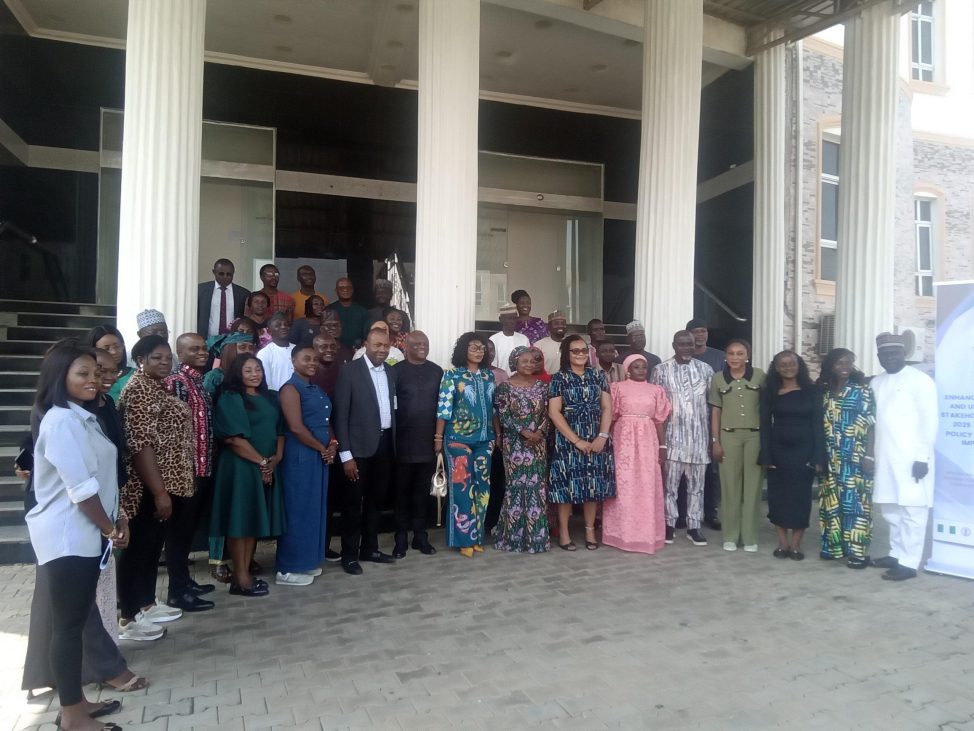
Stakeholders in Nigeria’s migration sector have converged on Abuja, the nation’s capital, to strategise on ways to raise public awareness of the draft 2025 National Migration Policy awaiting government approval.
The event was organised by CSOnetMADE in collaboration with the National Commission for Refugees, Migrants and Internally Displaced Persons (NCFRMI), with the support of the International Organisation for Migration (IOM) under the Migration Multi-Partner Trust Fund and the European Union’s Support for Migration Governance in Nigeria.
The engagement’s objective was to provide an inclusive platform for technical exchange among diverse stakeholders, share highlights of the National Migration Policy (NMP) 2025 and the Integrated Implementation Plan (IIP), as well as deliberate on effective dissemination and implementation strategies.
The theme of the two-day event is ‘Enhancing Public Awareness and Understanding of Key Stakeholders of the Draft 2025 National Migration Policy and Raising Awareness of Key Stakeholders on the Implementation of the GCM National Implementation Plan (Multi-stakeholder Meeting).’
In the opening remarks on behalf of the Federal Ministry of Humanitarian Affairs and Poverty Reduction (FMHAPR), the Assistant Chief Social Welfare Officer, Mrs Fumilayo Adejoorin, said that migration directly touches upon the core mandates of her ministry.
“We see its impacts daily on the lives of those displaced by conflict and climate, on families seeking economic opportunities, and on communities hosting migrants.
“The revised National Migration Policy (2025) represents our country’s strategic and forward-looking framework to manage these complex dynamics. It is designed to be a blueprint for making migration safe, orderly, and humane, while maximising its developmental benefits and protecting the most vulnerable.
“The comprehensive process of revising the policy, which involved extensive consultations with many of you in this room, has reached a critical milestone.
“The Draft 2025 National Migration Policy and its Integrated Implementation Plan have been formally submitted to the Cabinet Office for presentation before the Federal Executive Council for final approval,” she said.
She described the engagement as a pivotal step that brings stakeholders closer to the official adoption of the instrument.
Also Read: Nigeria Reaffirms Commitment to Data-Led Migration Policies
She added that the persistent advocacy and technical contributions of stakeholders have been instrumental in reaching the point the document has attained.
“Hence, we must use this opportunity to: deepen our collective understanding of the policy’s strategic priorities; pre-emptively map out our responsibilities so that we can hit the ground running immediately upon approval…”
Giving an overview of the document, Joy Agwu, a representative of CSOnetMADE, said the objective of the reviewed draft policy is to facilitate regular migration, protect migrants’ rights and safety, strengthen the integrated border management system for national security and safe migration, and promote dignified return, readmission, and sustainable reintegration, among other priorities.
The vision of the policy, she added, is “a sustainable migration governance for national and human development.”
Revised Migration Policy
The National Coordinator of CSOnetMADE, Dr Emeka Obiezu, in an interview, said that Nigeria revised its National Migration Policy to respond to emerging migration dynamics.
He explained that the Integrated Implementation Plan (IIP) operationalises the policy, translating strategic objectives into concrete actions.
According to him, the document was “developed through a consultative process with the Policy Review Committee and the members of the Technical Working Group on Migration and Development, involving government, civil society, and development partners.”
Participants were drawn from federal and state governments, academia, organised labour, media, as well as civil society organisations at both the state and federal levels.