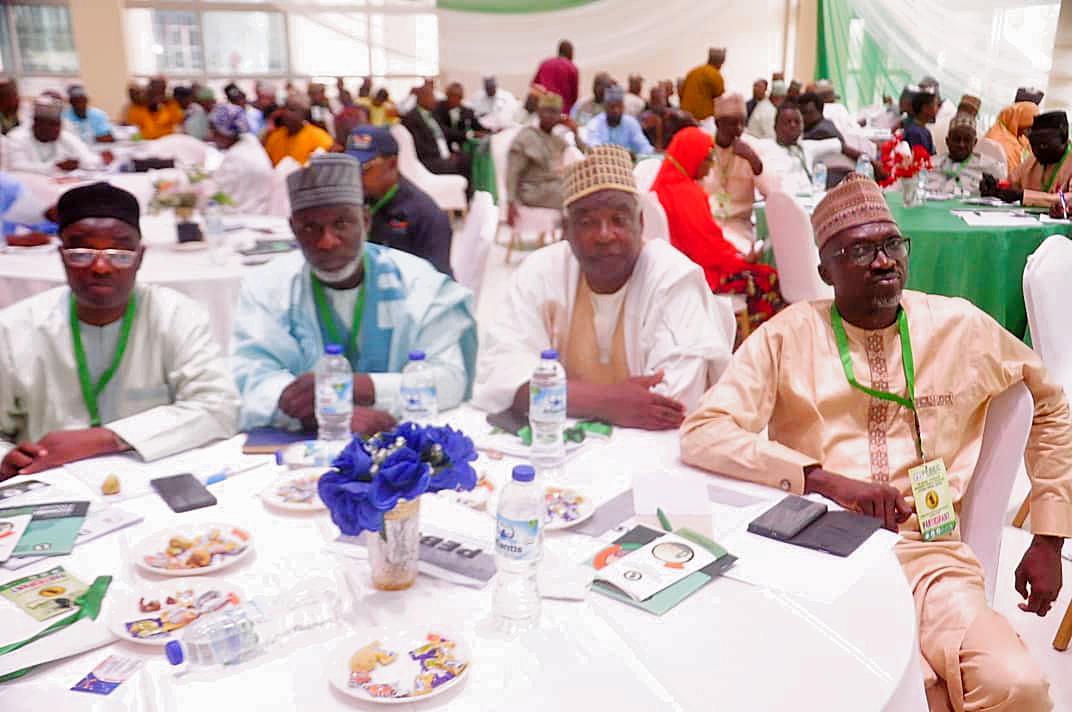
The Presidential Enabling Business Environment Council, PEBEC, has convened a sub-national stakeholders’ engagement session and a statewide Town Hall Meeting in Gombe, aimed at evaluating the state’s progress on business-enabling reforms and reinforcing alignment with national economic objectives.
The session brought together key stakeholders from both the public and private sectors, with the goal of deepening the implementation of the State Action on Business Enabling Reforms, SABER and promoting inclusive growth through improved regulatory environments at the state level.
Governor Muhammadu Inuwa Yahaya, represented by the Commissioner for Finance, Muhammad Gambo Magaji, described the engagement as both timely and strategic. He emphasised that Gombe’s recognition as Nigeria’s top-ranking state for Ease of Doing Business is the result of deliberate policy choices, strong political will, and far-reaching administrative reforms.
“Our administration has streamlined business registration processes, reduced bureaucratic bottlenecks, digitised land administration systems, and introduced investor-friendly tax policies. We have also maintained a stable macroeconomic environment with consistent policies that inspire investor confidence, reinforced by the rule of law, low crime rates, and a pro-business regulatory framework,” said Governor Yahaya.
He further highlighted key infrastructure projects, including the Special Agro-Processing and Export Free Zone, the Muhammadu Buhari Industrial Park, and the ultra-modern Livestock Development Zone, as major milestones in his administration’s drive to create an enabling environment for investment and economic diversification.
The Director-General of PEBEC, Princess Zahra Mustapha Audu, commended Gombe State for its exceptional performance in implementing business reforms.
“Gombe has consistently set the pace as a shining example of successful sub-national reform. Being ranked number one in PEBEC’s Ease of Doing Business survey for two consecutive years underscores the state’s commitment to reform-led governance,” said Princess Audu.
Meanwhile, the State Commissioner for Trade, Investment and Tourism, Nasiru Mohammed Aliyu, applauded PEBEC’s efforts to enhance Nigeria’s economic competitiveness, particularly at the sub-national level.
He reaffirmed Gombe State’s commitment to the national agenda for a business-friendly environment that fosters innovation, productivity, and inclusive growth.
The Gombe State Government, under the leadership of Governor Inuwa Yahaya, believes it has more than earned its place as the best state for ease of doing business, again.
The data supports this claim: Internally Generated Revenue (IGR) has surged from below ₦1 billion in 2019 to over ₦28 billion today.
The state now attracts over $100 million in foreign direct investment annually. More than 1.5 million residents are engaged in both skilled and unskilled labour, driven by an expanding private sector.
According to the National Bureau of Statistics (NBS), Gombe’s GDP is estimated at $55.5 billion, with investment returns exceeding 20%, particularly in agriculture, renewable energy, and light industry.
Much of this progress, according to state officials, stems from deliberate reforms and focused leadership.
Business registration processes have been simplified, land administration fully digitised, and tax policies restructured to support investors, especially small and medium-sized enterprises.
The state’s commitment to infrastructure development is evident.
The Muhammadu Buhari Industrial Park has become a hub for investment, with a newly commissioned seed company, inaugurated by former President Olusegun Obasanjo, standing as a testament to Gombe’s growing appeal to serious investors.
Other strategic projects, such as the Special Agro-Processing and Export Free Zone and the International Grains Market, have further bolstered investor confidence. What sets Gombe apart, however, is its relative peace and stability – a key factor underpinning the state’s sustained economic transformation.