


The National Sugar Development Council (NSDC) says it is working on getting comprehensive financing support to aid the development of the sugar industry and help existing operators lower the cost of irrigation.
The Executive Secretary/CEO of the National Sugar Development Council, Mr Kamar Bakrin, disclosed this while briefing critical stakeholders on the progress made by the council in addressing impediments to improved local sugar production in the country.

Speaking at a tripartite meeting of the agency with the Ministry of Industry, Trade and investment, and the major Backward Integration Programme (BIP) operators, the NSDC boss said the Council has elevated performance monitoring and oversight of the Backward Integration Programme (BIP) operators beyond what the Sugar Industry Monitoring Group (SIMOG) used to do.
According to him, the NSDC, under his watch, has emphasised robust, one-on-one, physical and virtual engagement with the operators, giving them targets and following up on deliverables.
Feedback
On the feedback he has received from the operators, the NSDC Executive Secretary disclosed that “the operators have complained about the existing loopholes in the free trade zone regime, which, they believe, certain participants in the NSMP have exploited.”
They also cited delays in the clearing of equipment at the ports, smuggling of sugar into the country, host community resistance to the expansion of their Backward Integration Programme (BIP) programmes as the primary causes of the delays in their BIP execution.
“The loopholes in the Free Trade Zone regime are being addressed by the ongoing amendment of the NSDC Act by the National Assembly,” he assured.
Mr Bakrin revealed that the amendment process, which has involved engagements with the relevant National Assembly Committee and key stakeholders, among other objectives, addresses the concern of the Backward Integration Programme (BIP) operators and also make the industry more attractive to other investors.
“The delays in the clearing of equipment at the ports is something that is also being addressed with the Nigerian Customs Service. On the issue of smuggling, the volumes do not significantly alter the economics of sugar production and the market dynamics. But regardless, we have engaged the relevant security agencies on the matter,” he reassured.
Host Community Resistance
In terms of host community resistance, the Council consistently intervenes and has actually driven the resolution of these grievances, especially the more significant ones that have been experienced in places like Numan in Adamawa State, according to the NSDC boss.
“At the moment, there is currently no backward integration programme in which the host community has restricted access to a significant proportion of land in the country.
One of the things we need is an aggressive push for a Sugar Sector Development Fund, as well as securing the kind of guarantees that will allow the cost of borrowing to come down. Also, to possibly extend whatever support we can provide around the issues of irrigation facilities, not necessarily as grants but just to lower the overall cost of irrigation infrastructure,” he stated.
Sanctions
“We believe that the two critical things that must happen is that the operators must act immediately to stop the deterioration in the output of their current operations, especially around the issues of agronomic and factory practices, which are clearly below global norms and standards.
They must also actively expand their existing brownfield operations.
In addition, we believe that without going into the specifics of individual companies for confidential reasons, the operators need to, as a matter of urgency, take a much more aggressive approach to expanding their BIP programmes to ensure that they are able to deliver on the NSMP targets,” said Mr Bakrin, emphasising the need for severe sanctions for underperformance.
“We believe that basic improvements in agronomics and factory practices can take annual raw sugar production to 200,000 metric tonnes in the short term even from the current land planted with sugarcane,” he added.
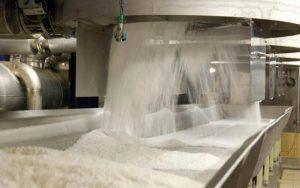
The NSDC boss argued that while the business of importation of raw sugar and refining at the existing facilities owned by the major operators may seem profitable on the surface, the more challenging work of actually growing sugar cane and processing it in Nigeria is ultimately more sustainable and rewarding for the operators and the country at large.
The minister said, going forward, allocation of raw sugar importation quota to each of the operators must be strictly tied to performance.
He added that his Ministry will take more interest in also monitoring the activities and performance of the Backward Integration Programme (BIP) operators.