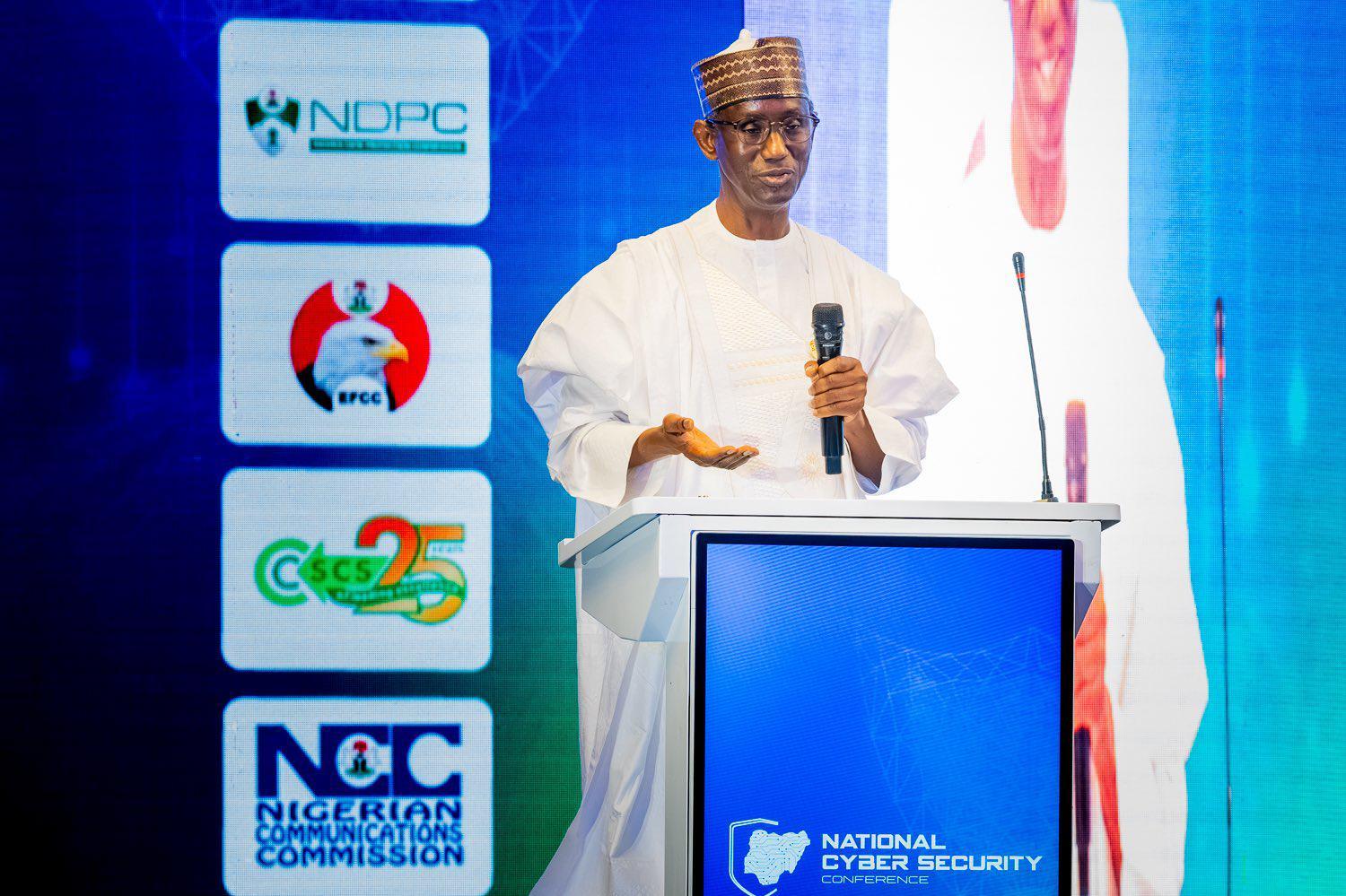
Nigeria’s National Security Adviser, Mallam Nuhu Ribadu, has underscored the critical role of a resilient cyberspace in securing the nation’s safety and driving economic stability. He made the remarks while declaring open the maiden National Cybersecurity Conference 2025, themed “Securing Nigeria’s Digital Future: Innovation, Collaboration, and Resilience,” held in Abuja.
READ ALSO: Cyberspace: Agency to enhance data rights in Nigeria
Speaking at the event, Ribadu stated: “We gather under a theme that captures both the challenge and opportunity of our time building a resilient digital future. It’s not just a theme, but a call to action.”
He highlighted Nigeria’s rapidly advancing digital transformation, which brings economic promise but also increased vulnerability. “Resilience is no longer optional,” he said. “It is the foundation of our national security and economic stability.”

The NSA outlined recent efforts to fortify Nigeria’s cybersecurity landscape, including the operationalization of the National Cybersecurity Coordination Centre a real-time, intelligence-sharing and response hub connecting public and private sector stakeholders.
Ribadu also called on global tech companies to invest in Nigeria’s secure and growing digital ecosystem, citing recent policy strides and infrastructure improvements. He praised the contributions of key institutions like NITDA, NIMC, NCC, EFCC, and ICPC, as well as the “countless unsung heroes” in both sectors for their roles in protecting Nigeria’s digital infrastructure.
Also speaking, EFCC Chairman Ola Olukoyede emphasized the urgency of anticipating cyber threats, describing cybercriminals as increasingly sophisticated and transnational. “Their actions erode trust, inflict financial losses, compromise national security, and tarnish Nigeria’s global reputation,” he said.
Olukoyede noted the EFCC’s continued efforts to deepen Nigeria’s cyber resilience, citing measurable progress in recent years.
In his address, NITDA Director General Kashifu Inuwa outlined the agency’s roadmap for building a resilient digital future. He highlighted five key pillars: digital literacy and talent development, a robust tech research ecosystem focused on emerging technologies like AI and blockchain, a strong legal and policy environment, inclusive access to digital infrastructure, and enhanced cybersecurity and digital trust.
He stressed the importance of partnerships: “Cyber resilience cannot be achieved in isolation. We must collaborate as a unified ecosystem to secure Nigeria’s digital backbone.”