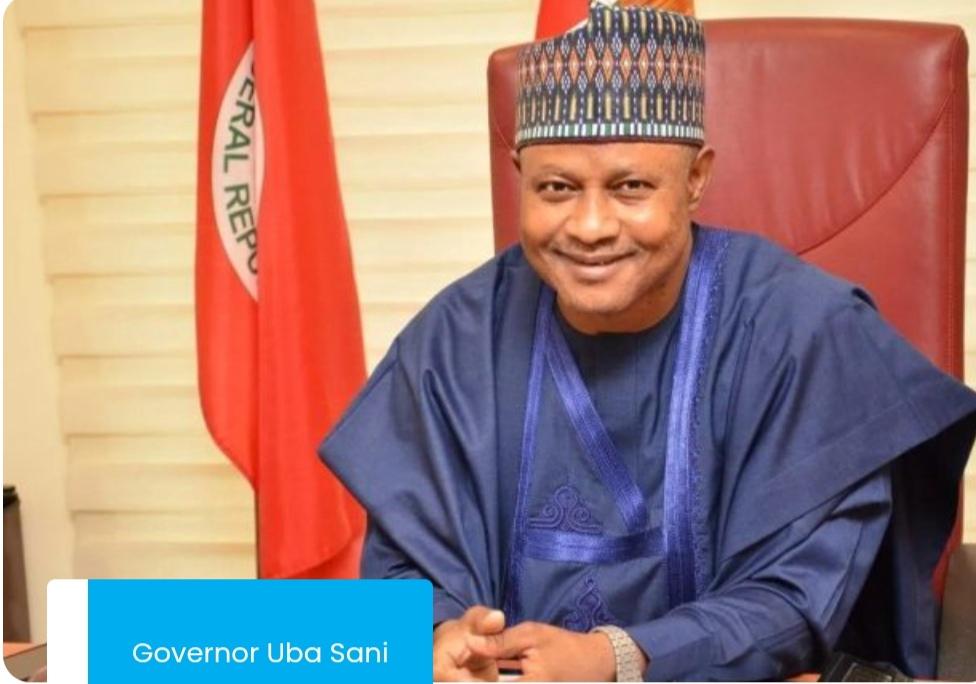
Kaduna State Governor, Uba Sani, has reiterated his administration’s commitment to using education as a strategic tool to combat poverty, unemployment, and rising insecurity across the state.
Speaking at the opening of the KADA EduPACT International Summit 2025 held at the Umaru Musa Yar’adua Centre, Murtala Square in Kaduna, the governor positioned education as a central driver of sustainable development and security.
The governor emphasised that education is not merely a sector to be managed but represents the state’s most effective strategy for economic revitalisation, poverty alleviation, and societal stability.
To this end, his administration has adopted a comprehensive, data-driven blueprint focusing on infrastructure upgrades, teacher quality, digital learning integration, and inclusive education policies targeting vulnerable populations, including girls, children with disabilities, nomadic groups, and children affected by conflict.
Despite global fiscal challenges, Kaduna State continues to safeguard its education budget, expanding digital and radio-based learning platforms, and reinforcing foundational literacy as a cornerstone of all interventions.
Demonstrating its focus on skills development, the government has completed three Institutes of Vocational Training and Skills Development in Rigachikun, Samaru Kataf, and Soba.
These institutes, certified by the National Board for Technical Education (NBTE), are now considered some of the most advanced technical training centres in Nigeria, surpassing many polytechnics and universities.
The state is also modernising Africa’s largest informal skills hub, the Panteka Market, home to over 38,000 apprentices.
The market is currently undergoing significant upgrades under the Nigerian Skills Qualification Framework, including new infrastructure and state-of-the-art training equipment.
Further investments have been directed towards tertiary education, including ₦500 million allocated to Kaduna State University (KASU), which recently gained accreditation for 40 new programmes. The implementation of a 40% tuition reduction across all state-owned tertiary institutions has led to a substantial rise in student enrolment.
While highlighting these strides, the governor acknowledged the pressing challenge of out-of-school children, describing it as an urgent priority. Under the Reaching Out-of-School Children (ROOSC) Project, the state has constructed or rehabilitated over 1,000 classrooms, established 62 new secondary schools, distributed nearly 1.5 million instructional materials, and provided almost 31,000 two-seater desks. These efforts are being closely tracked through digital dashboards to ensure improved enrolment and retention.
The KADA EduPACT 2025 summit aims to establish a practical and results-driven roadmap for educational transformation in the state. The framework is anchored on six strategic pillars: expanded access and equity; improved teaching and learning quality; sustainable financing; digital innovation; gender equity and inclusion; and a resilient education system underpinned by robust monitoring and evaluation mechanisms.
Minister of Education, Maruf Alausa, commended the state government’s bold educational reforms, recognising the summit as a timely platform for national and sub-national transformation.
The Chargé d’affaires and British Deputy High Commissioner to Nigeria, Gill Lever OBE, reaffirmed the United Kingdom’s longstanding partnership with Kaduna through its PLANE programme, which has supported foundational learning, teacher training, and efforts to reintegrate out-of-school children.
UN Deputy Secretary-General, Amina Mohammed, commended Kaduna for localising global education goals, especially at a time when education systems globally are under pressure from economic instability, inequality, and climate-related challenges.
Kaduna’s Commissioner for Education, Professor Abubakar Sambo, described the summit as a pivotal moment in shaping a transformative education model. He applauded the administration’s unprecedented 26% allocation of the 2025 state budget to the education sector, noting that this commitment is already translating into measurable improvements in learning outcomes.
The summit is co-organised by the Kaduna State Government and key international partners, including the UK’s FCDO-funded PLANE programme, UNICEF, the World Bank’s AGILE initiative, the Islamic Development Bank, Save the Children, the Malala Fund, Miva University, and others.
The event aims to forge a durable educational compact between the government and the people of Kaduna, centred on shared accountability, measurable targets, and long-term impact.