

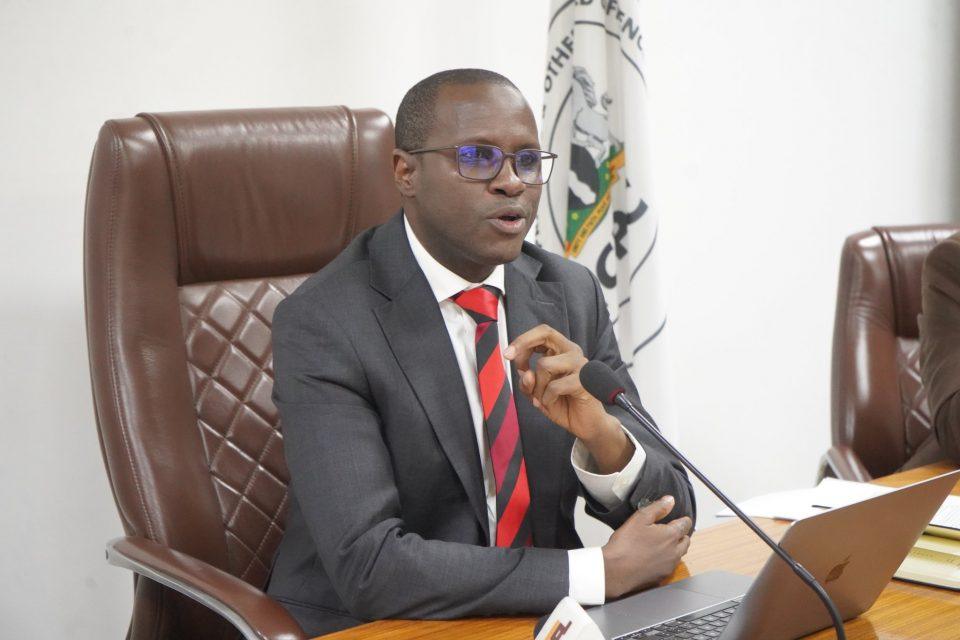
The Chairman and Chief Executive Officer of the Independent Corrupt Practices and Other Related Offences Commission (ICPC), Dr Musa Adamu Aliyu, has called for the overhaul of Nigeria’s public sector salary structure, which he described as unjust and demoralising.
Speaking at the 2025 National Conference on Public Accounts and Fiscal Governance organised by the Senate and House of Representatives’ Public Accounts Committees in Abuja, the ICPC’s chairman urged the National Assembly to engage the Salaries and Wages Commission and harmonise pay scales in a way that reflects fairness, justice, and economic reality.
The ICPC’s chairman also said stronger legislative scrutiny is needed to ensure that all revenues collected by government agencies are duly remitted to the national coffers.
While applauding recent gains in Nigeria’s global corruption ranking, the ICPC’s boss warned that the fight is far from over, reminding the audience of Nigeria’s past designation as one of the world’s most corrupt countries by Transparency International and cautioned against complacency.
“We’ve improved, but we’re still not where we should be. Out of 140 countries ranked by Transparency International in 2024, Nigeria is still behind 100. That means only 40 countries are below us,” he said, linking widespread corruption to poor accountability, misuse of public office, weak sanctions, and a lack of transparency in governance.
Trust Deficit
Dr Musa Adamu Aliyu argued that corruption has led to a trust deficit between citizens and government and scared away investors.
To close leakages and enhance transparency, he advocated the digitisation of key government processes, including payroll, procurement, and revenue collection.
He cited the successes of the Integrated Payroll and Personnel Information System (IPPIS), which helped the Economic and Financial Crimes Commission (EFCC) recover ₦21 billion in salary fraud in a single investigation.
“If we digitise our systems and eliminate human discretion, we will cut out most of the corruption,” he said, referencing international examples like Bulgaria, where procurement processes are fully transparent and publicly accessible.
He also called on lawmakers to pass a comprehensive whistleblower protection law, describing it as a vital tool to encourage citizens reporting corruption.
“Let it not just be policy. Let it be law, with protection and incentives for those who speak out,” he appealed.
The Role of the National Assembly
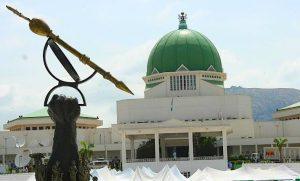
The Independent Corrupt Practices and Other Related Offences Commission (ICPC) also urged the National Assembly to intensify its oversight functions on revenue-generating agencies, warning that many such agencies operate with impunity, treating public funds as personal property.
“You see, the funny thing is that these revenue-generating agencies believe the money is their own. But unfortunately, it’s not theirs. So please, intensify oversight so they’ll be held accountable and bring to the table whatever they collect,” he said.
Represented by the Director of Finance at the ICPC, Mr Akporo Michael, the ICPC’s chairman also threw his weight behind the fiscal policy reforms of the present administration, particularly the recent tax legislation signed into law, which he said would reposition Nigeria’s fiscal framework and significantly boost revenue mobilisation.
“For the first time in our history, the government has taken the bull by the horns by reforming our tax system. These reforms aim to increase our tax-to-GDP ratio to between 18% and 20% in the coming years,” he noted, adding that this would help the country meet its growing development needs.
He pointed out that Nigeria’s low tax-to-GDP ratio of 7.8 per cent is among the lowest in sub-Saharan Africa. In contrast, countries like Kenya, South Africa, and Egypt are recording double-digit ratios and reaping the benefits in infrastructural development and service delivery.
“Our budget implementation suffers every year because we do not mobilise enough revenue. Contractors in my office have been waiting for payment since last year. It is time to close the gaps,” he said.
Nigeria’s State-Owned Oil & Gas Company
Dr Musa Adamu Aliyu decried the opacity of Nigeria’s state-owned oil and gas company, the Nigerian National Petroleum Corporation Limited (NNPCL).
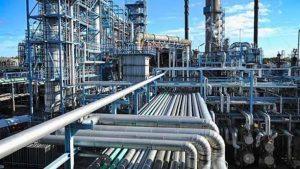
“Around the world, Saudi Arabia—their national oil company in the year 2024—posted a profit of $106.25 billion net profit. Around the same year—you can do a good mix—how much did our NNPC post? $2.4 billion profit in 2024.
These are the same players in the same league. Granted, Aramco’s capacity is higher than that of the NNPC. Their production on a daily basis is 9.1 million barrels per day, while Nigeria in 2024 was doing 1.3.
We agree. So let’s assume that Aramco is producing oil 10 times that of Nigeria. And they made a profit of $106 billion. If their capacity is more than just 10 times, what should be our own net profit? At least 10% of theirs. But we got only 2.4%,” he noted.
Anti-Corruption Courts
In addition, the ICPC’s chairman called for the establishment of special anti-corruption courts through constitutional amendment to speed up justice in corruption-related cases.
He recounted how some EFCC cases from as far back as 2006 had yet to secure convictions due to endless adjournments and changes in judges, warning that Nigeria’s continued survival depends on the outcome of the anti-corruption fight.
“We don’t have many options, just two. It’s either we kill corruption or corruption kills us. And the choice, as they say in science, is in our hands,” he said.
He applauded the National Assembly for organising the conference and called for greater collaboration with civil society organisations and the media to deepen public accountability, educate citizens, and expose wrongdoing.
“This war is not the EFCC’s alone. It must be fought by all Nigerians. All hands must be on deck,” he appealed.
The Central Bank of Nigeria (CBN)
For his part, the Governor of the Central Bank of Nigeria (CBN), Mr Olayemi Cardoso, called for greater synergy between monetary and fiscal authorities to enhance Nigeria’s macroeconomic stability and ensure sustained national development.
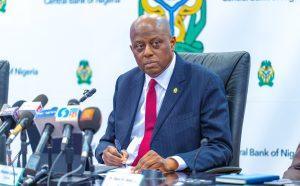
Mr Cardoso, who was represented at the National Conference on Public Accounts and Fiscal Governance by a senior CBN official, reaffirmed that the roles of both the Central Bank of Nigeria and fiscal authorities were not at odds, contrary to popular opinion.
He said while the fiscal authorities focus on revenue generation and development, the CBN’s primary mandate is to ensure that fiscal actions do not destabilise the economy.
“Contrary to the general belief, the Central Bank of Nigeria and fiscal authorities are not working at cross purposes. They may appear to have different tools, but both are focused on achieving the same goals: economic growth, stability, and improved welfare for Nigerians,” he emphasised.
He noted that one of the CBN’s central concerns is to balance government spending with the need to maintain macroeconomic stability, especially in areas like inflation, exchange rate management, and the strength of the naira.
He highlighted that since the inauguration of the current management at the CBN, the apex bank has adopted a proactive approach to both global and domestic economic developments, citing the minimal impact of recent geopolitical tensions as proof of this shift in strategy.
“We don’t sit and wait for events to occur. That’s why even recent global disruptions have had minimal impact on Nigeria’s economy,” he said.
The CBN governor stressed that a well-coordinated macroeconomic framework—underpinned by transparency, consultation, and shared objectives between fiscal and monetary actors—is essential to navigating Nigeria’s complex economic terrain.
The National Conference, jointly organised by the Public Accounts Committees of the Senate and House of Representatives, brings together key stakeholders to deliberate on enhancing fiscal discipline, public financial management, and sustainable development across all tiers of government.