The Ziva Community Initiative has urged women in Nasarawa State, North-Central Nigeria, to participate fully in mining activities and smart climate agriculture practices.
The Program Lead of Ziva Community Initiative, Mr. Samuel James-Pam, stated this during a two-day media training on reporting women’s involvement in sustainable agriculture, lithium mining, and the energy transition in Lafia, the Nasarawa State capital.
He said that Ziva Community Initiative, a nonprofit organization, has embarked on a mission to amplify the voices of women, recognizing their crucial role as pillars of society and family.
The initiative has garnered support from the African Center for Energy Policy (ACEP), enabling Ziva to conduct training sessions focused on building the capacity of women miners and farmers, with the goal of fostering sustainable practices that not only enhance their livelihoods but also protect the environment.
Mr. James-Pam emphasized the importance of journalists in this initiative. “You are critical stakeholders in this intervention. We need your help to amplify the voices of these women,” he urged journalists.
He further encouraged the women to form cooperatives. “When they stand together, they can access grants and support that they wouldn’t be able to as individuals.”
In a paper presentation titled “Sustainable Agriculture and Lithium Mining: Impacts, Opportunities and the Role of Women,” a professor of Geology, Department of Applied Sciences, Federal University of Lafia, Shekwonyadu Iyakwari, Ph.D., said women are increasingly stepping into the mining sector, challenging traditional norms and reshaping the landscape of an industry long dominated by men.
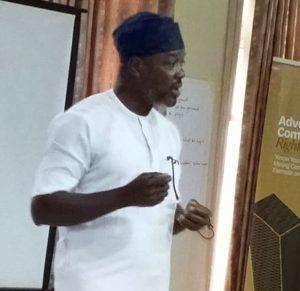
He said Nasarawa State is blessed with over 32 different minerals being actively explored. “The potential for economic empowerment through mining is vast, and women are at the forefront of this change,” he added.
Prof. Iyakwari stated that the involvement of women in mining is not just about economic empowerment; it also fosters peace and stability.

“Women tend to approach conflicts differently. They are less violent and more inclined to dialogue. Their presence in mining can lead to more harmonious relationships within communities.”
As a seasoned geologist, he emphasized the need for government intervention to ensure safety in these areas.
“We need police presence at mining sites. When miners feel secure, they can focus on their work without fear. This will not only boost productivity but also encourage more women to join the sector,” Professor Iyakwari noted.
Also, in a paper presentation titled “Media Engagement for Advocacy, Story Mapping: Identifying Gender Stories in Agriculture, Mining, and Energy,” a development journalist with Premium Times newspaper, Mr. Alqasim Suleiman, said, “As journalists, it is our responsibility to shine a light on these stories and the barriers women face in both agriculture and mining.”
He said women participate heavily in farming activities, but the challenge is that they don’t own the farms, they work for others.

Mr. Suleiman further urged journalists to advocate for policies that empower women and “ensure they have equal access to land ownership and opportunities in the mining sector.”
Earlier in her remarks, the lead of the project, Patience Ogbode, said the impact of the Ziva Community Initiative has been felt in Nasarawa State.
“So far, we have trained over 100 women who have reported increased yields on their farms and improved income from their mining activities. They are not only providing for their families but also contributing to the local economy.”
The Ziva Community Initiative continues to pave the way for women in mining and agriculture, fostering a community where their voices are heard, their stories are told, and their contributions are recognised.