
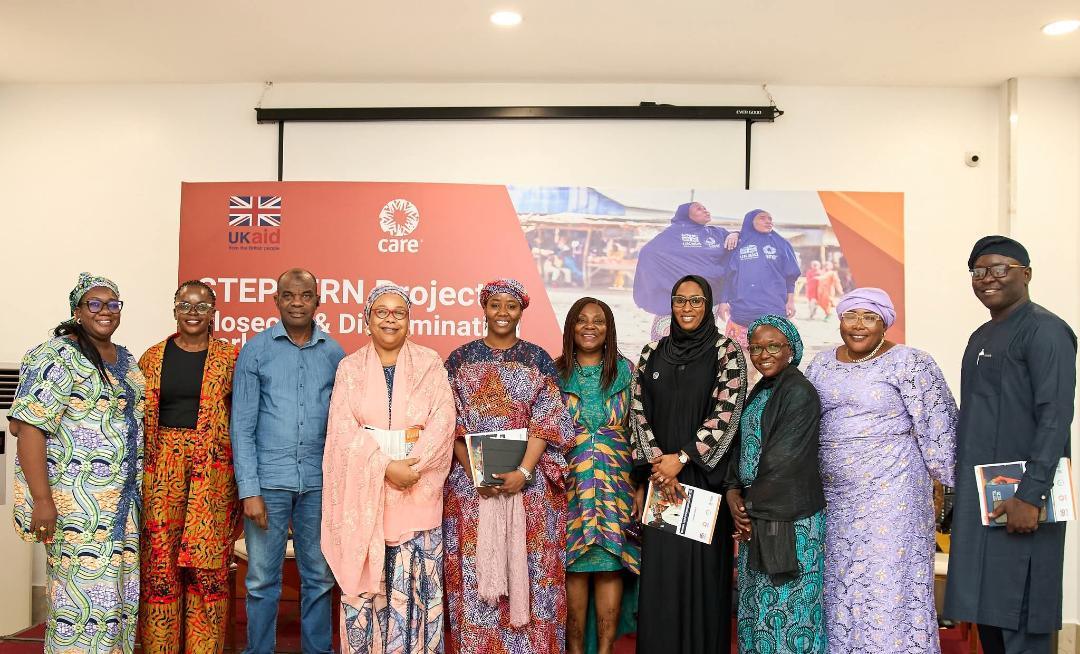
A total of 125,480 individuals across Borno, Adamawa, and Yobe States have been empowered through the Strengthening Protection Services and Resilience in Nigeria (STEPSERN) project, implemented by CARE Nigeria with support from the UK’s Foreign, Commonwealth & Development Office (FCDO).
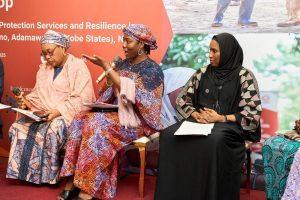
This was revealed at the project closeout dissemination workshop held in Abuja to share key findings, lessons, and sustainability strategies for continued protection and resilience support for women and girls in the North-East.
Implemented in partnership with Ekklesiyar Yan Uwa (EYN), Nigeria INGO Forum, and NEEM Foundation, the STEPSERN project focused on strengthening protection systems, advancing sexual reproductive health and rights (SRHR), and boosting women’s leadership in crisis settings.
Speaking at the event, Minister of Women Affairs and Social Development, Hajia Imaan Sulaiman-Ibrahim, commended the FCDO, CARE Nigeria, and partners for accelerating services to survivors and promoting women’s leadership.
“I believe the project has greatly harnessed women’s important roles in constructing enduring peace and security, and achieved a great feat in the implementation of the UN Resolution,” she said.
Represented by the Director of Gender, Ismalia Adamu, the Minister said the project’s outcomes align with the ministry’s efforts to close gender gaps, protect rights, and enhance access to opportunities and leadership.
“We are reviewing our frameworks to fast-track our mandate in line with the Renewed Hope Agenda of President Bola Tinubu,” she added, calling for stakeholder and development partner support to ensure sustainability.
She urged CARE Nigeria to ensure that the achievements and lessons of STEPSERN are preserved and scaled.
In her welcome address, Interim Country Director of CARE Nigeria, Jennifer Orgle, said the project delivered significant empowerment impacts in the BAY states.
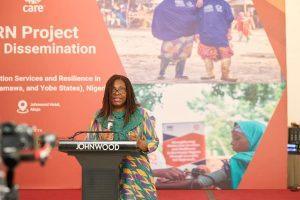
“Women who once saw themselves as broken and voiceless have overcome extraordinary challenges. They are now leading change—breaking barriers, challenging harmful norms, and redefining what is possible,” she stated.
She said the project piloted innovative models, such as Women Lead in Emergencies, that strengthened protection systems, challenged harmful norms, and enabled women to lead.
“Our efforts improved access to dignified health, protection, and livelihood services and fostered community ownership for sustainability,” Orgle added, thanking the FCDO for its steadfast support.
In her keynote address, FCDO Humanitarian Team Lead, Elizabeth McGarva, said the STEPSERN project demonstrated the power of coordination and locally led approaches.
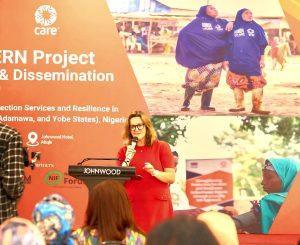
“What the project has done is show how integration and local leadership can strengthen protection and health services in the North-East,” she said.
She confirmed that project targets were exceeded.
“It’s not just a number. It’s a testament to the lives protected and the dignity restored,” she stated, commending the Women Lead in Emergencies model as a major achievement.
She urged continued investment in gender-transformative, locally driven solutions, warning that unmet needs, climate shocks, and resistance to social change must be addressed.
“We must be part of the conversation about what comes next,” she charged.
STEPSERN Impact Report
Presenting the impact report, Project Team Lead Mary Amos disclosed that 125,480 individuals—including 107 males and 477 females with disabilities—were reached with SRHR and gender-based violence (GBV) information.
The report showed that 1,290 GBV cases were managed and closed, eight Women and Girls Safe Spaces were established, and six Police Gender Reporting Desks were made functional.
Amos said 30 Women-Led Groups were registered and empowered, 3,012 women received start-up kits, 600 adolescents were trained on SRHR, and 220 health workers were trained on rights-based approaches.
She noted that the project used models such as Women Lead in Emergencies, Adolescent Mothers Against All Odds, and Community-Based Protection Mechanisms, and also built the capacity of community paralegals to enhance legal access for GBV survivors.
Call for Action
A panel discussion on “Building Resilience and Sustainability” emphasised the need for proper funding, community ownership, and sustained capacity building.
Representatives of the implementing partners and empowered communities from Jere, Bama, Yola North, Girei, Potiskum, and Gujba expressed appreciation for the project’s impact and pledged to sustain its gains.
Overview
The STEPSERN project was implemented by CARE Nigeria in partnership with EYN, Nigeria INGO Forum, and NEEM Foundation, and funded by the UK’s FCDO. It aimed to strengthen protection services and build resilience in Borno, Adamawa, and Yobe States.
PIAK

