
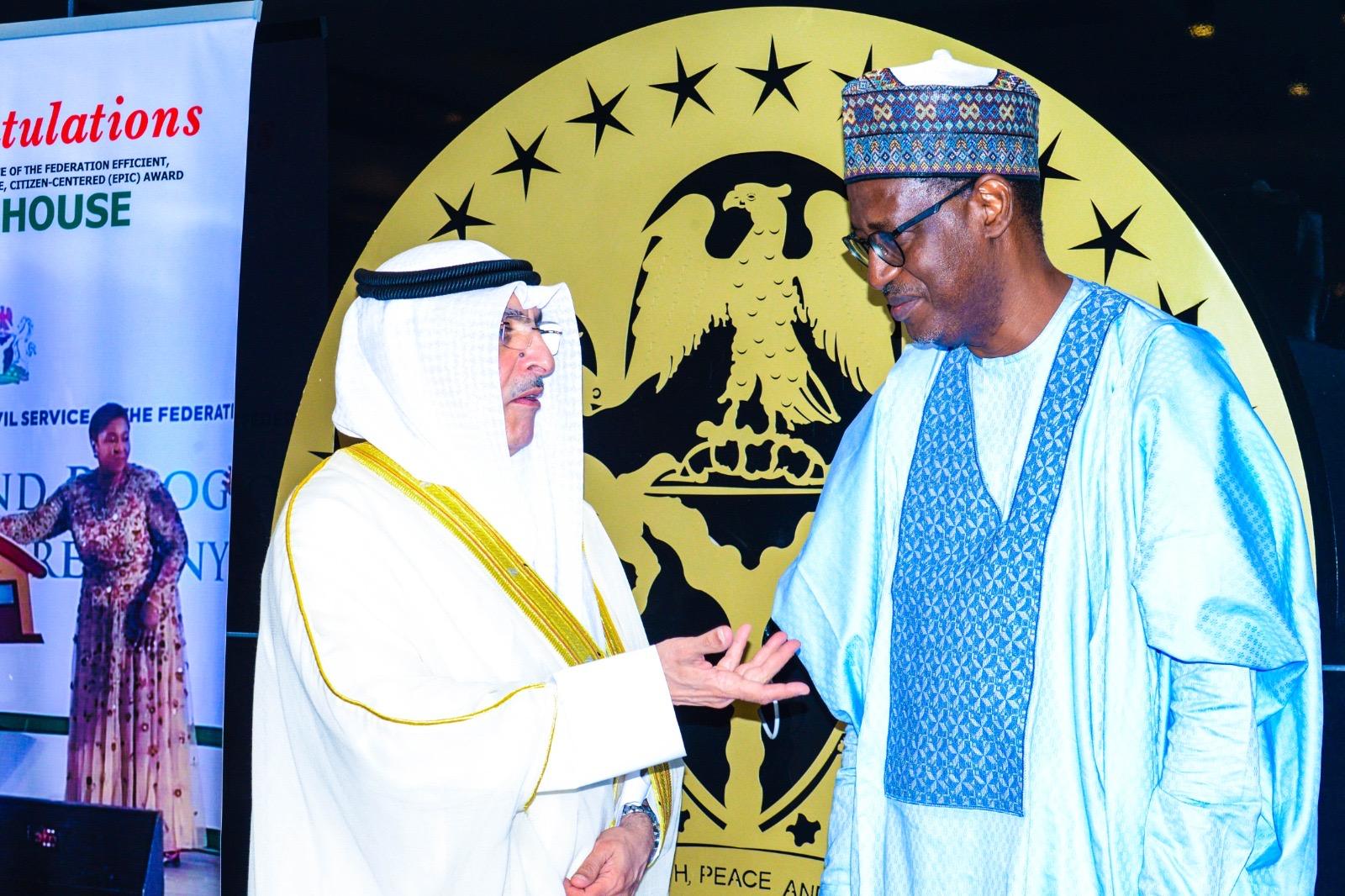
Nigeria’s Ministry of Housing and Urban Development has entered into discussions with the Kuwait Fund for Arab Economic Development (KFAED) to explore strategic partnerships in infrastructure investment.
During a high-level meeting in Abuja, Nigeria’s Housing Minister, Arc. Ahmed Musa Dangiwa, presented a series of urban initiatives requiring both financial and technical support.
These include the establishment of Building Material Manufacturing Hubs across Nigeria’s six geopolitical zones, each spanning 200 to 300 hectares and equipped with key infrastructure such as electricity, roads, and water systems.
“Our goal is to reduce the cost of building materials and stimulate job creation,” said Dangiwa.
“We’ve already received proposals from four investors to develop these hubs, and we’re preparing the infrastructure to accommodate medium to large-scale factories.”
Another major project highlighted was the Centenary City in Abuja, a 1,200-hectare district envisioned to become a mixed-use zone of residential, commercial, industrial, and tourism development.
Dangiwa emphasized that updated feasibility studies and infrastructure investment are essential to attracting global investors.
Dangiwa also appealed for support in slum upgrade projects targeting rural and urban areas.
“Last year’s budget supported the development of 150 slums; over 120 are already complete,” he noted.
He also raised funding concerns surrounding the ministry’s Renewed Hope Social Housing programme, which aims to build 100 homes in each of Nigeria’s 774 local governments.
The initiative targets low-income earners and vulnerable populations, with government subsidies covering up to 70% of housing costs.
Kuwait Fund Director-General Dr. Waleed Al-Bahar confirmed the Fund’s interest in backing infrastructure-related elements of these initiatives, especially in sectors like transport, education, and agriculture.
“These are promising projects,” said Dr. Al-Bahar, “but we require current and comprehensive feasibility studies before moving forward. We are ready to support the Nigerian government in preparing or updating these studies.”
While clarifying that the Kuwait Fund does not directly finance housing projects under its current policies, Dr. Al-Bahar reaffirmed its commitment to offering soft loans with 20–25 year maturities and low interest rates, citing a recent partnership with the Kaduna State Government on an educational program as a precedent.
The meeting concluded with mutual expressions of readiness to move discussions forward, as Nigeria seeks new development partnerships to advance President Bola Ahmed Tinubu’s infrastructure-driven housing agenda.

