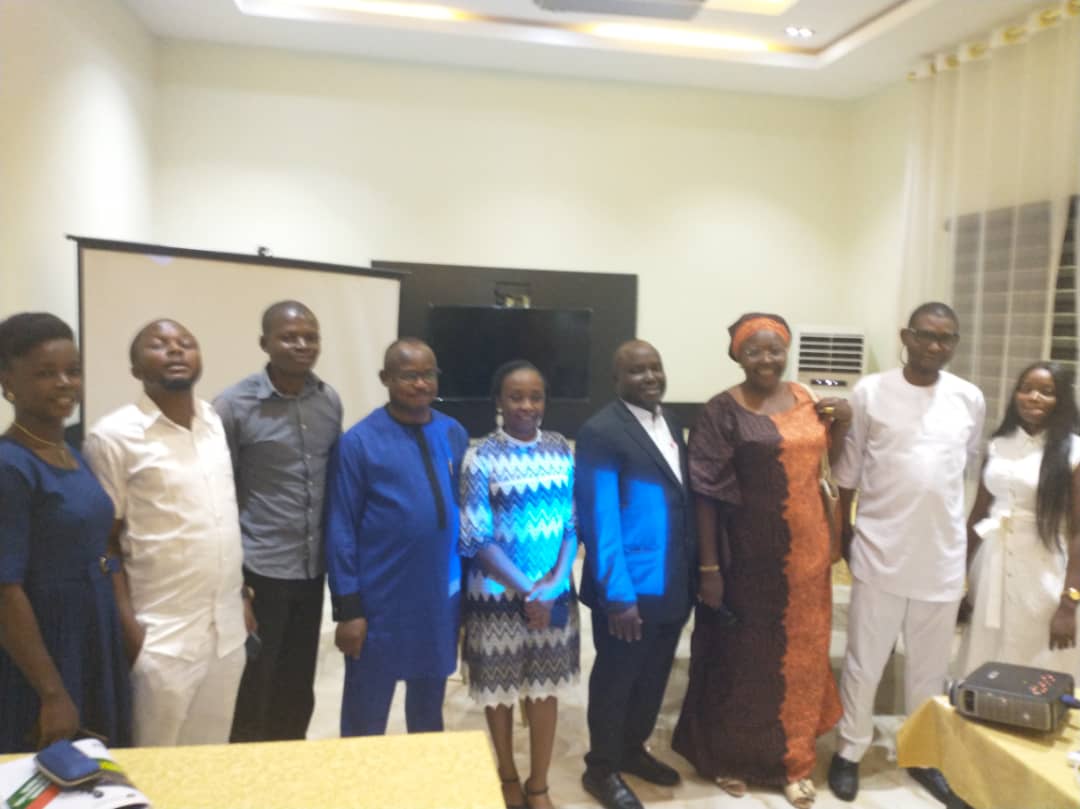
The Rule of Law and Accountability Advocacy Centre (RULAAC), in collaboration with the Fund for Global Human Rights through the Action Group on Free Civic Space (AGFCS), has renewed calls for the promotion of civic freedoms and press independence in Southeast Nigeria.
At a one-day dialogue titled “Voices Unchained: A Journey Through Civic Space in Southeast Nigeria” held in the Anambra state capital, Awka, stakeholders reflected on safeguarding constitutional rights.
Speaking on behalf of RULAAC’s Executive Director, Mr. Okechukwu Nwanguma, the Programme Officer, Onyinyechi Nwosu, said the 2025 Civic Space and Security Project builds on last year’s successful initiative and the impactful documentary “Silenced Gongs.”
The dialogue served as a platform for inclusive conversation on the civic space in the Southeast.
RULAAC emphasised the importance of engaging stakeholders, including media professionals, civil society organisations, legal practitioners, and affected communities, to develop actionable strategies that protect civic liberties and promote accountability.
“Civic space is not a privilege granted by the state, it is a right protected by law and sustained by the active participation of citizens,” Nwosu said.
Keynote speaker Prof. Jaja Nwanegbo, Director of the Institute for Peace, Security and Development Studies (IPSDS) at Nnamdi Azikiwe University, Awka, noted that Southeast Nigeria has historically thrived on vibrant public discourse.
From town hall meetings to campus debates and local media, these spaces have long supported democratic engagement.
He called for stronger legal safeguards, more rigorous judicial enforcement, and broader civic education to ensure that Southeast Nigeria remains a bastion of democratic participation and rule of law.
Barrister Chekwube Ezekwike acknowledged that while laws like the Administration of Criminal Justice Act (ACJA) provide a solid foundation, enforcement remained a challenge.
Key recommendations included promoting rights-based policing, reviewing repressive laws, ensuring independent judicial processes, engaging traditional and religious leaders to counter mob justice, and ensuring democratic student representation.
The conference concluded with a strong reaffirmation that civic space is a cornerstone of democracy and must be protected at all costs.
Representatives from academia, civil society, media, law, women’s groups, youth organisations, and grassroots communities committed to transforming the dialogue’s outcomes into sustained advocacy, legal action, and community engagement.
PIAK