The Public Service International (PSI) has called for well-funded public services that can guarantee universal access, protect workers, and help communities build resilience against increasing climate challenges.
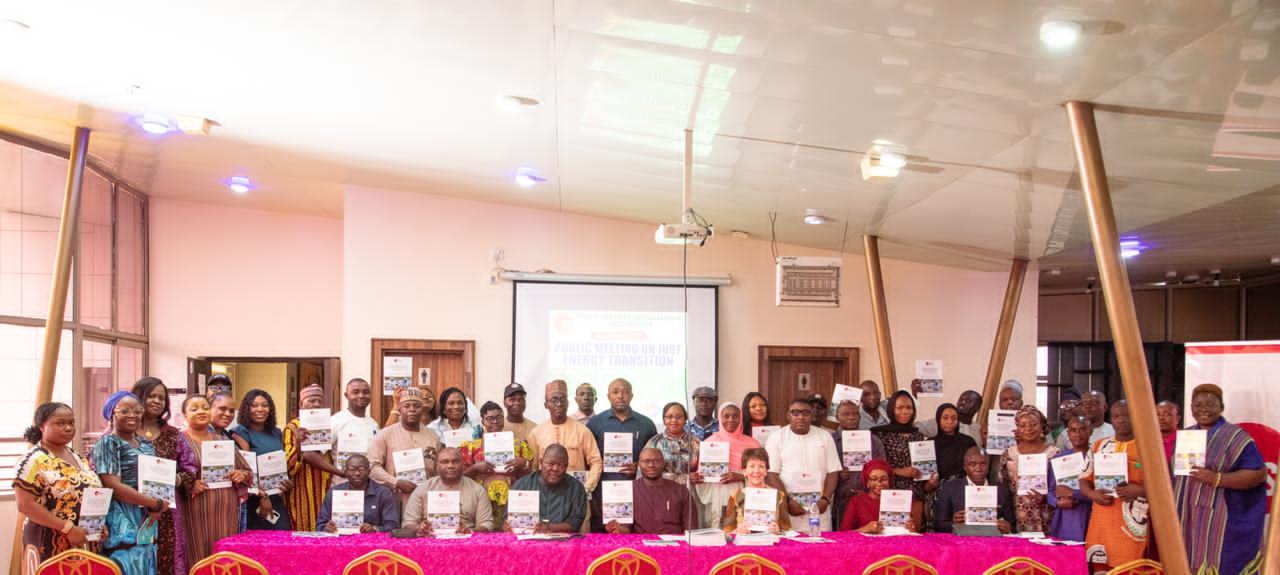
This was contained in the communique issued at the end of a one-day meeting organised for workers in Nigeria’s public sector by the PSI, which was held in Abuja.
The PSI also cautioned governments in Africa against turning to privatisation as a response to the challenges posed by climate change, warning that doing so would worsen the vulnerability of communities already struggling to cope with its impact.
The workshop aimed to build the capacity of PSI affiliate members in the National Union of Electricity Employees NUEE and the Medical and Health Workers Union of Nigeria (MHWUN).
In an interview, PSI’s Project Coordinator for Climate Change, Sandra van Niekerk, stated that climate change has intensified pressure on public services such as health, energy, water, and waste management.
These services, she believes, must be strengthened with adequate public financing rather than handed over to private operators driven by profit motives.
“We have to be very clear that the crisis of climate change cannot become an excuse to privatise the very services that are essential for building resilient communities.
“If we say the private sector should manage waste, energy, or health, we are actually making the problem worse because those services then become driven by profit and not by the need to protect communities,” she said.
She identified that the health and energy sectors are key areas for mitigating the impact of climate change on vulnerable communities.
Her organisation, she said, has worked with the two unions, the National Electricity Workers Union and the Medical Health Workers Union, on a project which “looks at the importance of a just transition which includes strengthening the public health sector so that they’re better able to withstand the consequences of climate change.
”We know that health is at the forefront of feeling the impact of climate change and strengthened at the same time, public energy and the transition to renewable energy, so that the health sector has reliable, sustainable energy that can provide its needs as a vital public service.”
For Mrs Van Niekerk, when people don’t have access to reliable electricity, they use unclean sources of energy for cooking; they burn wood to cook, and “we know that burning wood is a major source of respiratory illnesses and death, particularly for women.”
She said the number of women who have lost their lives from respiratory problems associated with cooking over wood fires was high, adding that it would benefit the health sector if “we’re actually making sure that women and households have access to clean energy, renewable energy sources”.
On why climate issues are considered workers’ issues, the PSI Coordinator stressed that workers are at the forefront of feeling the impact of climate change, particularly in the public sector.
“Whether you’re working in the energy sector or health sector or waste removal, you’re dealing with the impacts of climate change, so when there are floods, it’s the disaster management workers that are going in and helping people”, she said.
Build Capacity
Also speaking, PSI Project Coordinator for English-Speaking West Africa, Mrs Moradeke Abiodun-Badru, said PSI will continue to build the capacity of workers to understand climate issues and how they impact their daily lives.
She also noted that PSI will join voices in advocating for an energy transition that protects the interests of workers.
”We are talking about renewable energy, which means some workers might lose their jobs because ordinarily they are not conversant with the skills, or they don’t have the skills for managing renewable energy.
”We are saying that they don’t necessarily have to lose their jobs. The government can support them to have these new skills so that they can fit into their workplaces, and we are saying that the government should not outsource their jobs because of these skills.
”Government can also invest in training them because that is the way to go”, she said.
She explained that PSI will continue to advocate for public pathways in the energy transition, saying that “PSI stands for social justice, PSI stands for access to public services, and PSI believes that public services are for public goods”.
This, she stated, means that any services being rendered to the masses must not be in the hands of the privateers, must be accessible and affordable for the common man, “and that is why we use the slogan, people over profit”.
The meeting also witnessed the public presentation of the participatory research Report titled, “Shaping Climate, Health and Energy Nexus Adaptation Strategy (Building Nigerian Public Service Union’s Advocacy Capacity for Just Transition).”