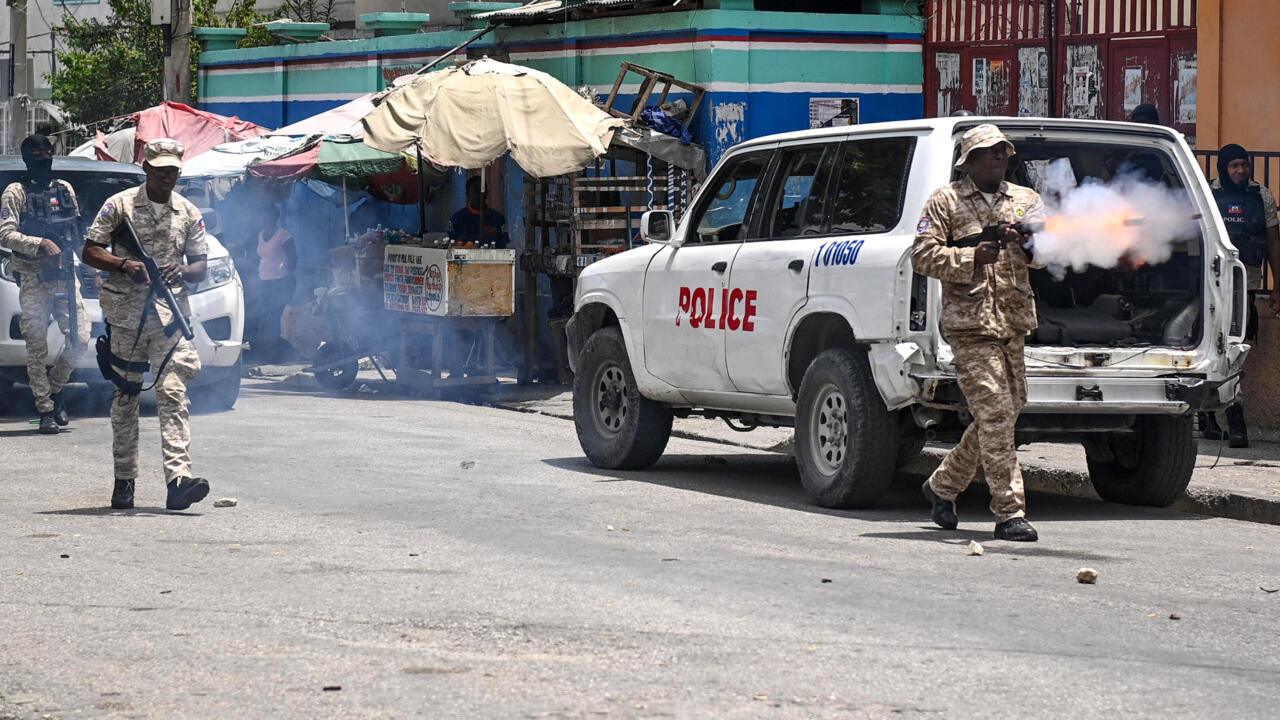
The United Nations Security Council began talks on a draft resolution for Haiti to expand an international force fighting armed gangs.
Armed gangs have taken control of almost all Haiti’s capital Port-au-Prince in an extended conflict that has forced some 1.3 million people from their homes, killed thousands and fuelled famine-level hunger.
The draft resolution, put forward by the United States and Panama, aims to transition the existing Multinational Security Support mission, which is both underfunded and undermanned, into a new force called the Gang Suppression Force.
Like the current mission, which is led by Kenyan police, the anti-gang force would be funded through voluntary international contributions.
However, the leadership structure would be different, the new mission would be led by a Standing Group of representatives from countries that have so far contributed personnel, plus the United States and Canada, and be supported by a new U.N. field office to be set up in Port-au-Prince.
A new force commander would be appointed by the Standing Group.
The proposal calls on the Americas regional diplomatic body, the Organization of American States, to follow up on its pledges of support with targeted assistance, including rations, communications and defense equipment.
Some Haitian analysts criticized the lack of a clear source of funding, however, and said the new plan duplicates existing structures and fails to address root problems.
Ricardo Germain, an independent security expert, said that besides funding he was particularly concerned by how the leadership would be replaced.
Jack Ombaka, spokesman for the Multinational Security Support mission, said the mission was still assessing the planned new model, but what was important was that it addressed the threats and benefited the Haitian people.
James Boyard, a security expert at the State University of Haiti, said the new model was too vague on coordination with local forces and that Haiti’s exclusion from the Standing Group threatened the country’s sovereignty.
“We would go from a democratic regime to an international tyranny,” he said, adding that any potential crimes committed by security personnel would need a pre-determined oversight body.
The topic of foreign intervention in Haiti is a sensitive one. Past U.N. missions in Haiti resulted in civilian killings, a sexual abuse scandal and poor wastewater management that caused a cholera epidemic that killed more than 9,000 people.
Haiti’s presidential office said it would comment once the official resolution was made public.
The U.S. mission to the United Nations did not immediately respond to a request for comment.
Reuters/Hauwa M.