


Nigerians in Diaspora Commission (NiDCOM) and the National Agency for Science and Engineering Infrastructure (NASENI) have agreed to deepen collaboration on innovation and technology by leveraging the expertise of Nigerians at home and abroad.
At a meeting in Abuja, the Chairman/CEO of NiDCOM, Abike Dabiri-Erewa, described the partnership with NASENI’s Executive Vice Chairman/CEO, Mr. Khalil Suleiman Halilu, as “a timely intervention” that will link Nigeria’s local innovators with scientists, engineers, technologists, and entrepreneurs in the diaspora.
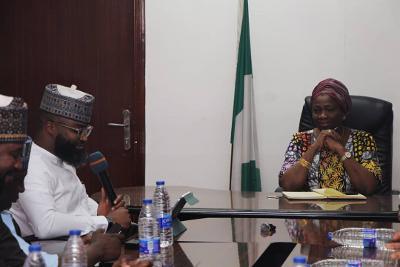
She emphasised that “the partnership will foster opportunities for Nigerians everywhere to work together for Nigeria’s progress through sharing ideas, skills, and experiences that can help build a stronger, more innovative Nigeria, especially under the Renewed Hope Agenda of President Bola Tinubu.”
Dabiri-Erewa lauded NASENI’s work and pledged the Commission’s support, while urging the Agency to participate in the 8th Nigeria Diaspora Investment Summit (NDIS) scheduled for November 11–13, 2025, in Abuja.
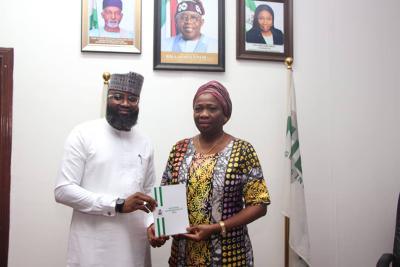
On his part, Mr. Halilu outlined NASENI’s flagship projects, including Revolut, a payment platform serving thousands of Nigerians with low-cost, real-time transfers; the Innovation Hub and Incubation Programme, which funds scientists and innovators at home and abroad; and Delta-2, a partnership with the Czech Republic entering its third phase this September to expand technology and international collaboration.
“My visit to NiDCOM is to present two key projects: a government-backed payment platform, similar to Revolut, designed to be seamless, flexible, multi-currency, and to provide real-time monitoring at affordable rates. The second project aims to engage Nigerians in the diaspora, particularly in science, technology, innovation, and entrepreneurship, to develop practical projects that can grow the economy,” he explained
Commending Dabiri-Erewa, the NASENI CEO added that “NiDCOM’s database of professionals would play an essential role towards this course.”
Both organisations also agreed to establish a joint working committee to identify areas of collaboration and develop projects in science, technology, engineering, and mathematics (STEM), alongside wider diaspora engagement.
PIAK

