

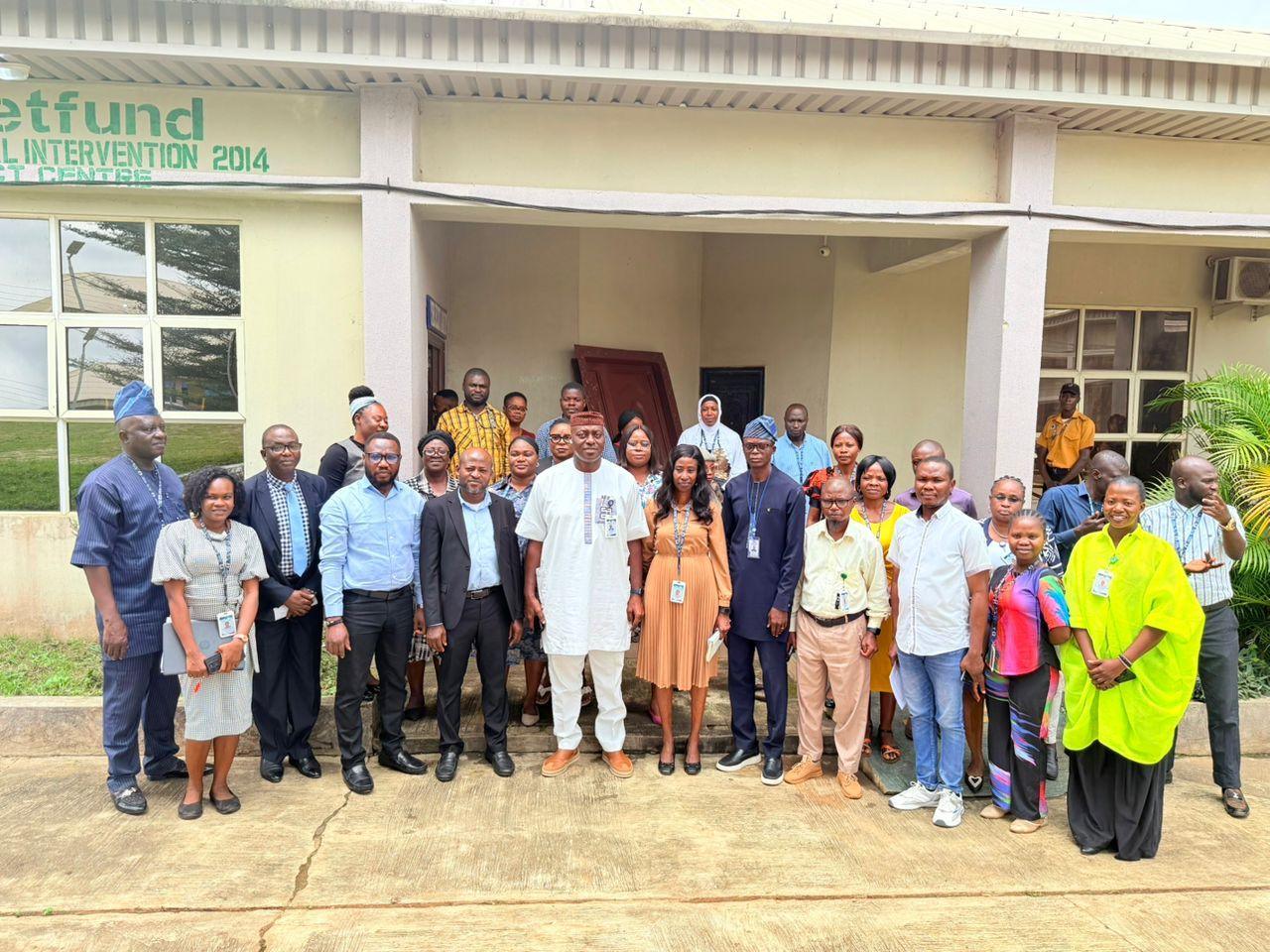
The Digital Bridge Institute (DBI) has commenced the training of tertiary institution workers on ICT.
A statement signed by the Agency’s Head of Public Affairs, Mr Soji-Eze Fagbemi, said the capacity of about 10,000 workers is being enhanced in digital literacy.
He named beneficiary institutions as the workforce in Nigerian universities, polytechnics and other tertiary institutions nationwide.
According to the statement, “under its 2025 Advance Digital Empowerment Programme for Tertiary Institutions (ADEPTI), the DBI will train 100 workers each in about 100 tertiary institutions who have keyed into the annual training programme.”
The training started on Monday at the University of Ilesa, Ilesa, Osun State, in Southwest Nigeria, with three other centres across the country, which include the Nigerian Army University Biu, Borno State, in the northeast; the Rivers State School of Nursing Sciences and Management Technology, Rumueme, Port Harcourt, in the south; and the Federal University, Birnin-Kebbi, Kebbi State, in the northwest.
Fully sponsored by the Nigerian Communications Commission NCC and implemented by the DBI, the programme is designed to help the staff of tertiary institutions in Nigeria build capacity in the adoption and implementation of ICT tools in teaching and research.
The Vice-Chancellor of the University of Ilesa, Professor Taiwo Asaolu, who declared the training open at the university’s centre, described the ADEPTI programme as a collaborative initiative underscoring the commitment of the federal government and the schools to enhancing technological proficiency among their workers.
“In today’s rapidly evolving digital landscape, advanced digital skills are crucial for quality teaching, learning, and research in tertiary institutions.
“Digital visibility and proficiency significantly impact global and national University rankings, reputation, education delivery, and research outputs.
“I am happy to inform you that at the University of Ilesa, we have invested in digital technologies, equipping our faculties with modern teaching devices and providing campus-wide WiFi internet services,” he stated.
Additionally, according to the university’s dean, the institution offers regular IT training and workshops to ensure that the staff and students can effectively leverage the tools.
“It is noteworthy that the Digital Bridge Institute’s ADEPTI workshop aligns with our vision, focusing on critical areas such as data analysis and visualisation, digital skills, cybersecurity, and emerging technologies.”
The Vice-Chancellor expressed confidence that the expertise of the resource persons will enhance the participants’ digital skills and inspire innovative approaches to technology integration.
While commending the NCC and the DBI, he encouraged participants to engage actively and capitalise on the opportunity, adding that the knowledge and skills acquired will have far-reaching impacts on their professional lives and the advancement of the university and Nigerian tertiary education.
With the training, he believes that the DBI, NCC and the university community are together building a digitally empowered academic community capable of meeting 21st-century challenges.
Also speaking, the President and CEO of DBI, Mr David Daser, said the programme is fully funded and sponsored by the NCC and implemented by the DBI, “Nigeria’s foremost Centre of International Communication Technology (ICT) training and telecom education.
Represented by the Centre’s Coordinator, Mr Soji-Eze Fagbemi, Daser highlighted the objectives and the rules governing the ADEPTI programme and advised the participants to take full advantage of the programme to improve their academic teaching and research outputs.
“I want to encourage participants to give this training the attention and commitment it deserves.
“As we embark on this transformative learning journey, I want to assure you that the instructors will do their best to deliver the learning content and achieve the expected learning outcomes,” he said.
He thanked the NCC for its continued support and sponsorship of the implementation of the ADEPTI programme and commended the management of the universities for showing commitment to capacity development initiatives by requesting the enactment of the programme in the institution.
Mr Daser expressed the belief that at the end of the 5-day training, “we would have significantly improved participants’ knowledge base”.

