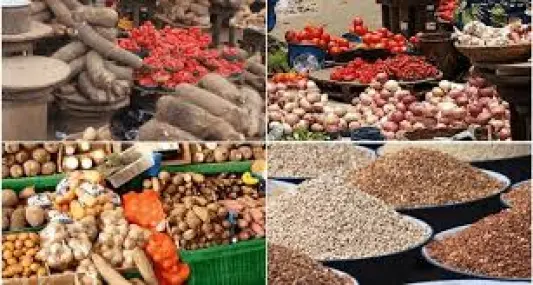
At independence in 1960, Nigeria was a food-secure nation, a net exporter of food, and had a strong agricultural sector, contributing significantly to its GDP.
The nation was agriculturally self-sufficient, with regional commodity-based policies ensuring adequate food production for its population.
Agriculture was the mainstay of the Nigerian economy, playing a foremost role in food security, rural employment, and foreign exchange earnings.
Nigeria was not only self-sufficient but also a major global agricultural producer and exporter, especially of cash crops like cocoa, groundnuts, and palm oil.
In fact, agriculture contributed a significant 67 per cent growth to its GDP between 1960 and 1961.
Nigeria’s agricultural growth began an abysmal decline in the early 1970s due to the oil boom, which led to the rise of crude oil revenue.
There was then a drastic shift of labour and resources away from farming to the urban oil sector. This shift caused a dramatic drop in the contribution of agriculture to exports and GDP.
This decline continued for many years under subsequent administrations in Nigeria.
On assumption of office as the President of Nigeria, one of President Bola Tinubu’s core agenda was food security. This informed his declaration of a state of emergency on food security in July 2023.
The Pronouncement transformed Nigeria’s approach to achieving food security, from mere policy discussions and boardroom strategies to practical, on-the-ground initiatives aimed at overhauling agricultural production, stabilising markets and improving food access for Nigerians.
The food security challenge in Nigeria before President Bola Tinubu’s administration was deeply challenging, characterised by severe food insecurity in 2022, with roughly 66 million Nigerians struggling to access adequate food and nearly 19 million suffering from acute hunger.
Persistent food inflation, insecurity in farming regions due to terrorism and clashes, and climate change-induced floods severely undermined food production and distribution.
Nigeria’s heavy reliance on imports like wheat, fish, and dairy surged from low agricultural mechanisation and ineffective past schemes.
In a major step to cushion the impact of the fuel subsidy removal in May 2023, which led to soaring food and transport costs, the Nigerian government ordered the release of 42,000 metric tonnes of assorted grains and 60,000 metric tonnes of rice from the National Strategic Grain Reserves.
The measure helped steady supplies and prevented the possibility of acute shortages across the country.
To combat insecurity on farmlands, the Nigerian government stepped up multiple initiatives with the Nigerian military conducting intensified aerial and ground patrols across farming regions, especially in conflict-prone States such as Borno, Kebbi, Benue and Plateau, to protect farmers from attacks by terrorists, bandits, and armed herdsmen.
In one of the most ambitious efforts in Nigeria’s history to address long-standing inadequate farming machinery, the Tinubu-led government partnered with Belarus to acquire 10,000 tractors over five years under the Belarus Agricultural Mechanisation Programme.
So far, 2,000 tractors have been delivered and deployed, with plans underway to establish local assembly plants and service centres to accelerate delivery, enhance maintenance, and ensure sustainability.
Complementing this is the Greener Hope National Agricultural Mechanisation Programme, a collaborative initiative involving South Korea, Taiwan, and Brazil, designed to create a modern agricultural mechanisation framework in Nigeria, including training, technology transfer, and the establishment of equipment hubs.
This is to accelerate the modernisation of the country’s farming practices and reduce dependence on outdated manual methods, as well as foster sustainable growth. Furthermore, the Nigerian government launched the National Agriculture Growth Scheme Agro-Pocket, an innovative digital platform designed to eliminate middlemen and curb corruption by directly connecting farmers with suppliers.
Through this programme, peasant farmers who are the backbone of Nigeria’s food production would enjoy the timely delivery of improved seeds, fertilisers, and other essential inputs, stimulating increased agricultural output nationwide.
To effectively tackle the challenges of seasonal farming and climate variability and promote food security, the Nigerian government, through the Public-Private Partnership model, initiated a key project, entitled “Irrigate Nigeria”, which is to boost irrigation farming through modern pumping machines and sustainable irrigation systems.
Additionally, the Ministry of Water Resources is implementing strategic irrigation schemes across key agricultural States, modernising dam and irrigation infrastructure, and training thousands in pump installation and water management technologies.
In a bold and necessary reform given the country’s recurring herder-farmer conflicts and the chronic underdevelopment of its livestock sub-sector, the Nigerian government in 2024, created the Ministry of Livestock Development, this bureau has attracted significant investments through the unveiling of the National Livestock Master Plan, a comprehensive 15-year strategy aimed at transforming the livestock sector into a key driver of food security, rural prosperity, and national economic growth.
Looking forward, Nigeria must accelerate agricultural transformation by rapidly scaling mechanisation through local assembly and maintenance of machinery, developing rural infrastructure like roads and storage facilities to curb post-harvest losses, and securing farmlands against banditry and farmer-herder conflicts.
Similarly, the nation must strengthen value chains for its farm outputs and export to create jobs and increase revenue and entrench climate-smart agriculture with investments in irrigation, drought-resistant seeds, and early warning systems to safeguard farmers from climate shocks.
Listen on Spotify