The Nigerian Senate, through its Committee on Finance, has given the managers of the nation’s economy two weeks to submit a detailed performance report on the implementation of the 2024 budget and projections for the capital component of the 2025 budget.
Chairman of the Committee, Senator Mohammed Sani Musa (Niger East), issued the directive after a closed-door session with the Minister of Finance and Coordinating Minister of the Economy, Mr Wale Edun; the Accountant General of the Federation, Mr Samsudeen Ogunjimi; and the Director-General of the Budget Office, Mr Tanimu Yakubu.
Senator Musa explained that “the presentation of the Medium Term Expenditure Framework (MTEF) and Fiscal Strategy Paper (FSP) for the 2026–2029 fiscal years would only proceed after the requested reports are submitted by 23 October.”
Read Also: Constitution Review, 2026 Budget Top Agenda As Lawmakers Resume Plenary
“We have reviewed the current position of the 2024 budget and discussed expectations for the 2025 budget. The Minister has briefed us, and we have collectively agreed that while progress is being made, there is still more to be done,” he said.
“We heard from the Accountant General and the Director of Budget about the payments released so far, warrants signed, and the 2025 authority to incur expenditure for agencies to implement their capital projects. We also noted that President Bola Tinubu has recently written to the National Assembly seeking approval for additional loans to support the 2025 budget.
“We have agreed that before deliberating on the MTEF for 2026, we must receive documented evidence of the 2024 budget performance and our expectations for 2025. The Honourable Minister of Finance has pledged to provide this progress report, and we will reconvene on 23 October,” Musa explained.
Before the meeting went into a closed session, differing views emerged between the Minister of Finance and the Director-General of the Budget Office regarding the performance of the 2024 and 2025 budgets.
While Mr Edun stated that the capital component of the 2024 budget was recording strong performance, with positive prospects for 2025, the DG of the Budget Office painted a more challenging picture.
According to Yakubu, the implementation of the 2024 and 2025 budgets has faced turbulence as several underlying assumptions did not hold.
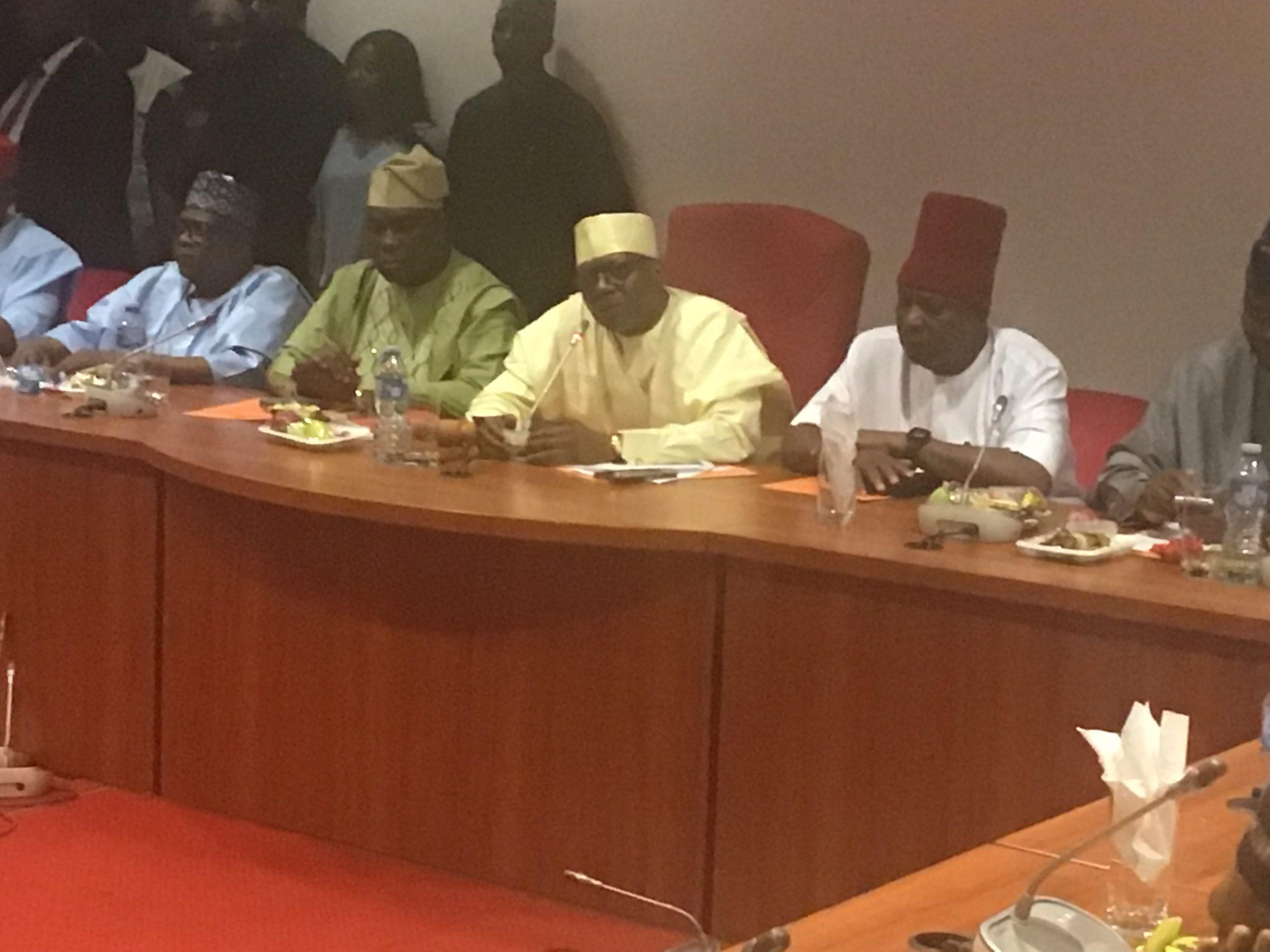
The Lawmaker said; “We have indeed had a turbulent year — one in which most of the assumptions underpinning the 2024 and 2025 budgets turned out differently from projections.
“Oil revenue, assumed at $75 per barrel, fell short by between $10 and $15 due to global price fluctuations. Inflation rose beyond projections, affecting borrowing costs and debt service, which have significantly exceeded targets.”
“Furthermore, the unforeseen fiscal implications of the Petroleum Industry Act (PIA) 2022 have compounded our challenges.
“Under the Act, 30 per cent of gross oil revenue and 30 percent of oil and gas profits are retained for upstream operations, while the Federal Government bears the NNPC’s operating costs. This has reduced the Federation Account allocation by nearly 70 per cent of what used to accrue.
“In addition, crude oil output has been lower than projected in the MTEF approved by the National Assembly,” Yakubu said.