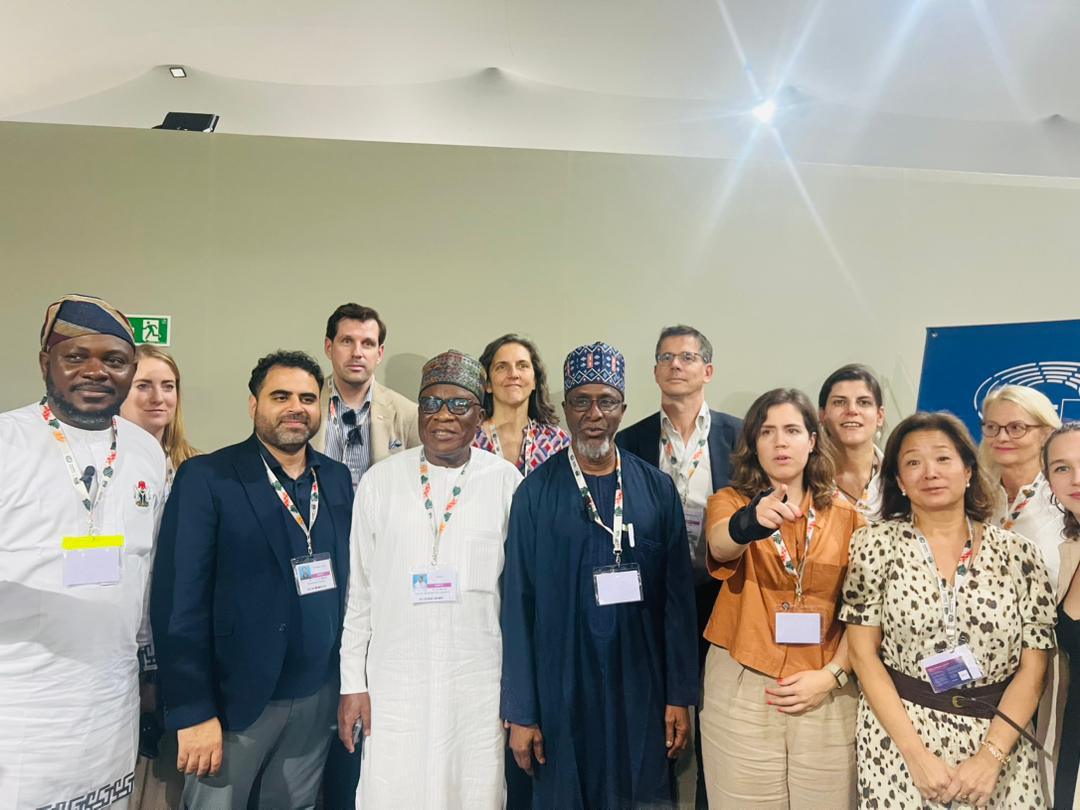
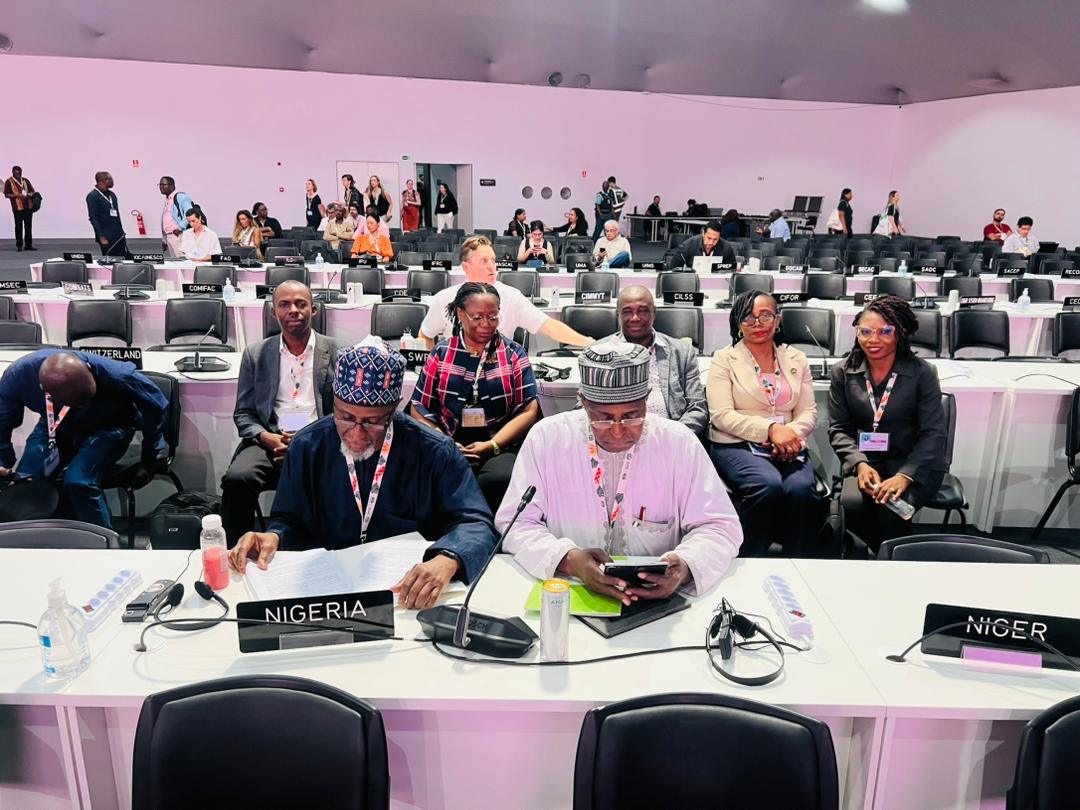
Nigeria’s President, Bola Ahmed Tinubu, has urged world leaders to urgently honour their $100-billion annual climate-finance pledge, as the country outlined major strides in its transition toward a resilient, low-carbon future at the United Nations Climate Change Conference (COP30) in Belém, Brazil.
Delivering the President’s national statement, the Minister of Environment, Balarabe Lawal, said that developing nations cannot advance climate adaptation, mitigation, and clean technology without timely and predictable climate financing from developed countries.
“Addressing climate change is a shared responsibility,”he stated. He described the COP30 as a critical moment for humanity to strengthen global solidarity and translate commitments into concrete action.
“Nigeria stands ready to collaborate, innovate, and support a just and sustainable transition for the benefit of present and future generations” he said.
Nigeria Presents First Enhanced NDC 3.0 in West Africa
President Tinubu also noted that Nigeria remains one of the countries most vulnerable to climate change, with the impacts visible from expanding desertification in the North to severe coastal erosion in the South.
To confront these threats, he said, “Nigeria has shifted from pledges to implementation, submitting its enhanced Third Nationally Determined Contribution (NDC 3.0) — the first in West Africa.”
The NDC aligns climate targets with national development priorities, focusing on energy access, adaptation, resilience, and emissions reduction.
As part of efforts to finance its transition, the President announced the issuance of Nigeria’s third Sovereign Green Bond to support green and climate-aligned projects nationwide.
Major Climate and Environmental Programmes
President Tinubu highlighted ongoing federal initiatives that are restoring ecosystems, strengthening livelihoods, and protecting communities, including:
- ACReSAL (Agro-Climatic Resilience in Semi-Arid Landscapes)
- The Great Green Wall Programme
- NEWMAP (Nigeria Erosion and Watershed Management Project)
He also spotlighted the Green Economic Empowerment (GEE 774) programme, which promotes e-mobility, including the assembly and distribution of electric tricycles through a lease-to-own scheme that is creating jobs and supporting women and young entrepreneurs.
Strengthening Disaster Preparedness
On disaster management, President Tinubu said Nigeria is boosting protection for vulnerable communities through the National Flood Management and Resilience Programme (NFM-RP), which includes investments in shore protection, hydraulic structures, river training, and catchment restoration.
Nigeria is also reinforcing climate resilience in the Sahel in collaboration with the Niger Basin Authority and the Lake Chad Basin Commission, prioritizing groundwater management, early warning systems, and nature-based solutions to prevent flooding, drought, and resource conflicts.
Boosting Carbon Markets and Sustainable Land Use
The President announced that Nigeria has fully operationalized its National Carbon Market Framework, positioning the country as an emerging hub for credible carbon credit transactions.
He also highlighted several initiatives advancing sustainable land and resource use, including:
- Nigeria Farmers Soil Health Scheme
- Smart Mining Technologies
- Nigeria Livestock Growth Acceleration Strategy (NL-GAS), targeting methane reduction in the livestock sector.
Promoting Inclusive Climate Governance
President Tinubu also reaffirmed Nigeria’s commitment to sustainable cooling solutions through the Nigeria Cooling Action Plan (N-CAP), which aligns with the Montreal Protocol and the Kigali Amendment to phase down hydrofluorocarbons.
The President concluded by underscoring the need for urgent global collaboration, “Climate change threatens our shared future” he said “This is the time for action, for fulfilment of promises, and for building resilience that leaves no nation behind” he added.