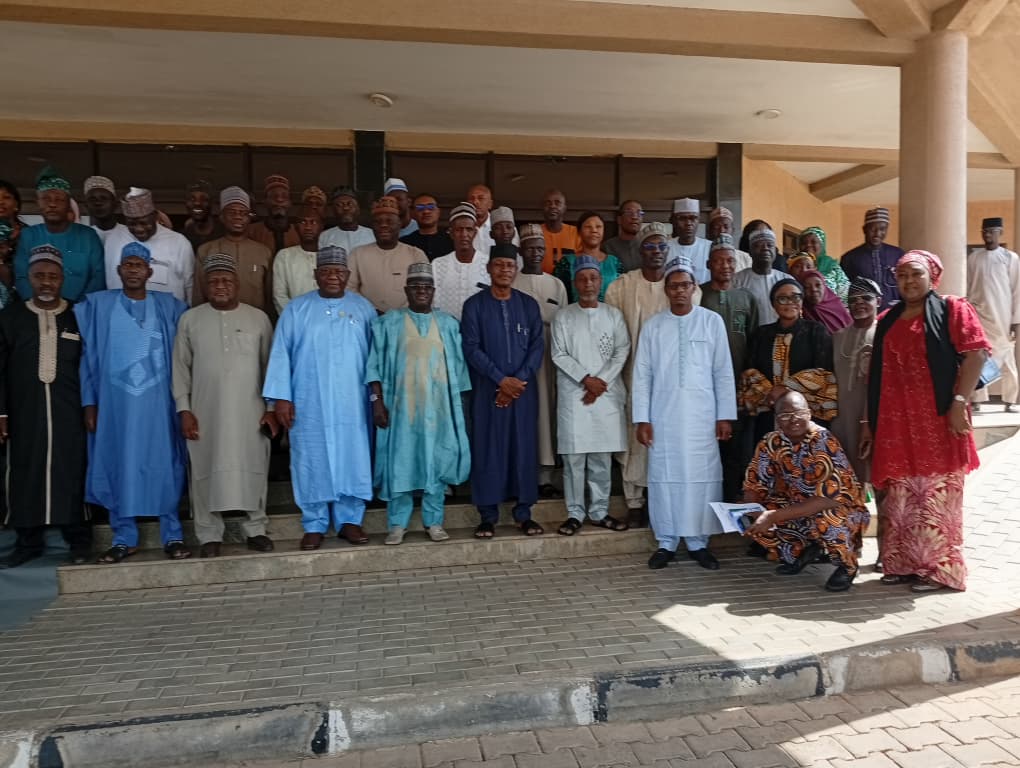
The Bureau of Public Service Reforms (BPSR) has commenced a training programme in Gombe to equip civil servants with the skills required to operate effectively within Nigeria’s increasingly digital public service environment.
The workshop focuses on artificial intelligence, digital governance, and the recently introduced Performance Management System (PMS).
The Director-General of the BPSR, Dr Dasuki Ibrahim Arabi, said the initiative responds to the fast pace at which government operations are shifting from analogue methods to digital and AI-driven processes, in line with national e-government and AI policies.
He explained that many participants were drawn from frontline service-delivery institutions, particularly agencies where citizens engage directly with government services such as hospitals. Dr Arabi emphasised that civil servants must now become proficient in using AI tools and adapt to the PMS, which replaces the long-standing APER system.
The Director-General commended Gombe State for being the first in the country to establish its own reform bureau and encouraged other states to follow suit, adding that digitalisation remains the most effective route to improved service delivery.
He highlighted several reform achievements at the federal level, including the Integrated Personnel and Payroll Information System (IPPIS), which has drastically reduced ghost workers; the Treasury Single Account (TSA), which has strengthened financial control; and the Government Integrated Financial Management Information System (GIFMIS), which has modernised payment processes. According to him, these reforms have curbed abuses, enhanced transparency and ensured that financial transactions can now be easily tracked by oversight bodies.
Dr Arabi added that performance management has been fully institutionalised across the federal civil service, and from January 2026, civil servants will be assessed based on Key Performance Indicators (KPIs) and Standard Operating Procedures (SOPs), with salary progression tied to measurable output. He noted that succession planning and mentorship have also become mandatory across Ministries, Departments and Agencies (MDAs).
Declaring the workshop open, the Gombe State Head of Service, Ahmed Kasimu Abdullahi, reaffirmed the state government’s commitment to building a more efficient and accountable civil service. He cited ongoing reforms, including biometric attendance, continuous verification of workers, and improved welfare packages such as CONMESS and CONHESS.
He urged civil servants to remain committed as the state government continues to invest in modernising public service delivery.