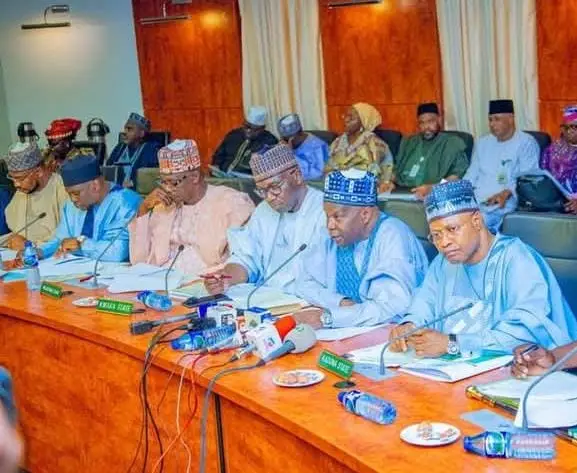
The Northern Governors Forum (NGF) underscores the urgent need to prioritize investment in the first 2,000 days of life, highlighting it as critical for the health, development, and future productivity of children
The “First 2,000 Days” refers to the period from conception to approximately age five, which is critically important for a child’s long-term development
During this phase, a child’s brain and body undergo rapid development, making adequate nutrition, healthcare, stimulation, and foundational learning interventions crucial for lifelong health, learning, and productivity.
The report said that “the NGF members were in Kaduna on Monday and Tuesday for a joint emergency meeting.”
The Team Lead for Stunting and Early Years at the World Bank, Dr Ritgak Tilley-Gyado, outlined the demographic, economic, and service-delivery imperatives for strengthening the first 2,000 days of infants lives.
Tilley-Gyado said “they were at the forum as part of the ongoing national consultations on strengthening Nigeria’s human capital, which focused on the country’s early years priorities, with emphasis on nutrition, early learning and child development in the first 2,000 days of life.”
She explained that World Bank support is channeled through the Human Capital Development Core Working Group (HCD-CWG), which is a committee of the National Economic Council coordinated by the Office of the Vice President.
The CWG supports and Analytical Advisory Group, forms part of a broader sequence of engagements with federal ministries, development partners and state governments aimed at aligning evidence, policy options and delivery pathways for a future early years programme.
In her presentation to the forum, Tilley-Gyado highlighted the importance of preventing stunting, supporting early stimulation and foundational learning, and strengthening family systems to empower women and ensure responsive caregiving and positive parenting.
She described building strong early years outcomes as a people, economic and a social stability strategy, particularly for regions experiencing demographic pressures.
Also, World Bank Country Director for Nigeria, Dr Mathew Verghis, said that “states hold the largest delivery responsibility and are therefore central to shaping a nationally coherent, yet locally grounded approach that can deliver results at scale.”
Verghis emphasised that the conversations, reflect an emerging recognition that Early Years outcomes depend on multisectoral action, requiring strong collaboration and convergence across health and nutrition, education, WASH, women’s empowerment, food and diets, agriculture and social protection.
He, therefore, said the consultations were part of a deliberate, evidence-first process to build a nationally coherent and state-responsive Early Years platform grounded in local realities and multisectoral priorities.
“Nigeria’s Early Years agenda is expected to form a core component of broader human capital efforts being advanced under the National Economic Council’s Human Capital Development framework,”he said.
Responding, Governor Umar Namadi of Jigawa opened the interventions by highlighting the strong links between poverty and poor early childhood development outcomes.
He commended the World Bank’s results based instruments and offered constructive suggestions for strengthening them.
Other Governors welcomed the analysis and affirmed their readiness to engage further.
Their consensus was that investing in the 2,000 early days of children is the most important investment they can make if they want peace, productivity, and a stronger northern economy.
NAN