
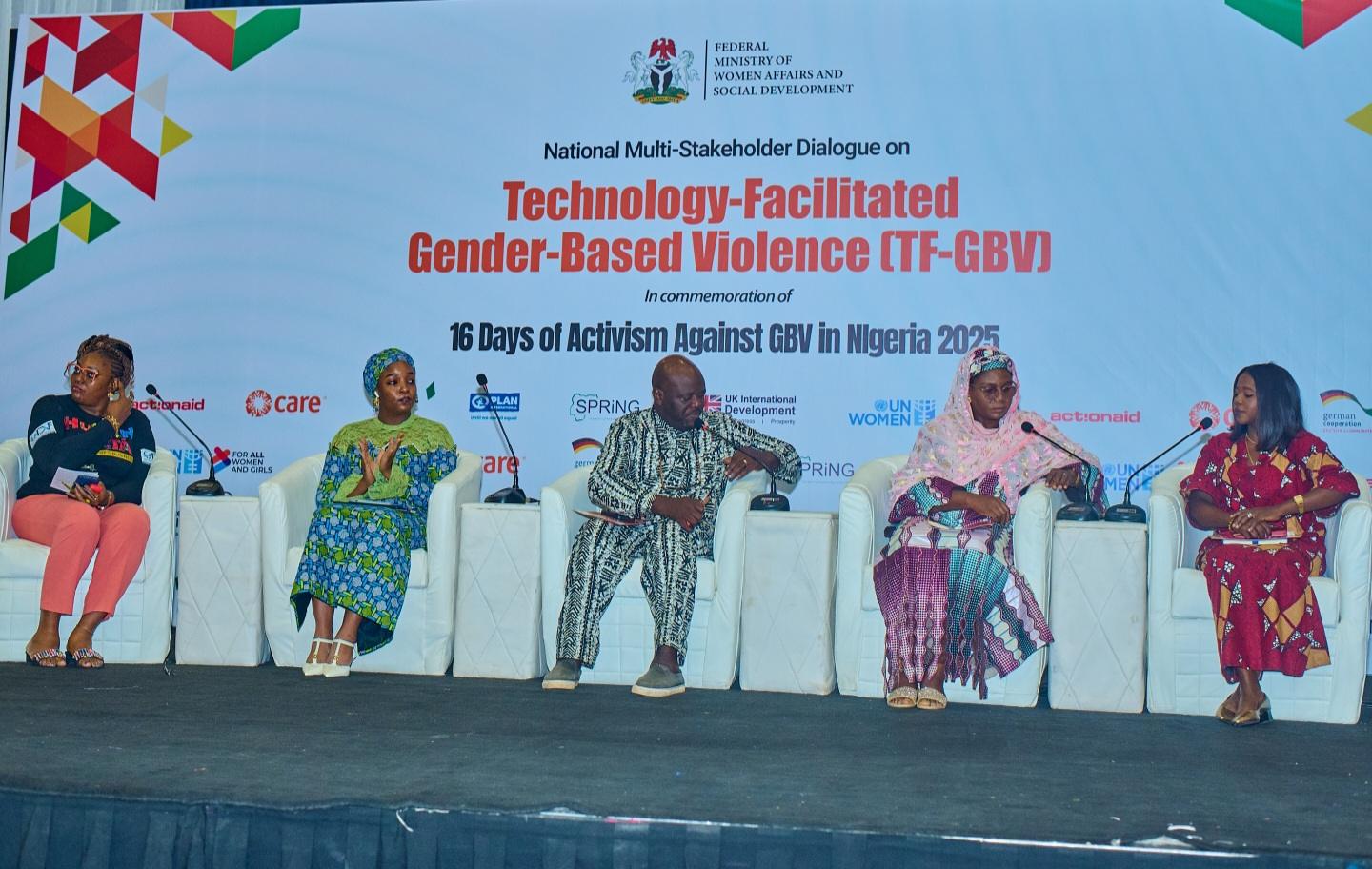
The Head of Development Cooperation at the British High Commission in Nigeria, Cynthia Rowe, has reaffirmed the United Kingdom’s support in the fight against Technology-Facilitated Gender-Based Violence (TF-GBV), calling for urgent national action to protect women and girls in digital spaces.
Speaking at a one-day National Multistakeholder Dialogue on Technology-Facilitated Gender-Based Violence (TF-GBV) in Abuja, Rowe warned that online abuse has become one of the fastest-growing threats to gender equality.
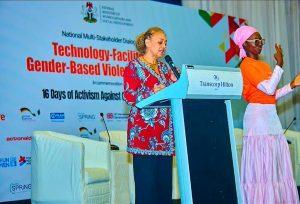
She stated that “technology-facilitated gender-based violence is one of the fastest-growing threats to equality and participation in our societies. Addressing it requires not only strong laws but also collective action.”
Citing data from the Humanity Index 2025
She said, “Three in five Nigerians, 59%, have either experienced GBV or know someone who has… and 51% of Nigerians report that they have experienced abuse or violence online.”
While expressing concern about the scale of gender-based violence in the country, she advocated for increased resource allocation and gender-responsive budgeting to address this reality.
“Nigeria has spent an average of just 365 Naira per woman on GBV prevention and response last year… In some states, allocations were as low as 34 naira per woman,” she said.
Also calling for updates to existing laws, Rowe urged amendments to criminalise non-consensual image sharing, deepfake sexual content and online sexual extortion.
She emphasised the need for a national online gender safety policy, stronger content moderation standards and swift removal of harmful material by platforms, noting that “laws alone are not enough. We need survivor-centred justice.”
“Nigeria already has strong foundations. It has the Cybercrimes Act, the Violence Against Persons Prohibition Act, and the Data Protection Act. But these frameworks do need updating to meet evolving digital threats.”
Rowe stressed that civil society remained vital to progress, saying, “We need civil society to advocate for reform, to monitor implementation and to support survivors.”
“Creating safer digital spaces must become a national priority. Together, let us turn digital spaces into platforms of empowerment rather than harm.” Rowe urged.
In an interview, Deputy Team Leader, Tetra Tech SPRiNG Priscilla Ankut, highlighted the value of collective effort in response to TF-GBV, noting that SPRiNG’s collaboration with government and partners “amplifies and reinforces each other’s approaches”.
“…this year’s theme, Unite to End Digital Violence. Now, development partners, government partners, civil society, we have all come together, we have united, and we have amplified our call for ending digital-based violence,” she said
Submissions from a panel moderated by Tetra Tech SPRiNG’s Gender Equality, Disability, and Social Inclusion Lead, Amina Olubukola Akano-Bello, underscored the need for stronger, survivor-centred mechanisms, mapping of GBV service providers, and strengthened multisectoral responses.
Akano-Bello warned that TF-GBV is “weakening protection of women and girls” and could discourage participation in leadership, governance and politics.
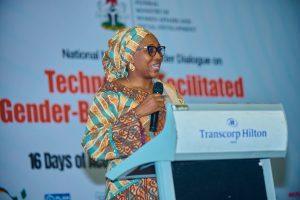
She said that the menace “can actually undermine the transformative potential of women’s peace and security agenda.”
A participant, Dr Maji Peters, Country Coordinator, Carefronting, stressed the urgency of awareness, noting that many young people seeking online validation become vulnerable.
He cautioned that “the internet never forgets,” and urged Nigerians to “be careful and promote shared humanity.”
Stakeholders at the convergence organised by the Federal Ministry of Women Affairs and Social Development, in collaboration with Development Partners, repeatedly called for urgent reforms to protect women and girls in digital spaces.
The dialogue ended with a unified call for immediate action to curb TF-GBV nationwide.
Lateefah Ibrahim

