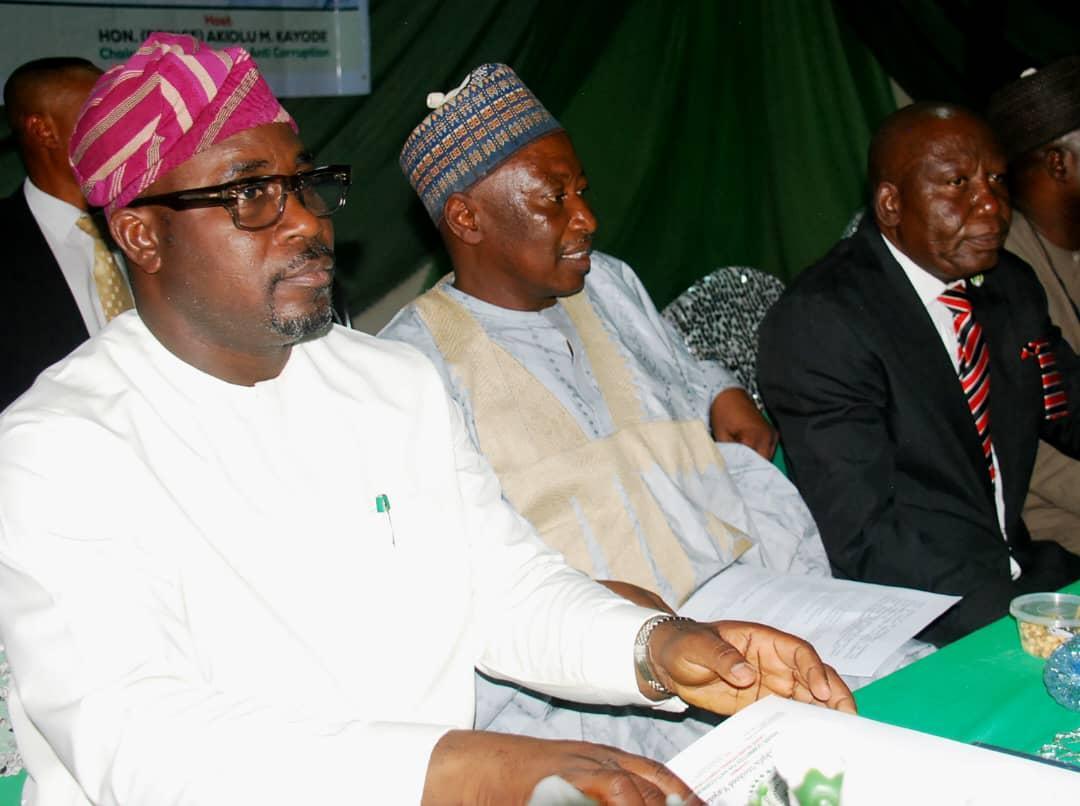
The Chairman of the House of Representatives Committee on Anti-Corruption, Mr Mashood Akinolu, has reaffirmed the House’s commitment to creating policies and frameworks that will empower youths across Nigeria.
Mr. Akinolu made this statement during the commemoration of the 2025 International Anti-Corruption Day in Abuja.
He noted that the House is working to enhance transparency, strengthen legal frameworks, and support civic education that equips young people with the knowledge and tools to resist and report corruption.
The House is working to enhance transparency, strengthen legal frameworks, and support civic education that equips young people with the knowledge and tools to resist and report corruption,” he said.
He emphasised that corruption undermines democracy, steals from the vulnerable, slows development, and erodes public trust in institutions.

In his remarks, the Chairman of the Independent Corrupt Practices and Other Related Offences Commission (ICPC), Musa Aliyu, stated that corruption remains one of the greatest threats to development and social justice. He added that it erodes public trust, diverts resources from essential services, and undermines opportunities for young people.
“Corruption remains one of the greatest threats to development and social justice; it erodes public trust, diverts resources from essential services, and undermines opportunities for young people,” he said.
The Chairman of the Code of Conduct Tribunal (CCT), Dr Mainasara Umar Kogo, advised youths to develop their skills, noting that formal education alone is no longer sufficient in the fast-evolving, technology-driven job market.
Also Read: Nigeria Reaffirms Commitment To Youth Empowerment
He stressed that the nation is endowed with mineral resources, emphasising that one fundamental missing link is injustice.
“If we can bridge that missing link, our future leaders will know that they are not the future leaders of Nigeria alone but future leaders of the world,” he said.
Stakeholders at the event urged Nigeria’s youth to be part of the conversation demanding a corruption-free country and encouraged them to use their creativity and digital skills to promote transparency, accountability, and good governance.