The International Finance Corporation (IFC) of the World Bank Group has renewed its call for urgent, collective action to end gender-based violence (GBV) in Nigeria, describing safety as a prerequisite for economic growth and national development.
Speaking at the National Dialogue themed “United for Safety: A National Dialogue on Ending Gender-Based Violence in Nigeria,” recently organised by the Federal Ministry of Women Affairs and Social Development in collaboration with the World Bank, the IFC Regional Director for Central Africa and Nigeria, Dahlia Khalifa, said the moment “could not be more timely or more urgent.”
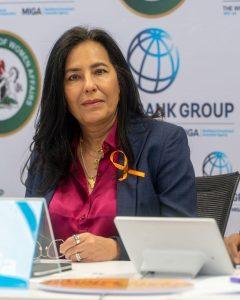
Khalifa stated that “safety is a shared responsibility, and it’s a prerequisite for development.” She noted that violence “physical, emotional, digital or financial” continues to limit the choices and potential of women and girls.
“Globally, one in three women experience physical or sexual violence. That’s not just a statistic, it’s a reality that shapes access to education, jobs and participation in public life,” she said.
Highlighting the economic implications as severe, she explained that “the economy cost billions of dollars every year up to 3 per cent of GDP in some countries.” She added that in Nigeria, GBV “suppresses half of the country’s potential,” distorting labour markets, increasing health costs and reducing productivity.
Also Read: Nigerian Women to Rise Against Gender-Based Violence
Khalifa cited IFC’s Respectful Workplace study, which estimates that violence and harassment cost Nigerian businesses billions of naira annually, leading to absenteeism, high turnover and lost productivity.
“These are not just numbers; they represent lost dreams, lost productivity and lost opportunities for all of us,” she said.
Beyond statistics, Khalifa highlighted ongoing interventions, noting that IFC is working with partners through its “Empower Finance Initiative” to help financial institutions redesign products to prevent financial abuse. She added that through the “Respectful Workplaces Programme”, IFC has partnered with over 100 businesses to tackle harassment, bullying and domestic violence. “Because safety at work is non-negotiable,” she emphasised.
Khalifa aligned the dialogue with the World Bank Group Gender Strategy, noting that over the past decade, operations to prevent and address GBV have increased tenfold, with 90 projects across more than 60 countries currently supporting survivors and strengthening protection systems.
She concluded by urging sustained commitment, calling for action across government, the private sector and civil society to unlock Nigeria’s full economic and development potential beyond the campaign.
“Safety benefits everyone. When women and girls live free from violence, societies are stronger, economies are more productive and opportunities expand for all,” she said.
Scale-Up GBV Interventions
In a formal announcement, Adaorie Udechukwu, IFC Gender and Economic Inclusion Programme Lead for West and Central Africa, outlined IFC’s Scale-Up GBV Interventions (SURGE) project.
According to Udechukwu, SURGE “is designed to strengthen Nigeria’s private sector to prevent and respond to gender-based violence and harassment in workplaces, supply chains and communities, while also addressing financial abuse through financial institutions.”
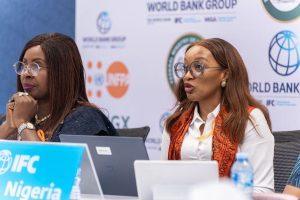
She explained that the two-year initiative “will work with companies, industry associations, regulators and trainers to embed survivor-centred approaches that improve wellbeing, trust, retention and productivity.”
Udechukwu noted that SURGE will work with 50 or more companies, industry associations, regulators and trainers, leveraging programmes such as Respect@Work, Empower Finance and the development of a National GBV Toolkit to guide employers in prevention and response.
“The project aims to translate policy commitments into practical actions that businesses can implement,” she said.