
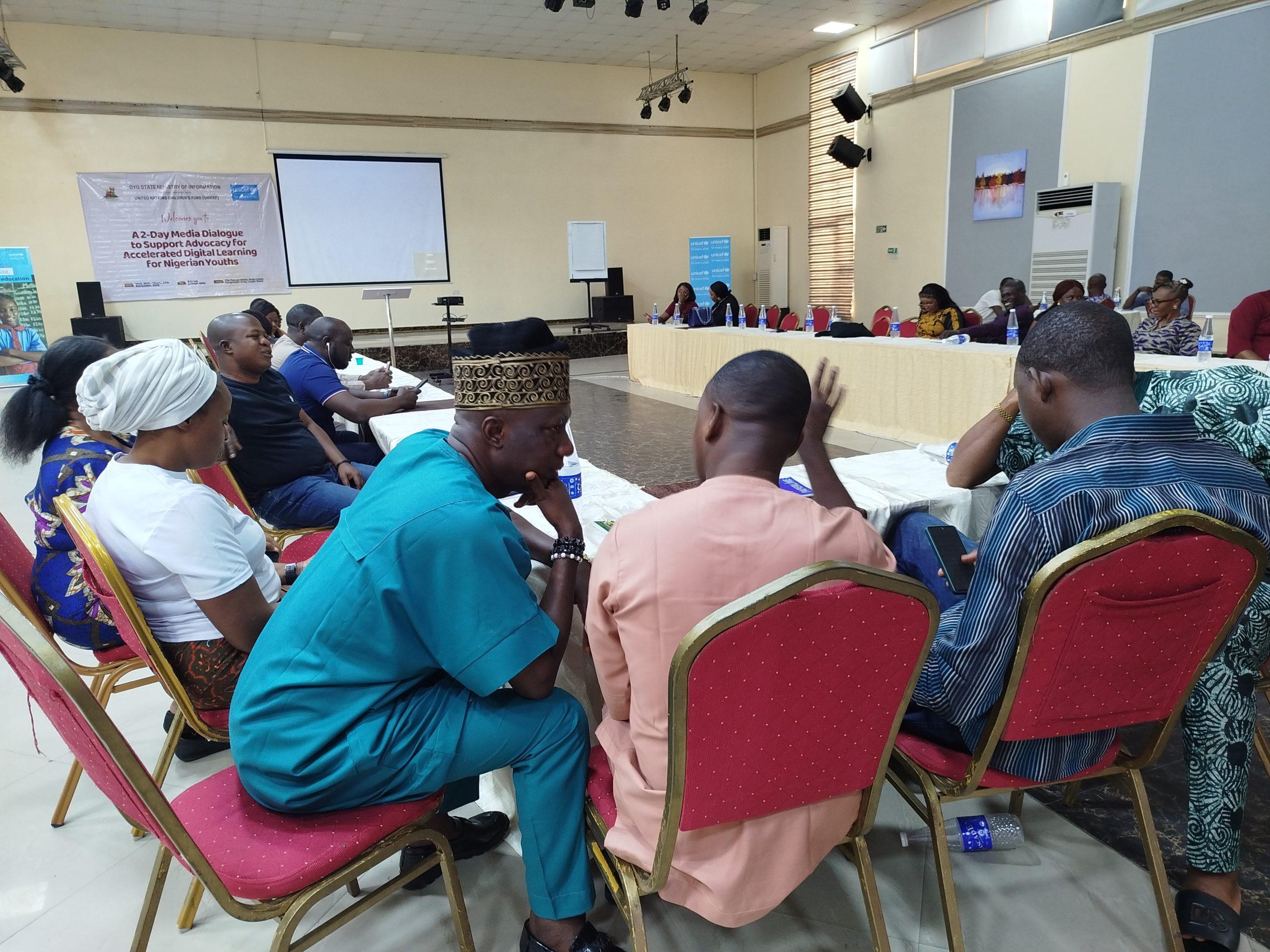
The United Nations Children’s Fund (UNICEF) has called for an inclusive and accelerated digital learning access for Nigerian youths.
Chief of UNICEF Lagos Field Office, Celine Lafoucriere made the call at a two day Media Dialogue in support of advocacy for Accelerated Digital Learning among Nigerian Youths.
Emphasizing the importance of digital learning Lafoucriere said; “digital skill determines who gets ahead and who gets left behind in today’s world.”
She noted that 80 percent of Nigerian youngsters lack digital skills to compete globally, even as over 18 million of them remain out of school and not digitally enabled.
The UNICEF Chief, who said the situation must be confronted, argued that digital skills are now critical, stressing that without them, millions of youths would miss out on available opportunities.
According to her, “the greatest challenge in Nigeria is having an army of youths who are not digitally competent to confront problems in their communities despite their number and intellect.”
”Here is the major concern, by 2030, Nigeria is projected to have about 126 million children and adolescents as a whole. This would be the largest youth population anywhere in the whole of Africa. And it can both be a strength as well as a weakness.
“The difference however is whether we give those children the skills to be able to thrive and find jobs for tomorrow and that will adequately prepare them for the world that they will be faced with,” she said.
While highlighting efforts of UNICEF in helping Nigeria bridge its digital gap, Lafoucriere explained that “the landscape is now changing, especially with greater commitment being shown by the federal government.”
She said, “The good news is that progress is happening. Over 2 million children and youth across 21 States, which means around 300,000 in the Southwest, are already using the Nigerian Learning Passport (NLP). And more than 62,000 girls and young women have completed digital courses.”
She said that the Nigerian government’s national policy on skills development is helping to reshape the digital-gap conversation in Nigeria more positively.
In his presentation, UNICEF’s Education Specialist, Babagana Aminu, also stated that digital competence is critical to maximizing opportunities in today’s world.
According to him, digital competence means being proficient in using digital tools to achieve goals, solve problems and participate in the emerging digital society.
Aminu said, “There are several job opportunities as well as funds for startups that digital competence can enable our youths access. The youths only need to have the requisite skill set to tap into and participate in the digital revolution.
“Artificial Intelligence can be the game changer for them, especially in the areas of FinTech and banking, Agriculture and AgriTech, E-commerce and retail as well as Healthcare.”
The expert called on government and other stakeholders to help Nigerian youths attain their digital potential by providing digital learning infrastructure nationwide.
The Permanent Secretary, Ministry of Information, Oyo State, Rotimi Babalola underscored the importance of education, particularly digital learning and youth engagement in the country.
He said, “Education is the key to unlocking opportunities. It is exemplified by SDG goal two. And this shows how critical education is to the development of our children and our society.
“We’re especially passionate about providing digital learning opportunities for our children and youths, hence this media dialogue to increase advocacy for funding and partnership.”
In the same vein, Martins Opeyemi, Director Policy, Planning, Research and Statistics, Ministry of Basic and Secondary Education, Lagos State, highlighted the success stories of UNICEF’s partnership with states.
“We have a lot of good stories to tell about our collaboration with UNICEF. The ultimate beneficiaries of this partnership are our students and teachers.
“The digital learning process has improved the lot of our children, making them competitive globally. This is noticeable in national and international competitions, where they have excelled,” he stated.
UNICEF Communication Officer, Blessing Ejiofor in her remarks, urged media professionals to engage with opportunities in the digital world so as to have realistic views to express in their reportage.
The media dialogue organised by Oyo State Ministry of Information was held in Lagos in partnership with UNICEF. It brought together education specialists, policy makers, journalists from Southwest Nigeria and Edo State as well as other stakeholders in the country.
Olusola Akintonde

