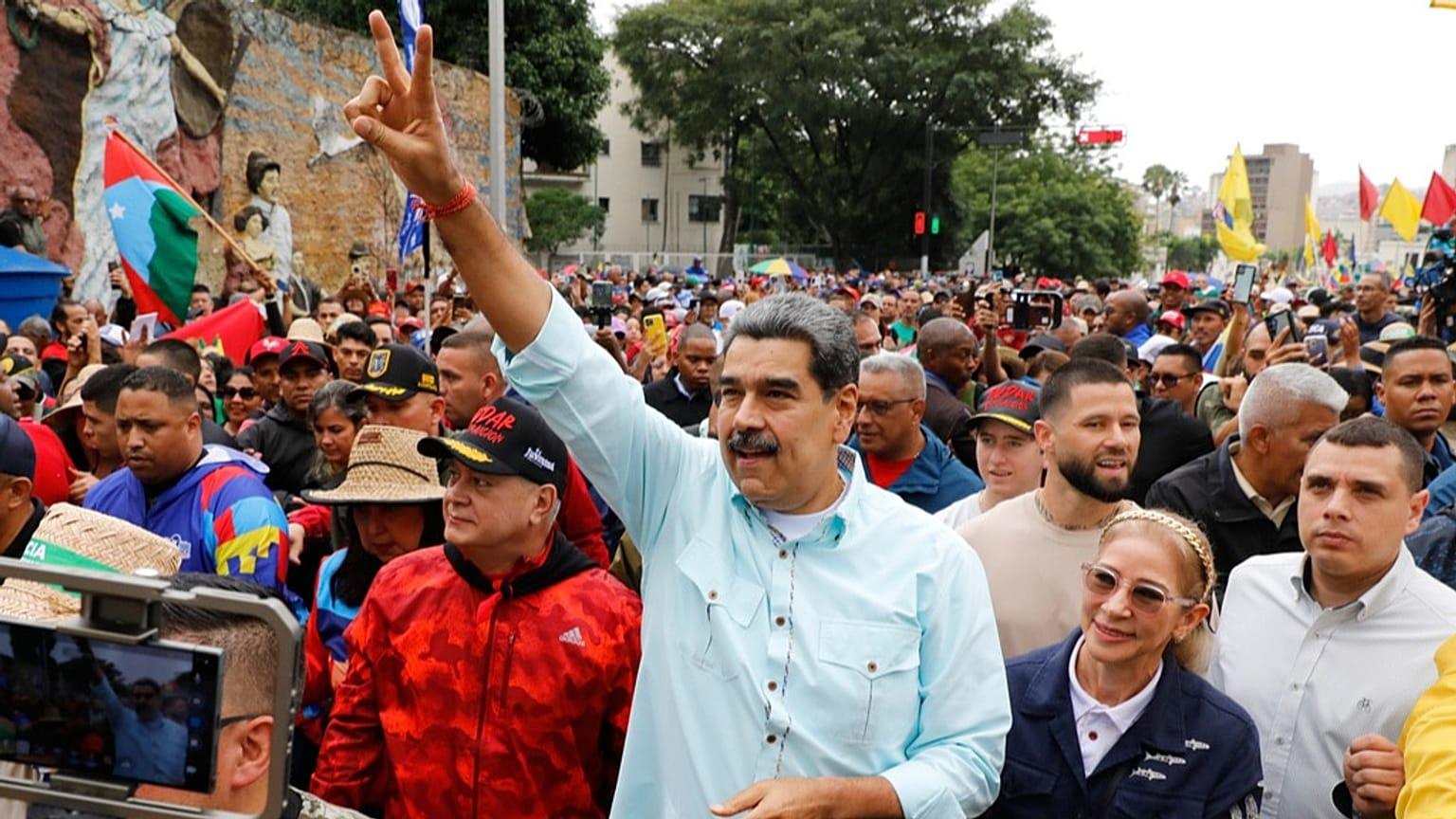
Venezuela President, Nicolás Maduro has reiterated his commitment to combat drug trafficking as he expressed readiness to negotiate an agreement with the United States
Maduro made the remarks in a pre-recorded interview with Spanish journalist Ignacio Ramonet, aired Thursday on state television. He said Venezuela is open to “serious” talks with Washington on combating drug trafficking but declined to comment on a recent CIA-led strike at a Venezuelan docking area that the U.S. believes was used by drug cartels.
Reiterating long-standing accusations against Washington, Maduro said the United States is pursuing regime change in Venezuela as part of a pressure campaign aimed at gaining access to the country’s vast oil reserves. He linked this strategy to a months-long U.S. military deployment to the Caribbean Sea that began in August.
“What are they seeking? It is clear they want to impose themselves through threats, intimidation and force,” Maduro said, adding that it was time for both countries to “start talking seriously, with data in hand.”
According to him, Venezuelan authorities have repeatedly conveyed to U.S. officials their willingness to cooperate. “If they want to seriously discuss an agreement to combat drug trafficking, we’re ready,” he said. Maduro also noted that Venezuela remains open to U.S. oil investment, citing Chevron as an example of ongoing cooperation.
Chevron Corp. is currently the only major U.S. oil company exporting Venezuelan crude to the United States. Venezuela holds the world’s largest proven oil reserves.
The interview was recorded on New Year’s Eve, the same day the U.S. military announced strikes against five boats accused of drug smuggling. The latest operation brings the total number of reported boat strikes to 35, with at least 115 people killed, according to figures released by the Trump administration. Venezuelan nationals are among the casualties.
U.S. President Donald Trump has defended the strikes as a necessary escalation to curb drug flows into the United States, describing the situation as an “armed conflict” with drug cartels. The operations initially began off Venezuela’s Caribbean coast before expanding into the eastern Pacific Ocean.
.
AP/Jide Johnson.