
Nigeria’s Minister of Power, Adebayo Adelabu, has called for stronger collaboration between the Energy Commission of Nigeria (ECN) and the Rural Electrification Agency (REA) to drive local production of electricity components and accelerate reforms in the power sector.
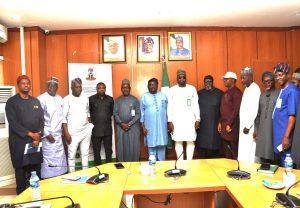
Adelabu made the call during a meeting with the management of the ECN at his office in Abuja, stressing that enhanced synergy between the two agencies is critical to achieving President Bola Ahmed Tinubu’s vision of a self-sustaining and growth-driven power sector.
According to the minister, local manufacturing of key electricity components would significantly reduce Nigeria’s dependence on imports, conserve foreign exchange, and strengthen the domestic economy.
He said such collaboration must be anchored on robust research, accurate data collection, and effective planning.
“The ECN and the REA need to synergise. They need to come together, share research, and build data that will help the sector in the local production of electricity components,” Adelabu said.
“We must do everything possible in this regard. It will gladden Mr. President’s heart to know that in his time, Nigeria is manufacturing meters and other critical power inputs for itself. Our exports are growing higher than our imports, and we must sustain this trend by conserving our foreign exchange,” he added.
Data-Driven Reforms
The minister underscored the importance of data in reforming the power sector, describing the lack of reliable data as a major obstacle to effective planning and decision-making.
He disclosed plans by the Ministry of Power to establish a central data pool that would integrate all key stakeholders in the sector.
“We are going to have a central data pool, and ECN must be part of this process,” he said.
“All stakeholders, including generation companies (GenCos) and distribution companies (DisCos), will be integrated into this data framework so that we can have reliable and comprehensive data for the sector,” Adelabu stated.
“Research is also critical, and your agency must work closely with the ministry’s Research Department to support informed planning,” he added.
Better Coordination, Hydropower Focus
Adelabu also announced that the ECN would participate in the quarterly Power Sector Working Group meetings to strengthen coordination across agencies in the sector.
Highlighting Nigeria’s vast hydropower potential, he noted that hydroelectricity remains one of the most reliable sources of power globally.
He said Nigeria has over 300 small dams across different states that could be harnessed to boost electricity generation.
“We need to develop local capacity in turbine production, as turbines are the most critical components in hydropower generation,” the minister said.
“These small dams are very important to us, and we must maximise their potential,” he added.
“States must also take greater responsibility for generation, transmission, and distribution to reduce the power challenges we face. The ministry is ready to support this initiative because turbines are central to this process,” Adelabu stated.
ECN Pledges Support
In his response, the Director-General of the Energy Commission of Nigeria, Dr. Mustapha Abdullahi, expressed the commission’s readiness to work closely with the Ministry of Power and other stakeholders to realise President Tinubu’s vision of revitalising the power sector and strengthening the economy.
He assured the minister of ECN’s commitment to research, data development, and policy support aimed at enhancing local content and promoting sustainable energy development nationwide.
Lateefah Ibrahim