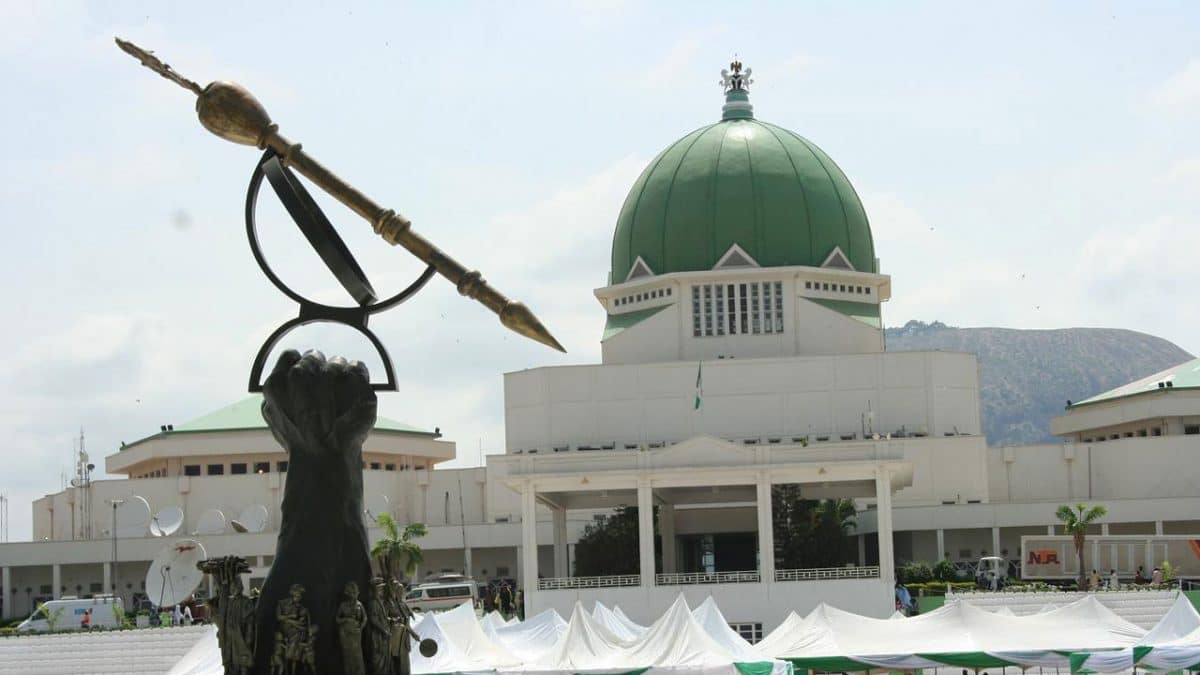
After over a month break to celebrate Christmas and New Year, the Nigerian Legislature is reconvening on January 27 for their first sitting in 2026.
Some key issues will preoccupy the attention of lawmakers in the new year as they return to Abuja for their legislative activities.
Top on the list is the defence of the 2026 budget proposals by heads of Ministries, Departments, and Agencies (MDAs) of the Federal Government before the respective oversight committees of the National Assembly.
The 2026 Appropriation Bill of N58.472 trillion passed second reading on December 23, just a few days after President Bola Tinubu presented the estimates to a joint session of the Senate and the House of Representatives.
It makes a provision of N4.097trn for statutory transfers; N15.909trn for debt service; N15.251trn for recurrent (non-debt) expenditure; while the balance of N23.214trn is earmarked for capital projects.
The 2026 budget is benchmarked at $64.85 per barrel of crude oil, daily oil production of 1.8million barrels, and a dollar/naira exchange rate of USS1/N1,400.
Nigeria is also running its 2025 budget till March 31, 2026, by which time the implementation of the year’s budget is expected to be in full force, as part of the government’s plan to end the current multiple budget challenges confronting it.
The 2024 budget, which dragged into 2025, officially terminated on December 31, according to the plan.
Constitution Review
Another area of top priority is the ongoing review of the 1999 Constitution which will be sped up to review the clause-by-clause consideration of the report on the various bills seeking new insertions to the constitution.
State police top the list along with amendments to align with the new changes proposed for the Electoral Act, 2022.
Another crucial consideration is the bill seeking special seats (Special Seats Bill) for women in the National Assembly and state legislatures to be contested exclusively by women.
The Chairman, Senate Committee on Media and Public Affairs, Senator Adeyemi Adaramodu (APC, Ekiti-South), while confirming the resumption preparations had said the constitution and the Electoral Act would be priorities of Senators upon resumption on January 27.
Senator Adaramodu disclosed that before the National Assembly proceeded on recess in December 2025, the Ad-hoc Committee on Constitution Alteration, chaired by the Deputy President of the Senate, Senator Jubrin Barau, had already sat at a joint session with its counterpart in the House of Representatives to collate and review submissions made by stakeholders to be included in the constitution.
According to him, the report of the joint sitting is with the Senate and ready for consideration.
“What is left now is for us to take it (the report) clause-by-clause. After taking it clause-by-clause, that is the end of it.
“Immediately, we resume now (January 27), we will take everything clause-by-clause. You know the procedure in the National Assembly is that once any report is taken clause-by-clause, that’s the end of the whole process. After that, we will send the report to the State Houses of Assembly for approval,” he said.
The Senator Jibrin Barau-led committee had earlier held zonal public hearings on the constitution in the six geopolitical zones of the country, where Nigerians from diverse backgrounds made inputs into the proposed changes.
Special Seats Bill
The Special Seats Bill proposes adding 37 seats in the Senate (one per state and the FCT), 37 in the House of Representatives (one per state and the FCT), and 108 in State Houses of Assembly (three per state, one per senatorial district).
This totals 182 additional women-only seats nationwide, existing alongside current constituencies without redistributing existing ones.
The bill failed to progress beyond the National Assembly during the last review attempt as the majority of lawmakers kicked against it.
As of October 2025, when the Senate and the House of Representatives planned a joint retreat on constitution review, the Jibrin Barau-led committee confirmed receiving 69 bills, including state creation requests, two boundary adjustments, and 278 local government creation requests, figures that increased in subsequent weeks.
As the 10th Nigeria’s National Assembly resumes plenary for the 2026 legislative session, the focus will be on economic reforms, national security, and key constitutional amendments ahead of the 2027 general election.