As Anambra State intensifies efforts to contain measles and rubella, two vaccine-preventable diseases that remain a global public health concern, the Government has warned that any school obstructing children’s access to routine immunisation will face immediate closure.
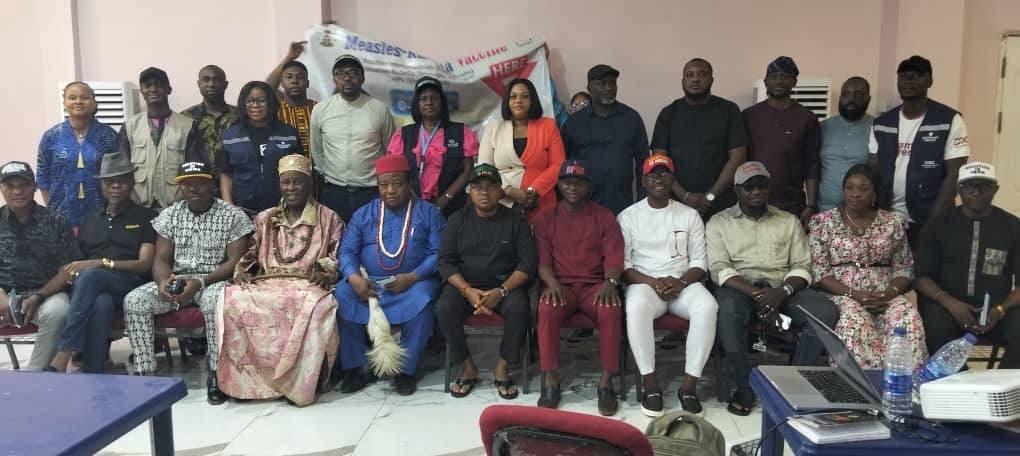
The directive was issued by the Commissioner for Health, Dr Afam Obidike, during a stakeholders’ engagement with chairpersons of the state’s 21 local government areas, ahead of the rollout of the Measles and Rubella vaccination campaign.

Globally, health authorities, including the World Health Organisation (WHO), have repeatedly warned that gaps in routine immunisation coverage, worsened in many countries by disruptions during the COVID-19 pandemic, have led to a resurgence of measles and increased risks of rubella outbreaks.
Children in low- and middle-income countries remain particularly vulnerable, making subnational campaigns such as Anambra’s critical to achieving global elimination targets.
Dr Obidike stressed that the state government would not tolerate any action that puts children’s health at risk, describing immunisation as a non-negotiable public good.
He charged local government chairpersons to take full responsibility for the exercise in their respective councils, noting their central role in driving uptake at the community level.

“The health of our children is not negotiable. Any school, public or private, that denies children access to this life-saving vaccine will be shut down. Local government leaders must ensure total compliance,” he said.
The commissioner also urged council authorities to closely supervise the campaign to ensure smooth implementation across communities.
He warned that officials found negligent or incompetent in handling the exercise would be held accountable, underscoring that effective leadership is essential to the success of the campaign.
Earlier, the Executive Secretary of the Anambra State Primary Health Care Development Agency, Pharmacist Chisom Uchem, said the meeting was convened to align stakeholders towards reducing the burden of measles and rubella in Anambra State and Nigeria more broadly.
She noted that all necessary logistical and operational structures had been put in place to ensure that no eligible child is missed.
“Our goal is to significantly reduce measles and rubella cases in the state. With strong local government support, we are confident that every eligible child will be reached,” he said.
Providing technical insights, the State Health Immunisation Officer, Mrs Edith Onwuka, explained that the campaign is designed to close immunity gaps among children.
She disclosed that confirmed rubella cases have been recorded in Njikoka, Aguata, Ihiala, and Orumba North local government areas.
“These cases highlight why this campaign is urgent. Immunisation remains the most effective and cost-efficient way to protect children and prevent outbreaks,” Mrs Onwuka said.
In his remarks, the traditional ruler of Ifitedunu in Dunukofia Local Government Area, Igwe Emeka Ilouno, a public health expert, commended the state government and its partners for prioritising child health.
He encouraged local government leaders to take ownership of the programme to ensure its sustainability and success.
Goodwill messages were delivered by Dr Nnamdi Okoye of Nigeria’s National Primary Health Care Development Agency.
He reaffirmed federal govrrnment’s support for Anambra State’s immunisation efforts and called for strong collaboration at all levels of government.
Mr Victor James of the United Nations Children’s Fund (UNICEF) also pledged continued partnership with the state.
He noted that strengthening routine immunisation is central to global efforts to reduce child mortality and achieve universal health coverage.