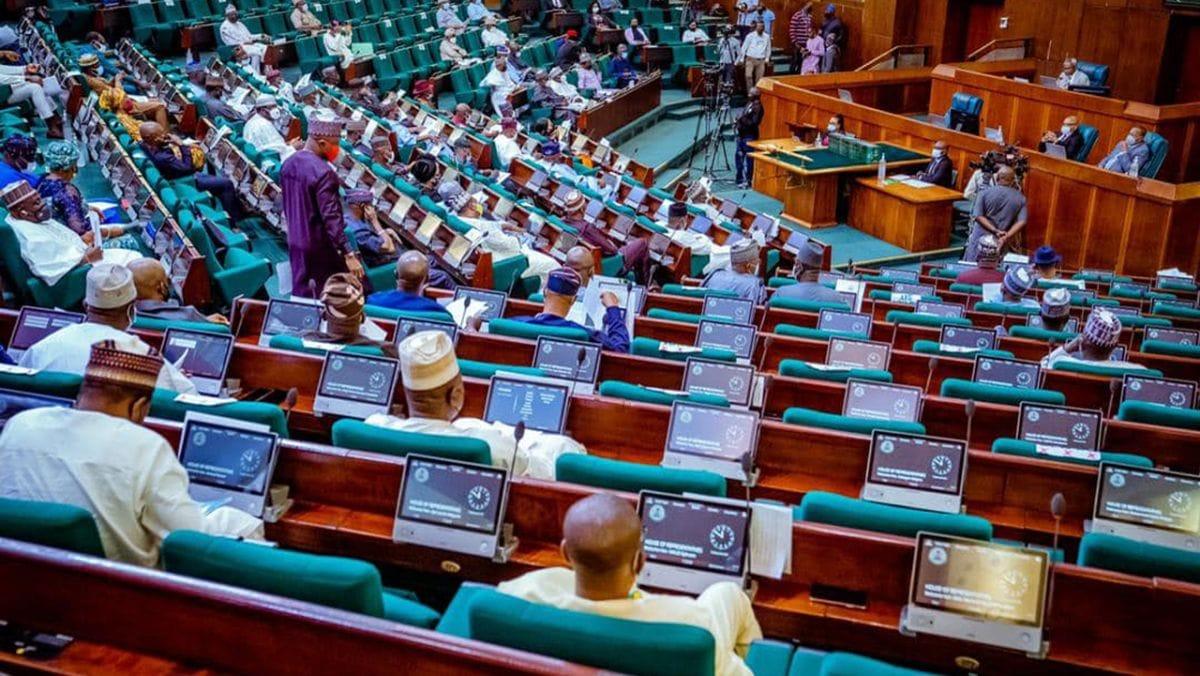
Nigeria’s House of Representatives has approved President Bola Tinubu’s 2026 Appropriation Bill of ₦58.18 trillion through second reading.
The budget anchored on macroeconomic stability, enhanced security, and increased capital expenditure.
Speaking on the general principles of the budget, the Leader of the House Professor Julius Ihonvbere said that the President Bola Tinubu administration inherited “distorted and disarticulated institutions”.
“This budget is a promise and a dream,” the lawmaker concluded. “If we work together, Nigeria will be a better place—not just for us, but for generations to come.”
“Development that is not sustainable is not development at all,” he said, noting that the ongoing economic reforms, though painful, are essential to repositioning the country for long-term growth.
He cited key macroeconomic indicators to justify support for the budget, including a 3.98 per cent economic growth rate ahead of the 2026 fiscal year, a drop in inflation to 14.45 per cent from about 25 per cent, improved revenues, export growth, and expanded foreign direct investment.
According to him, the naira has stabilised around ₦1,400 to the dollar, down from over ₦1,800, while Nigeria’s external reserves have climbed to a seven-year high of about $47 billion, sufficient to cover more than 10 months of imports.
“We have not printed a single naira since this government came into office. That fiscal discipline has helped stabilise the economy,” he stated.
Budget structure
On the structure of the budget, total revenue is projected at ₦34.33 trillion against total expenditure of ₦58.18 trillion, leaving a deficit of ₦23.85 trillion. Non-debt recurrent expenditure is pegged at ₦15.25 trillion, while capital expenditure stands at ₦26.08 trillion—an allocation lawmakers described as a clear signal of commitment to sustainable development.
“This is a departure from the past where recurrent spending outweighed capital investment. Here, capital expenditure is higher, which is what drives real development,” the lawmaker said.
He said that the 2026 budget assumptions include an oil benchmark of $64.85 per barrel and oil production of 1.84 million barrels per day.
Sectoral allocation
Sectoral allocations show security and defence taking priority, with ₦5.41 trillion earmarked to address insecurity and food challenges, infrastructure receiving ₦3.56 trillion, education ₦3.54 trillion, and health ₦2.48 trillion.
The House noted that beyond figures, the budget represents a set of promises by the executive stronger budget discipline, improved revenue performance through new tax measures, blockage of leakages, consolidation of macroeconomic stability, human capital development, and prudent debt management.
“We are not saying the government is perfect, but it is our duty, as representatives of 360 constituencies, to guide it to do the right things at all times,” the lawmaker said.
The Speaker put the question to a voice vote. The “ayes” prevailed overwhelmingly, sealing the House’s approval of the budget.
The budget, christened “The Budget of Consolidation, Renewed Resilience and Shared Prosperity,” was presented to the National Assembly on December 19, 2025, and described by lawmakers as a defining moment in Nigeria’s economic re-engineering.
The House after unanimously passing the budget for second reading adjourned plenary for two weeks for the budget defence.