

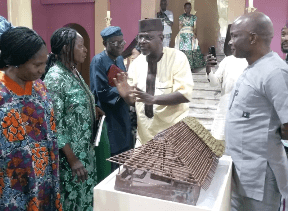
Professor Aderemi Ajala of the Department of Archaeology and Anthropology, University of Ibadan, has urged Nigerians to pay more attention to the nation’s alternative heritage, noting that many valuable cultural and natural histories remain hidden and neglected.
Ajala made the call while speaking on “Alternative Heritage: Uncovering Community Histories and Stories”, during an exhibition on monuments and natural history on Wednesday in Lagos state.
The exhibition was organised by the National Commission for Museums and Monuments (NCMM) and Institut Francais de Recherche en Afrique (IFRA-Nigeria).
The exhibition is with the theme, ‘Reimagining Nigerian Alternative Heritage’.
The Don noted that the exhibition’s focus was timely, addressing Nigeria’s heritage conversation which had been largely dominated by popular artefacts, while other heritage forms shaping identity and community memory were often neglected.
“There are quite a number of other heritages that speak well of our history,” he said.
According to Ajala, heritage is often classified into cultural and natural heritage, as well as tangible and intangible forms – those that can be physically handled and expressed through knowledge, traditions and lived practices.
He, however, said the heritage community was increasingly concerned about some other heritage that were not listed among this popular classification.
He noted that those in that category are now described as alternative heritage – heritage that is hidden, marginalised, and not commonly recognised, yet deeply significant.
“The alternative heritage speak to the value, they speak to the identity, they speak to the history of the people,” he said.
The professor highlighted examples ranging from totemic animals, endangered species, rivers and landscape features, to indigenous knowledge systems such as soap-making, local diets, community festivals, oral traditions and music that document social realities.
He also cited termite mounds as an overlooked heritage, adding that they reflect sophisticated indigenous building knowledge.
According to him, alternative heritage offers a broader way of understanding community histories, beyond the conventional museum objects that dominate public attention.
He said such heritage helps to foster inclusivity in heritage management, strengthen community-based history, reclaim indigenous knowledge, empower marginalised groups and encourage innovation.
Ajala noted that alternative heritage support cultural diversity and a stronger sense of identity and belonging, especially at the grassroots where many histories remain undocumented.
He said in spite of its importance, there were major challenges limiting the recognition of alternative heritage in Nigeria.
“Some of the challenges include the elitist perception of museums, where many Nigerians feel heritage spaces are only meant for a privileged class and lingering colonial traditions.”
Others are: religious sentiments that discourage engagement with cultural objects, poor documentation, marginalisation of intangible heritage, and power dynamics where dominant narratives suppress community-based heritage.
Ajala called for increased awareness, stronger research culture, better preservation and more community involvement in identifying and promoting alternative heritage.
He urged stakeholders to see alternative heritage not as secondary but as essential to uncovering Nigeria’s untold stories and preserving its cultural future.
NAN

