
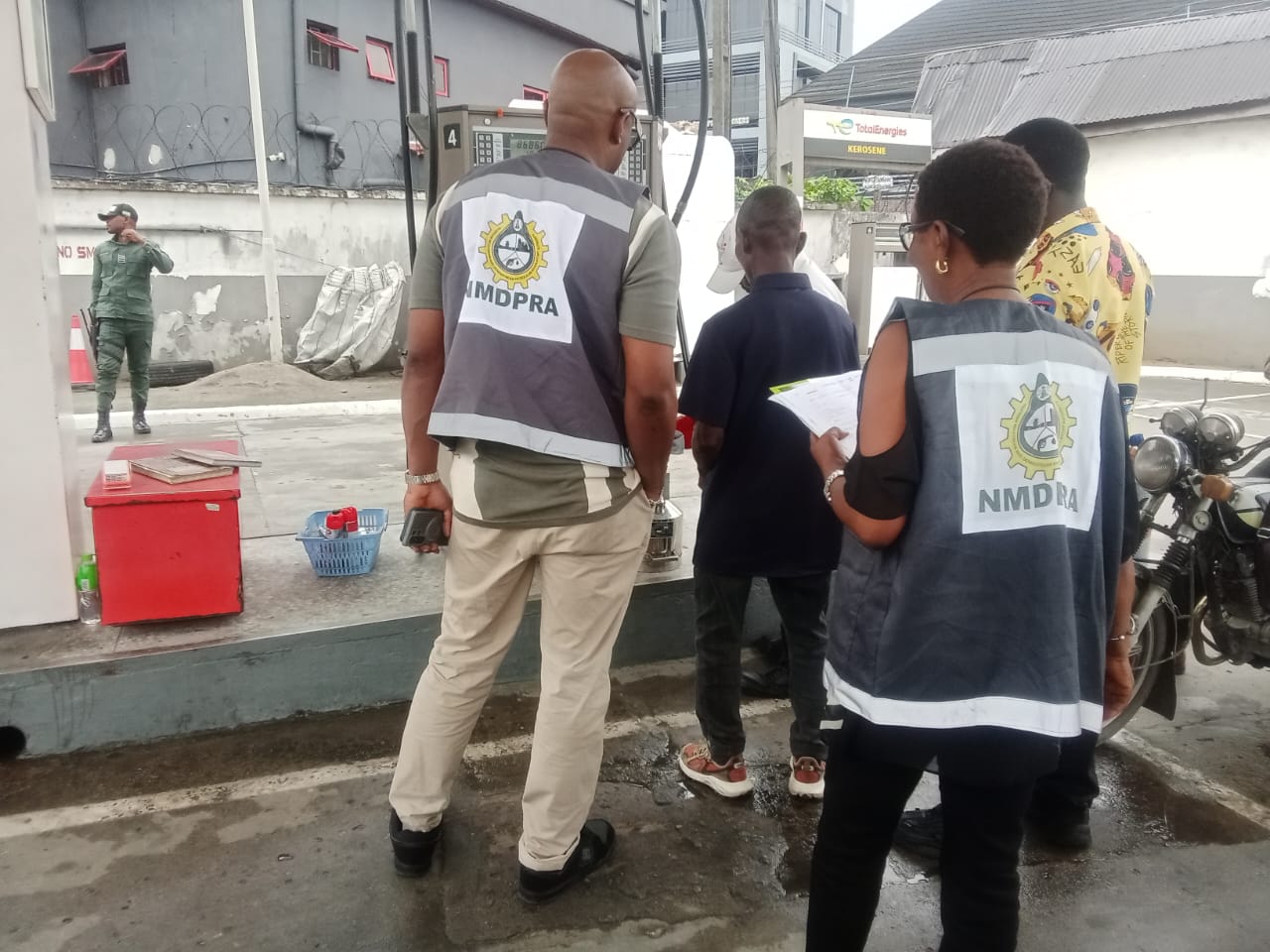
The Nigeria Midstream and Downstream Petroleum Regulatory Authority (NMDPRA), has sealed several fuel stations in Port Harcourt, Rivers State capital, for under-dispensing Premium Motor Spirit (PMS), commonly known as petrol.
The enforcement exercise, which affected major fuel stations across the state capital, forms part of the Authority’s intensified efforts to curb sharp practices in fuel retailing, protect consumers, and ensure transparency in petroleum product sales.
Speaking in an interview with Voice of Nigeria, the Team Lead of the NMDPRA Retail Outlet Monitoring (ROM) unit, Mrs. Ibumieghaye Ziniye, explained that the Authority routinely monitors fuel stations to ensure compliance with regulatory standards.
According to her, the team inspects retail outlets, examines their operations, and physically measures dispensing pumps to confirm that customers are receiving the correct volume of fuel paid for.
“We go out to monitor retail outlets and examine their activities. We even measure their pumps to know if they are actually selling as required. While we do not control the price of PMS, the NMDPRA has control over pump accuracy and meter calibration,” Ziniye said.
She stressed that any station found to be dispensing less than the approved volume faces immediate sanctions, including sealing of the premises.
“If they don’t give the actual litre or volume per litre, we go against them by sealing the station,” she stated.
Ziniye reiterated that the core mandate of the NMDPRA is to protect consumers from being short-changed, ensuring they receive full value for their money.
“If a litre is ₦1,000, let that ₦1,000 give you exactly one litre. If you are buying 10 litres for ₦10,000, you should not be short-changed. That is the essence of our work,” she explained.
The ROM Team Lead further disclosed that the Authority also closely monitors the movement of petroleum products from depots to retail outlets to prevent diversion, hoarding, or illegal exportation.
“When marketers lift products from the depot, we follow them to their stations. If we don’t, some may divert the product or even move it out of the country,” she said.
Ziniye noted that consistent regulation and monitoring have significantly reduced fuel scarcity across the country, particularly during peak demand periods such as the festive season.
“Previously, fuel scarcity in December used to be very severe nationwide. These days, we don’t see that anymore because we monitor marketers right from the depot and supervise depot operations closely,” she added.
She also called for increased private sector participation in petroleum depot ownership, noting that more depots would help improve product availability and ease pressure on the supply chain.
Meanwhile, some motorists and fuel buyers at the affected stations commended the NMDPRA team for the enforcement exercise, describing it as a welcome development.
They expressed optimism that sustained regulatory action would improve service delivery and contribute to a better and more transparent petroleum sector in Nigeria.

