Operators in Nigeria’s riverine sand mining sector have urged the National Inland Waterways Authority (NIWA), the federal agency responsible for regulating inland waterways, to provide clearer guidance on regulatory oversight along the River Niger amid concerns over overlapping federal and state controls.
In recent weeks, sand miners operating along the River Niger raised concerns that unclear coordination between federal and state authorities is affecting business operations and disrupting economic activities.
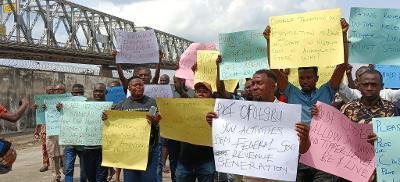
In Onitsha, a major commercial hub, members of sand miners’ and tipper drivers’ associations staged a peaceful protest at NIWA’s Area Office on Friday. The demonstration, which involved an estimated 150 to 200 participants, aimed to formally seek regulatory clarity and institutional guidance for their operations.
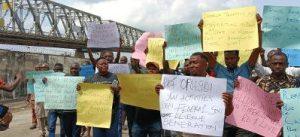
The protesters carried placards and documents, stating that they operate under licences issued by NIWA and the Federal Ministry of Mines. They explained that their engagement with NIWA was intended to highlight operational challenges arising from what they described as overlapping regulatory expectations at different levels of government.
Speaking on behalf of the group, President of the Riverine Sand Miners Association, Mr Christopher Mbaegbu, said the association recognises NIWA as the statutory authority overseeing inland waterways and turned to the agency for clarification on regulatory responsibilities.
“We obtained all necessary licences and approvals after meeting federal requirements
“Our intention is to understand clearly how federal and state regulations align, so that we can continue operating lawfully and productively,” Mbaegbu said.
The associations noted that enforcement actions in recent weeks had affected trucks, heavy equipment and work schedules, increasing operating costs and slowing the supply of sand to the construction sector. They added that improved coordination among relevant authorities would help prevent disruptions and strengthen investor confidence.
Tipper drivers, who transport sand from riverbanks to construction sites, also expressed support for regulation and environmental standards. Chairman of the Anambra State Tipper Drivers Association, Mr Augustine Akigwe, said drivers contribute significantly to the state’s internally generated revenue through approved levies and fees.
“We are committed to compliance. Clear guidelines on approved routes, fees and regulatory oversight will help everyone operate more efficiently.” Akigwe said.
In response, NIWA’s Area Manager in Onitsha, Sir Victor Nwokocha, reiterated that the authority operates under federal law and is mandated to regulate activities on inland waterways. He said NIWA remains open to collaboration with state institutions to ensure smooth and lawful operations.
“NIWA believes that regulatory issues are best resolved through dialogue and adherence to existing legal frameworks,” Nwokocha said, adding that the matter had been reported to the agency’s headquarters for further guidance.

The Anambra State Government, through the Managing Director of Operation Clean and Healthy Anambra (OCHA Brigade), Mr Celestine Anere, said the state’s priority is regulation, environmental protection and road safety. He noted that operators using state infrastructure are expected to comply with applicable state requirements, particularly those designed to prevent damage to roads and the environment.
“Our responsibility is to ensure orderliness and environmental standards,” Anere said, adding that the state welcomes lawful business activities conducted in line with regulations.
The operators appealed to Anambra State Governor, Professor Chukwuma Soludo, to support efforts to harmonise federal and state roles, describing such alignment as essential for sustaining jobs, boosting revenue and promoting investment.
As Nigeria continues to strengthen its infrastructure and improve the business environment, the engagement in Onitsha highlights the importance of intergovernmental cooperation in managing natural resources. For stakeholders along the River Niger, clear policies and sustained dialogue remain central to long-term stability and growth.