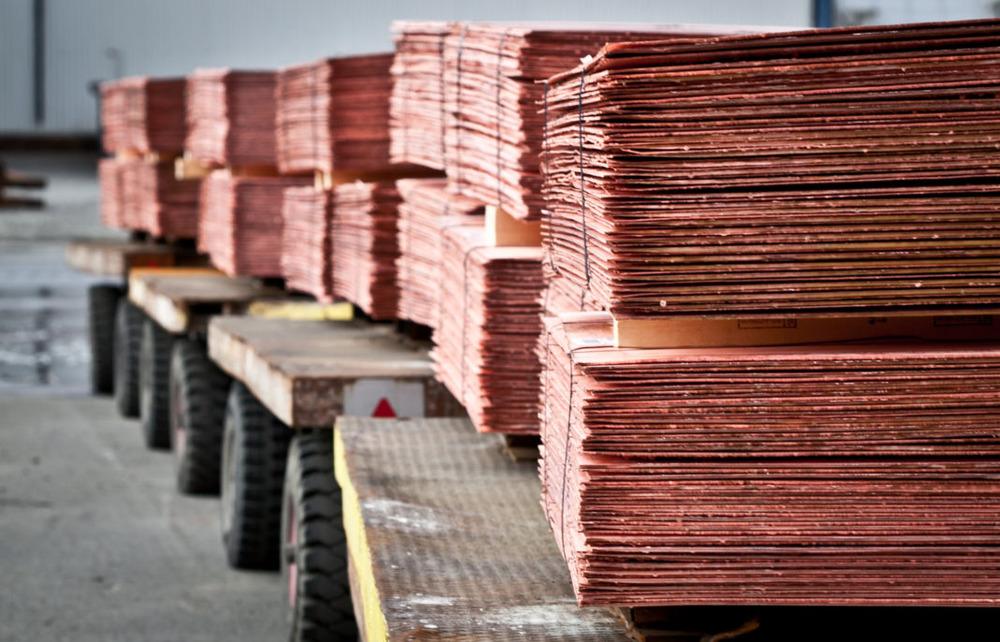
Zambia is aiming to cross the one‑million‑tonne copper production mark this year, with President Hakainde Hichilema urging mining companies to re‑capitalise existing operations and accelerate investment in new projects.
Speaking at the 13th Zambia International Mining and Energy Conference and Exhibition (ZIMEC) in Kitwe, Hichilema said mining remains central to his administration’s economic reconstruction agenda but stressed that energy development must advance in tandem with mineral production.
“We set the target of producing three million metric tonnes of copper annually by 2031. But it is not possible to achieve that target without energy. The two are hand‑in‑glove,” he said, calling on investors to “make your decision to re‑invest in existing mines and in the green fields as well.”
Hichilema said renewed capital injection into brownfield operations such as First Quantum Minerals, Lumwana and Mopani, alongside greenfield developments, has so far attracted about $12 billion in commitments.
He added that some long‑standing operations were “heading towards the exit door” before the government intervened to stabilise the sector.
Zambia’s mining industry has been recovering after years of stagnation marked by ownership disputes, under‑investment and declining output.
Hichilema’s government has prioritised policy stability, debt restructuring and the revival of key assets such as Mopani and Konkola Copper Mines to restore investor confidence.
Global demand for critical minerals, particularly copper for renewable energy technologies, has further strengthened Zambia’s position as a preferred investment destination.
Mines and Minerals Development Minister Paul Kabuswe said the sector’s rebound is evident, noting that Zambia reached 890,000 tonnes of copper last year – the highest in its history.
He said the country would likely have surpassed one million tonnes “save for the problems at Sino Mines and maintenance works at Trident, which reduced our value by 16 percent.”
AP