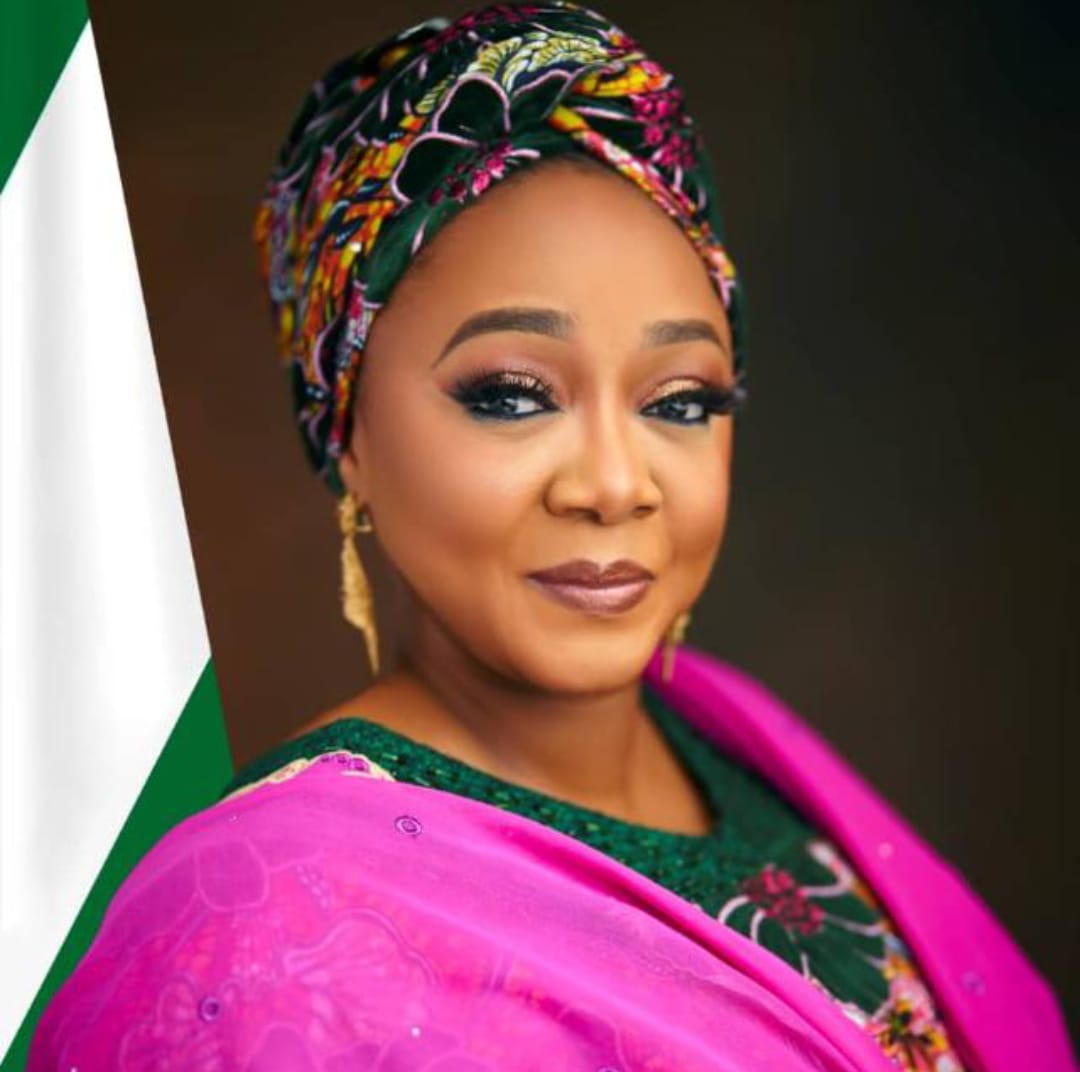
The Minister of Women Affairs and Social Development Hajiya Imaan Sulaiman-Ibrahim, has reaffirmed the unwavering commitment of the Federal Government to protecting and empowering every Nigerian child.
In a statement marking the 2026 International Day of the African Child, themed “Ensuring Universal Access to Water, Sanitation and Hygiene for Every Child in Africa”, she declared that universal access to water, sanitation and hygiene is indispensable to child survival, education and national development.
The Minister stressed that under the Renewed Hope Agenda of President Bola Ahmed Tinubu, the Federal Government operates on the principle that “every child counts, and every life matters,” saying that the declaration of 2026 as the Year of Family and Social Development reinforces the role of families in child protection and national growth.
Minister Sulaiman-Ibrahim stated that Nigeria joined the rest of Africa and the global community in renewing its commitment to the dignity, safety and development of every child, noting that “the Nigerian child remains the focal point of our national conscience, the anchor of our social stability, and the heartbeat of our development aspirations.”
She noted that the annual commemoration is rooted in the courage of the children of Soweto in 1976, whose stand against injustice continues to underscore the importance of protecting children’s rights and access to opportunities.
Emphasising the significance of the 2026 theme, the Minister stated that access to Water, Sanitation and Hygiene (WASH) services remains fundamental to child development across the continent.
“Clean water, adequate sanitation, and proper hygiene (WASH) are not mere infrastructural metrics; they are fundamental prerequisites for child survival, disease prevention, educational continuity, and total human development,” she said.
She disclosed that the Ministry has operationalized the National Strategy and Costed Action Plan on Ending Child Marriage in Nigeria by 2030 and advanced the review of the National Adoption Policy, alongside ongoing work on the National Child Policy and alternative care systems.
According to her, the Renewed Hope Social Impact Intervention 774 programme is expanding child-focused services across all 774 local government areas through educational support, child protection services, psychosocial care, nutrition-sensitive interventions, skills development and digital inclusion initiatives.
The Minister further said that government investments in WASH infrastructure and hygiene campaigns have contributed to “a documented 15% reduction in waterborne childhood illnesses across targeted rural communities over the last year.”
On child protection, she said the upgraded National Child Abuse Reporting Hotline processed and resolved more than 8,000 cases in the past year, linking victims to legal aid, emergency shelters and rehabilitation services.
Condemning recent abductions of schoolchildren in Oyo and Borno States, the Minister described such incidents as “a direct assault on our national security, our values, and our future”, assuring affected families that government remains committed to securing the safe return of every abducted child.
She called on governments, traditional and religious institutions, development partners, civil society, the private sector and parents to scale up investments in water, sanitation, education, child protection and digital safety, stressing that “the protection of the African child is a collective national imperative that permits no bystanders.”
The Minister reaffirmed Nigeria’s commitment to protecting, educating and empowering every child, describing the nation’s responsibility to its children as a sacred covenant that must be upheld without compromise.