The team of journalists covering the Presidency in Nigeria, also known as the State House Press Corps (SHPC), has unveiled plans to institutionalise an annual Presidential Press Corps Dinner with President Bola Ahmed Tinubu.
This is part of efforts to strengthen engagement between the Presidency and journalists reporting on the seat of government.
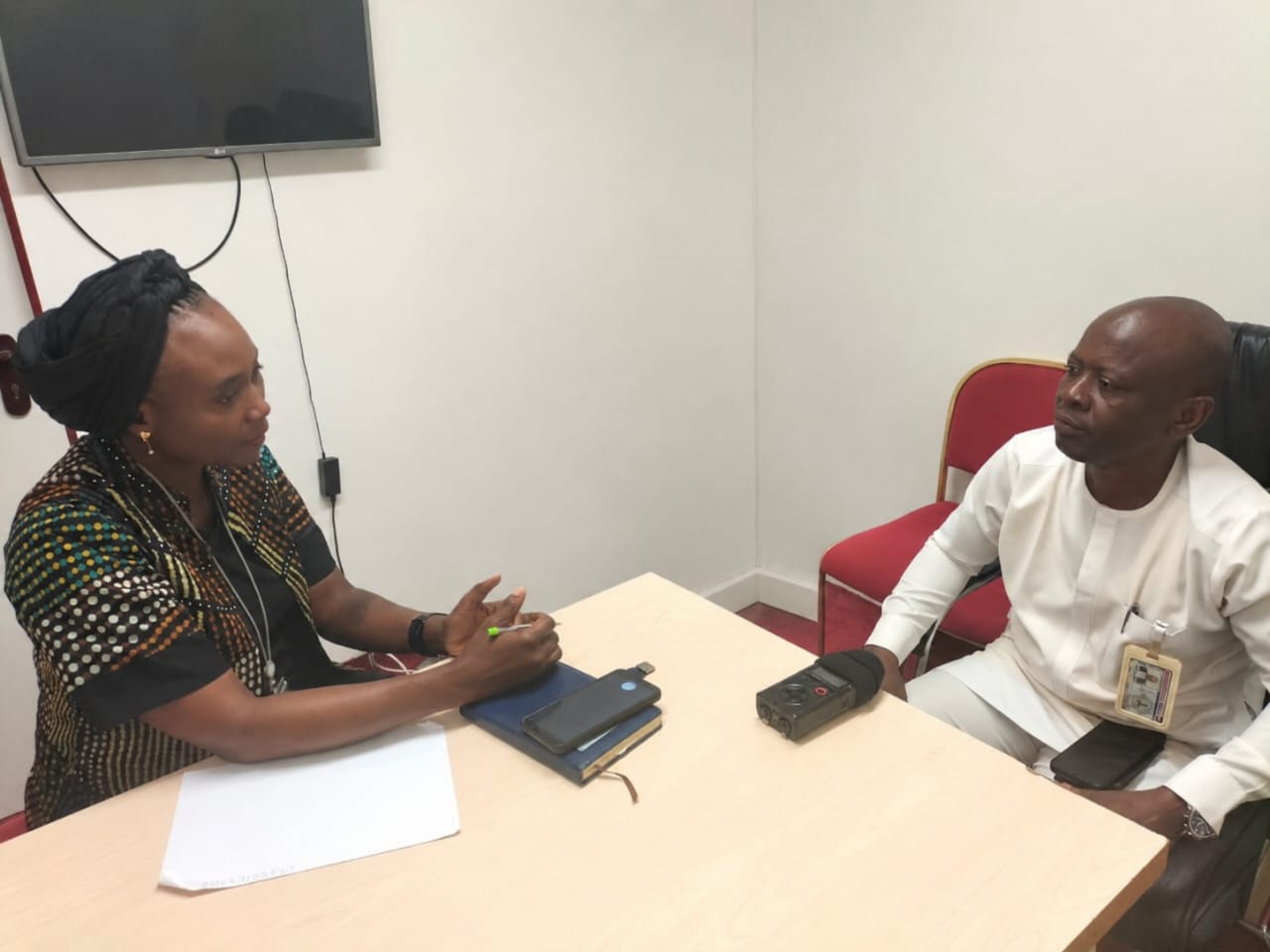
Chairman of the State House Press Corps, Dr Anule Emmanuel, made the disclosure in an interview with the Voice of Nigeria State House Team, Timothy Choji and Temitope Mustapha, ahead of the inaugural Presidential Press Corps Dinner slated for June 19, 2026.
Dr Anule described the event as the first of its kind and expressed optimism that it would become a permanent feature in the relationship between the Presidency and members of the press corps.
“We call this the maiden edition of this dinner. That tells you that it has never happened before,” he said.
According to him, although former President Olusegun Obasanjo held informal interactions with journalists during his administration, there was no formal designation for such an event as a Presidential Press Corps Dinner.
“I remember that former President Obasanjo made attempts once or twice, meeting informally with the press corps, but it was not designated any name. We want something that is formalised and unique to our own clime,” he explained.
The Chairman said the corps intends to use the platform to foster a more constructive atmosphere for interaction between the President and journalists who report on the activities of the Presidency.
“We want an opportunity where we have an atmosphere of familiarity with the newsmakers, at least once in a year with the President. It is not easy, given the schedule of the President and the enormous responsibilities on his table, to have such an informal engagement,” he said.
He revealed that members of the corps would formally appeal to President Tinubu to institutionalise the annual gathering.
“We will put a request to the President when we meet and appeal that he institutionalises this so that it becomes a regular thing. At least when the year begins, everybody will be looking forward to this kind of informal gathering with the President,” he stated.
Dr Anule noted that the annual dinner could also provide opportunities for broader engagement involving media executives and members of the diplomatic community.
Beyond fostering stronger media-Presidency relations, Anule said the long-term vision includes creating support mechanisms for young journalists and students studying Mass Communication and related disciplines.
“When this is institutionalised, we are hoping that we will have an opportunity where we can raise funds and support upcoming journalists, maybe students studying Mass Communication in higher institutions, through scholarships and other forms of support,” he said.
Drawing inspiration from similar initiatives in other countries such as the United States of America, Dr Anule said the corps was considering ways of contributing to the development of journalism and media professionalism in Nigeria.
“So we are thinking about the Presidential Press Corps annual dinner. We will put a request to the President when we meet and appeal for you to institutionalise this so that it becomes a regular thing.
Everybody is looking forward to having this kind of informal gathering with the president, where we even have some media chief executives also join us and some members of the diplomatic corps, so that’s the plan.
And even in the future, we are hoping that when this is institutionalised, we will have an opportunity where we will make some fundraising and support upcoming journalists, maybe students who are studying Mass Communication in higher institutions in terms of media scholarships.
What you see happening in Washington, for instance, you see them giving scholarships and support. I’m not saying that’s the focus, but that is what we’re thinking we can also do in the future, in the near future,” he emphasised.
The Press Corps Chairman emphasised that only credible journalists are accredited to cover the Presidency and that the present crop of journalists have been carefully selected by their organisations to serve as correspondents in the seat of power.
“The State House Press Corps comprises journalists from print, broadcast and online media organisations accredited to cover the activities of the President, Vice President, First Lady and other engagements within the Presidency.
Each newspaper house or news organisation in Nigeria will always send their best to the State House because they want excellent representation.
Over the years, some media houses have changed correspondents at intervals. They are correspondents, videographers and reporters from both print and broadcast organisations.
This is a body whose primary duty is to monitor activities within the Presidency and feed members of the public, both local and international, with accurate information,” he explained.
Anule also rated the Presidential Media Team highly, attributing its effectiveness to the presence of experienced media professionals serving in key communication roles within the Tinubu administration.
He said the team, led by presidential aides including Bayo Onanuga, Sunday Dare, Daniel Bwala, Tunde Rahman and Tope Ajayi, has demonstrated a strong understanding of media relations and the information needs of journalists covering the Presidency.
According to him, managing information flow for about 79 accredited State House correspondents from diverse media organisations is a significant responsibility, but the media team has largely succeeded in providing journalists with timely access to information and necessary clarifications.
Dr Anule, a veteran State House correspondent with about 19 years of experience covering the Presidency, has worked with Financial Standard, Nigerian Pilot, New Telegraph and AFP. He joined the State House Press Corps in 2007 and currently serves as its Chairman.
On concerns that closer interaction between journalists and public officials could undermine media independence, Anule maintained that access should not be mistaken for compromise.
The SHPC Chairman stressed that journalists covering the Presidency remain guided by the core principles of the profession, including objectivity, fairness and factual reporting.
According to him, strengthening engagement between the media and public officials enhances accountability and democratic governance by providing journalists with greater access to information and decision-makers.
“Let me just put it back to you. How do you imagine covering a newsmaker and never having access to the newsmaker?
That you come close to a newsmaker does not mean compromise. You are still focused. We will remain focused on our job. If we need to criticise, we criticise constructively. You still work within the parameters of the tenets of the job — objectivity, presenting facts as they are, and never compromising the system.
Let me tell you, the State House Press Corps remains a strong channel between the Presidency and members of the public, both international and local.
Through our stories, you have people who look up to our reports every day , business people and investors, both local and foreign. We break these stories before you begin to see analyses on other beats and sectors of the economy.
So long as we remain focused on good reportage, we help grow our democracy.
Ours is to report stories effectively and in a balanced manner. Investors and policymakers read our stories and often make decisions based on the information they receive.
Whether we come close to government in terms of partnership or not, we continue doing our job. It is through our work that we help strengthen good governance and quality reporting,” Anule said.
The SHPC Chairman noted that the proposed annual dinner would offer correspondents a rare opportunity to interact not only with the President but also with senior government officials, media executives and other key stakeholders whose roles shape public policy.
According to him, such interactions would foster better understanding, professional relationships and more informed reporting in the public interest.
“So the idea is creating this forum where once in a while we have an opportunity to interact with people holding important offices and even exchange contacts, because these are people you rarely get to see every day,” he stated.
On measures to strengthen government-media relations and improve the sustainability of journalism in Nigeria, Anule called for greater institutional support for media organisations through access to financing, soft loans and targeted incentives.
He noted that many media houses, particularly in the print and broadcast sectors, are grappling with rising operational costs, including the high cost of newsprint, equipment upgrades and other production materials.
According to him, government intervention through credit facilities, waivers and other forms of support would help media organisations remain viable and better fulfil their role in promoting accountability and good governance.
“Elsewhere, with my knowledge of how different sectors of the economy are supported, you see subventions to media houses.
Sometimes media houses in the print sector will tell you that newsprint is expensive. They need funding, soft loans and access to finance. These are things government can do, even for the broadcast industry.
There are times when you see waivers granted to some businesses. Why don’t we have waivers and small credit facilities for the media industry?
Sometimes you go to media houses and hear complaints about salaries because things are difficult.
Materials for newsprint are expensive, while broadcast materials are also costly. Some organisations need to upgrade equipment, but despite good intentions, they often lack access to finance.
Government can create channels for access to funding for the media industry because, after all, good journalism ultimately helps to promote good governance,” Anule added.