
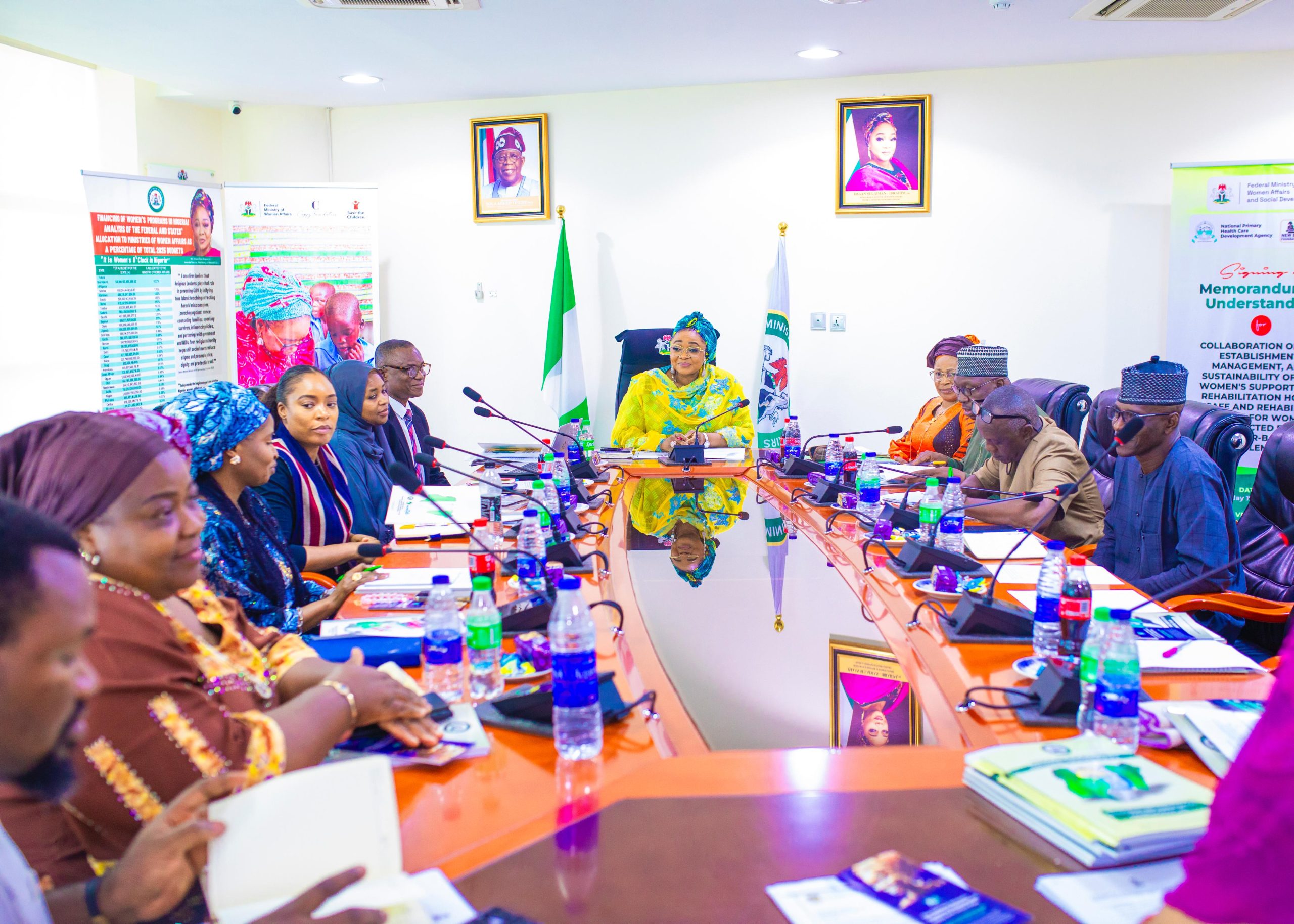
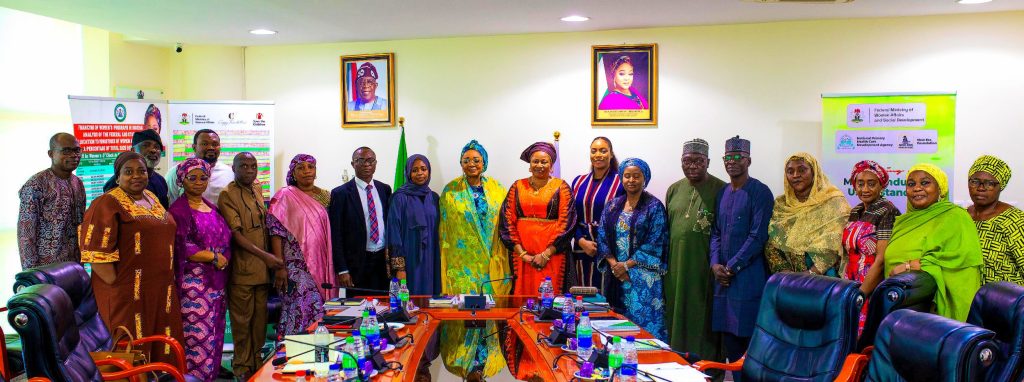
The Minister of Women Affairs and Social Development, Imaan Sulaiman-Ibrahim, has inaugurated the National Technical Working Committee for the review of Nigeria’s National Gender Policy, directing members to deliver an evidence-based, implementation-focused framework before the current policy cycle expires in 2026.
Describing the inauguration as a defining moment, the Minister said, “It marks another significant milestone in Nigeria’s journey towards achieving gender equality, social justice, and inclusive national development.”
She said the review had become imperative because “the current National Gender Policy (2021–2026) has served Nigeria well, but the realities of today demand a more responsive, innovative, and implementation-focused policy framework as we look toward the 2027-2032 cycle.”
Calling for timely delivery, the Minister stated: “We are running against time, and the clock is ticking. With the current policy cycle nearing its end in 2026, we do not have the luxury of delay. We must act with absolute urgency, precision, and speed to prevent any policy vacuum.”
READ ALSO:Gender Policy Stakeholders Commit to National Action Plan Success
Also explaining the governance structure, she said, “This Technical Committee will be driven directly from the Office of the Honourable Minister,” while the Secretariat would be domiciled in the Department of Gender Affairs, to ensure a unified institutional approach.
Minister Sulaiman-Ibrahim said the revised policy would align with the Renewed Hope Agenda of President Bola Ahmed Tinubu as well as Nigeria Agenda 2050, the Sustainable Development Goals, African Union Agenda 2063, the Maputo Protocol and other regional and international commitments.
She stressed that “Gender equality is not the responsibility of the Federal Ministry of Women Affairs alone; it is a national development agenda requiring collective ownership,” adding that every Ministry, Department and Agency “must see gender responsiveness as a vital indicator of good governance, effective service delivery, and national competitiveness.”
Acknowledging development partners, the Minister said, “I want to specifically extend my profound gratitude to the exceptional partners sitting at this table today, and all other development partners who have firmly committed to providing the essential technical, financial, and strategic support required to make this process a success.”
Political Participation
She said the review would prioritise women’s economic empowerment, political participation, education and STEM, gender-based violence, women’s health, climate resilience, peace and security, humanitarian response, family strengthening, and inclusivity.
On implementation, the Minister insisted, “The revised policy must be strictly evidence-based,” explaining that “this assignment must not become merely an academic exercise; it must produce a policy that is implementable, results-oriented, and capable of transforming lives.”
She further directed the Committee to engage stakeholders across Nigeria’s six geopolitical zones to ensure broad ownership of the revised policy.
Formally inaugurating the Committee, which the Minister will Chair, she declared, “Our goal is not simply to revise a policy document; it is to reshape opportunities for millions of Nigerian women, girls, families, and communities.”
She charged members “to approach this assignment with a fierce sense of urgency, innovation, and national responsibility.”
The Minister charged: “History will judge us not by the policies we draft, but by the lives those policies transform.
He said they should seize the opportunity to develop a National Gender Policy that is bold in vision, inclusive in process, rapid in execution, and deeply transformative in impact for every Nigerian.

