

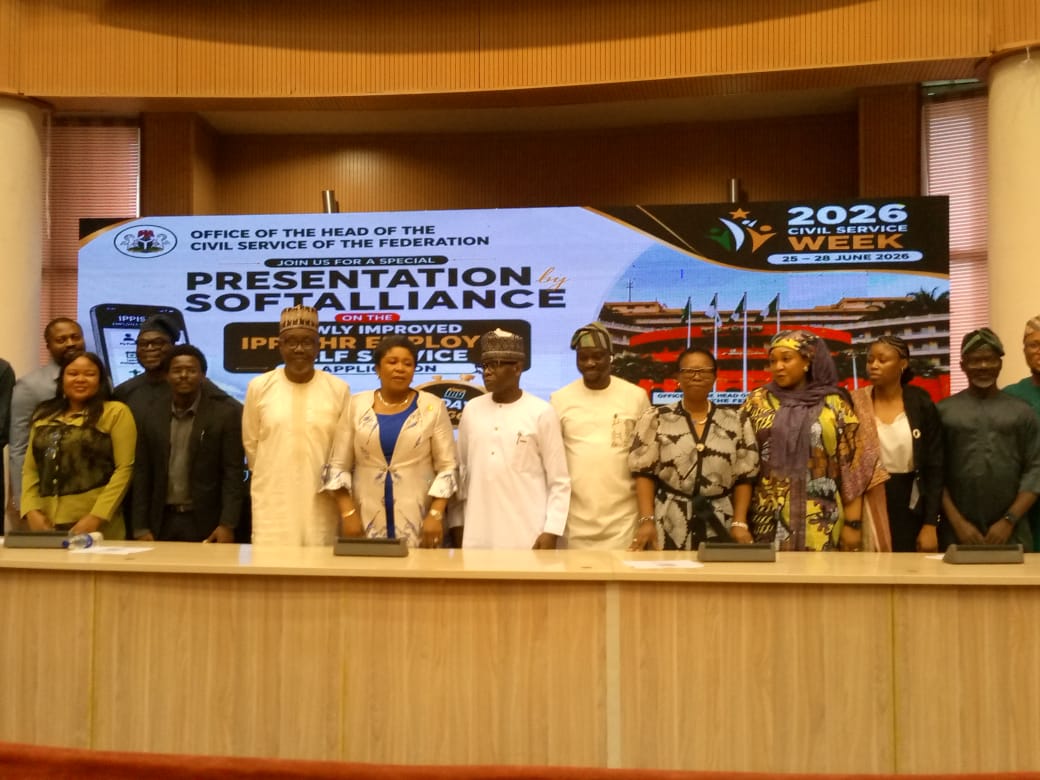
The Head of the Civil Service of the Federation, Mrs Didi Esther Walson-Jack says the Service has shifted from permission economy to an empowerment economy.
The Head of Service said this at an interaction session with Civil Servants across the federation as part of activities marking the 2026 Africa Public Service Week, in Abuja, Nigeria.
She said the new economy was created to remove bottlenecks in accessing Human Resources information and tracking records without having to queue at a counter or depend on someone else’s convenience.
READ ALSO: Head of Service Commends Shippers Council on Digital Migration
While she urged the Civil Servants to take advantage of the tool, she noted that technology only serves when it is embraced.
“Alongside Service-Wise GPT and the digital initiatives already underway, this is how we build a Civil Service that works, not just for citizens, but one that also treats its own people with the respect and efficiency they deserve”.
” There is no greater reward in public life than to look back and see lives changed, systems strengthened, and a Service left better than you found it.” Walson-Jack emphasised.
On mentoring, she said it changes trajectories, speaks the truth that performance appraisals cannot and sees the human being behind the officer.
According to her, the Public Service Week is not just a date on the calendar, it is a call to every government institution across the continent to reflect on the quality, relevance and impact of public service.
“It is a time to reflect, renew and recommit”. African Public Service Day reminds us that public service is not only a national responsibility, but an African obligation. It challenges us to build institutions that are professional, ethical, innovative, responsive and truly people-centred.
“It reminds us that the strength of any nation is closely tied to the strength of its Public Service.” She stated.
The Chairman, Federal Civil Service Commission, Professor Tunji Olaopa said the value of mentoring in any profession, especially in a career setting, and the workplace, cannot be overemphasised.
According to him, there’s a need for the older professionals to take the younger ones through the rudimentary aspect of the Service to enhance their skills for better productivity.
“Indeed, there is so much that the profession of public administration and the civil service lose by letting the legacy of the administrative wisdom of vintage bureaucrats fritter away as they retire over the years“.
“I wonder whether, as every serious profession should delight in, if we have ever systematically and intentionally built and managed a database of the core competences and of those vanishing skills of outstanding officers, specialists and mentors while they were still in service; as a resource to leverage and harvest when required from time to time.” The Chairman explained.
He recommended the restoration of personalised career development plans for profiled officers adding that, mentorship must not always be top- bottom.
“We must be thinking of how, through reverse mentoring, we can begin to narrow the skills gaps between tech-savvy young digital civil servant natives, so they can teach their bosses and seniors (the oldies) how, for example, they could masterly navigate the dynamic that artificial intelligence (AI) has created for policy work and for public administration”. Olaopa stated.
The Group Manager, Product, SoftAlliance Limited, Olusola Abiodun who presented the IPPIS employee Self-service Application reaffirmed that the tool was created with a sustainability mindset and zero human contact.
Speaking on cyber security, Mr. Abiodun noted that the site is tested, trusted and fully secure.
“The site is very safe. It cannot be bridged. In terms of processes that we need to follow, that has been fully done. Again , we’re also ISOP compliant and NDPR compliant. This demand that the information resident in our system should not be available to anybody outside.”
He disclosed that Civil Servants who wishes to engage the employee self-service platform, must have a designated Username and password.
Mr. Olusola Abiodun further said that one of the new features added is the availability and accessibility of the platform by all Federal Civil Servants across the federation.
He added that it was part of the problem they had in the old system which made it imperative for only the Core Civil Servants to access the application, but now, all MDAs, about 600,000 employees can now access the application based on their roles and responsibilities.

