


The Wikigap 2026 Training has spotlighted the critical role of journalists in closing the gender gap on women visibility on Wikipedia.
The training held in collaboration with the Girls Voices Initiative and the National Association of Women Journalists (NAWOJ) in commemoration of the 2026 international Women’s Day in Abuja had stakeholders calling for stronger, credible media coverage of women to improve global representation.
Training facilitator Airat Abdulrahom declared that “Reliable sources on Wikipedia are very paramount. ” It is the backbone of Wikipedia articles.”
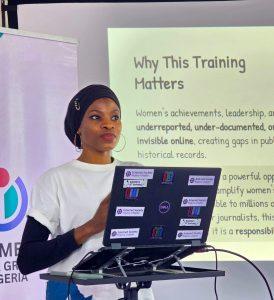
She stressed the importance of collaboration with the media, urging, “They need to work with us to create sources for these women, using their stories on their various media sites.”
The President of Wikimedia Nigeria, Olushola Olaniyan, linked the disparity to structural gaps in coverage. “Visibility has been reflected more on men while women seem not to exist,” he said.
He noted that the challenge extends beyond Africa: “We do not have sources even when women are doing right to cite what they are doing.”
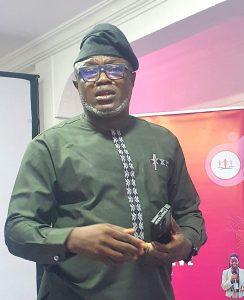
Reinforcing the urgency, Executive Director Omolayo Olanrenwaju Ogunsiji emphasising the need to take ownership of storytelling said, “The narratives that have been written about Nigerian women in the past, it is not something to write home about.” We are the ones that write our own story the way we want it. Nobody will do it for us.”
Speaking on viable collaboration, she stated that “we’re doing that with the National Association of Women Journalists here in Abuja.” It is a great pleasure for us to always empower women, give visibility to women, and for us to write our story the way we want it.”
On editorial standards, co-founder Isaac Olatunde underscored the importance of notability: “It is documenting information that is relevant to the entire world, and for us in Nigeria, I believe the journalists have a lot of work to do.”
While noting progress from “less than 17%” to “over 20%” in female biographies, he added, “If you have not done something significant, you have no business on Wikipedia.”
From the civil society perspective, collaborator, Carolyn Seaman of Girls Voices Initiative highlighted long-term impact: “We are very aligned with the mission to improve the profiles of women.”
She projected that “by 2031, we should have a significant community of women who are actively engaged and not just actively engaged, but even leading really phenomenal projects in Wikimedia.”
A journalist participant, Adaku Ene, pointed to newsroom responsibility: “Stories about women and their achievements are underreported,” warning, “If we do not have stories about women, then there will not be credited credible sources.”
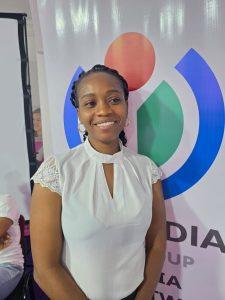
Ene added; “I see that 90% of the participants are females. They are going to enhance their reportage on reports about women, which is going to be used as reference points to give credibility and visibility to women on Wikipedia.”
The training underscored a unified message: “Without deliberate, credible documentation by journalists, many African women will remain absent from the global knowledge space.”