


The Abuja Environmental Protection Board (AEPB) and the United Nations Industrial Development Organization (UNIDO) have established a pilot waste recycling project in the Jabi area of the Federal Capital Territory, Abuja, in line with the United Nations Sustainable Development Goals (SDGs).
The mini pilot project, which focuses on plastic waste recycling, was officially handed over to Chanja Datti, a waste management company, to manage and operate the facility once construction is completed following an agreement with both AEPB and UNIDO.
Speaking at the handover ceremony, Chief Financial Officer of Chanja Datti, Mr. Kehinde Olusola, explained that the company was selected by AEPB and UNIDO to fund, manage, and operate the facility.
“We are here today to formally hand over the site for the recycling project, which we will be managing on behalf of AEPB. The civil works have now been handed over to the contractor, FEM-FASH Global Resources Ltd. We aim to complete construction within the next 30 days so that we can begin recycling operations,” he said.
READ ALSO:Nigeria, UNEP Partner on Sound Chemicals, Waste Management
He noted that the event aligns with Chanja Datti’s 10th anniversary and its commitment to environmental sustainability in Nigeria.
“Chanja Datti has been a key player in the recycling business. As we approach our 10th anniversary next month, we remain passionate and invested in promoting environmental sustainability. This project is a testament to our ongoing efforts and the trust AEPB and UNIDO have placed in us,” he added.
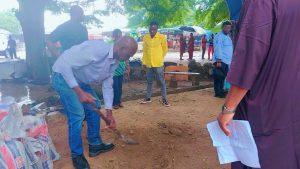
Mr. Olusola also highlighted that although Chanja Datti is undertaking the construction, the company expects to recoup its investment.
Also speaking at the event, Mr. Charles Uzoma, UNIDO Project Field Coordinator, explained that once the civil works are completed, UNIDO will provide the necessary equipment for plastic waste collection in the district.
“We are piloting plastic recycling in the Jabi district in collaboration with the AEPB and Chanja Datti Company Ltd. Once civil works are done, UNIDO will supply equipment to aid in the collection and preliminary processing of plastics—either baled or crushed—before they are transported to processing centers,” he said.
According to him, the initiative is the first of its kind in Abuja and represents a significant collaboration between the public and private sectors.
“This project is funded by the Government of Japan and is being implemented in both Lagos and Abuja. While the Abuja pilot is based in Jabi, the Lagos component is currently ongoing in Lekki and Yaba,” he added.
Mr. Uzoma reaffirmed UNIDO’s commitment to working with key stakeholders to support environmental sustainability.
Representing the Director of AEPB, Engr. Braimah Osilama, the Director of Solid Waste Management, Mr. Benjamin Enwerem, commended UNIDO for initiating the project.
He described the commencement of the civil works as a major milestone in the journey of the project.
“We’ve come a long way, almost three years since we initiated this project. Today marks a landmark achievement with the start of civil construction, a critical phase. Without civil works, we can’t install equipment or provide a working space for the operators,” he explained.
Mr. Enwerem emphasized that the project would help reduce plastic pollution, which adversely affects public health and contributes to flooding and other urban challenges.

“Although this is a pilot project, we want it to serve as a model for similar facilities, including those initiated by the private sector. We urge the contractors to construct a center that sets a standard others can emulate,” he said.
He also stated that the AEPB plans to establish more recycling centers across the metropolis to curb plastic waste and promote sustainable urban living.