

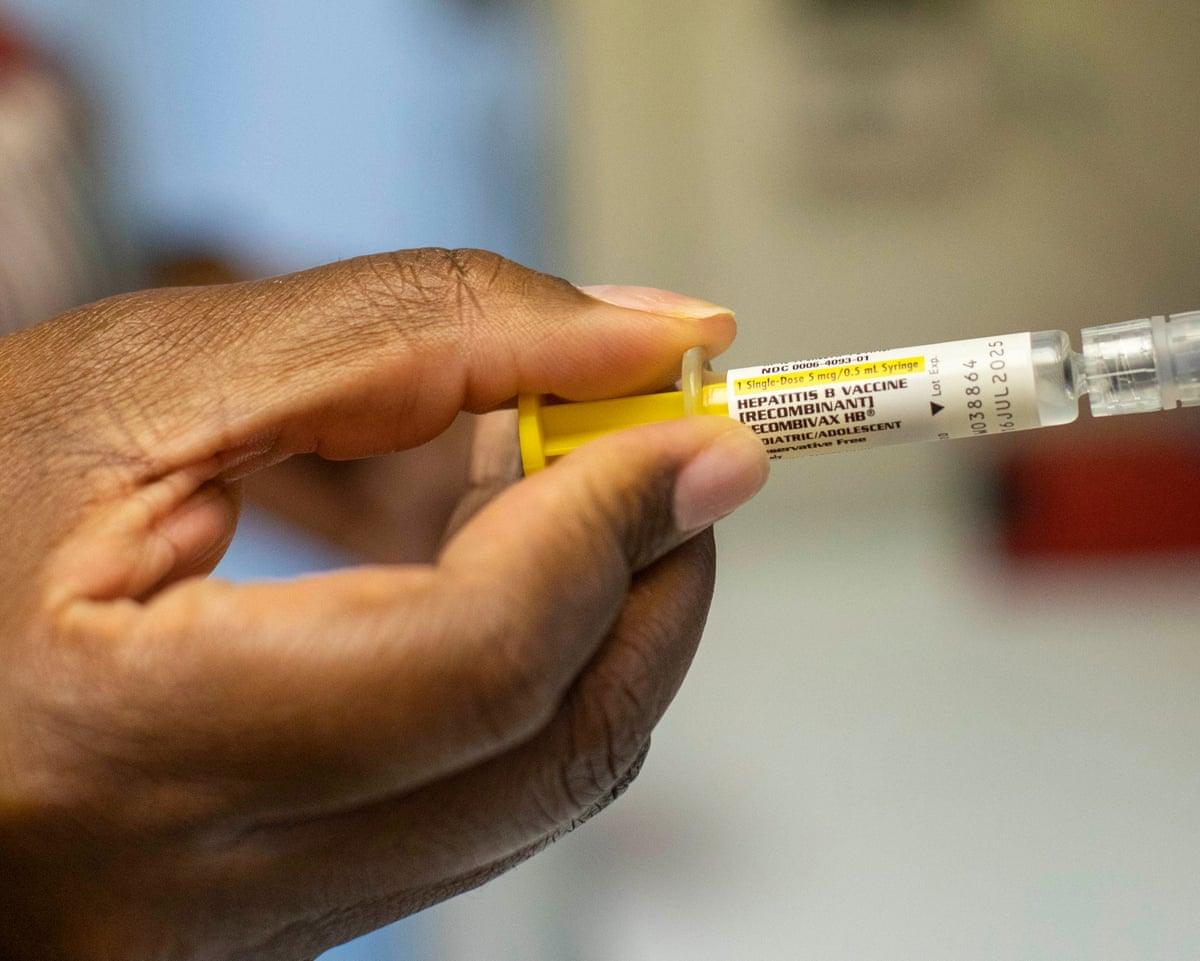
The Africa Centre for Disease Control and Prevention (Africa CDC) has confirmed the cancellation of a United States-funded study on hepatitis B vaccines involving newborns in Guinea-Bissau.
The Deputy Incident Manager for Mpox at Africa CDC, Dr Yap Boum, disclosed this on Monday during a webinar briefing.
Boum said the study did not meet acceptable ethical standards, adding that Africa CDC supports research that informs public health policy, emphasising that all studies conducted on the continent must strictly adhere to internationally recognised ethical principles.
He explained that the proposed research design raised serious concerns, particularly the possibility of delaying access to a life-saving hepatitis B vaccine for some newborns.
”The study reportedly funded by the United States Department of Health and Human Services, was intended to examine the timing of hepatitis B vaccination in infants in Guinea-Bissau.
”However, public health experts and ethicists criticised the proposal, warning that withholding or delaying a proven vaccine in a high-burden setting can expose infants to avoidable health risks.
”Hepatitis B remains a major public health challenge in sub-Saharan Africa, where infection in early life significantly increases the risk of chronic liver disease, cirrhosis and liver cancer,” he stressed.
He revealed that Guinea-Bissau currently administers the hepatitis B vaccine at 6 weeks of age due to logistical and supply constraints. However, global health guidelines recommend a birth dose to prevent mother-to-child transmission.
Critics argue that delaying a proven hepatitis B vaccine for African newborns would be unethical, raising concerns about double standards in global health research, potential harm to vulnerable infants, and the reputation of U.S.-funded studies abroad.
These criticisms prompted scrutiny from both U.S. and African health authorities, ultimately contributing to the study’s cancellation.
NAN