

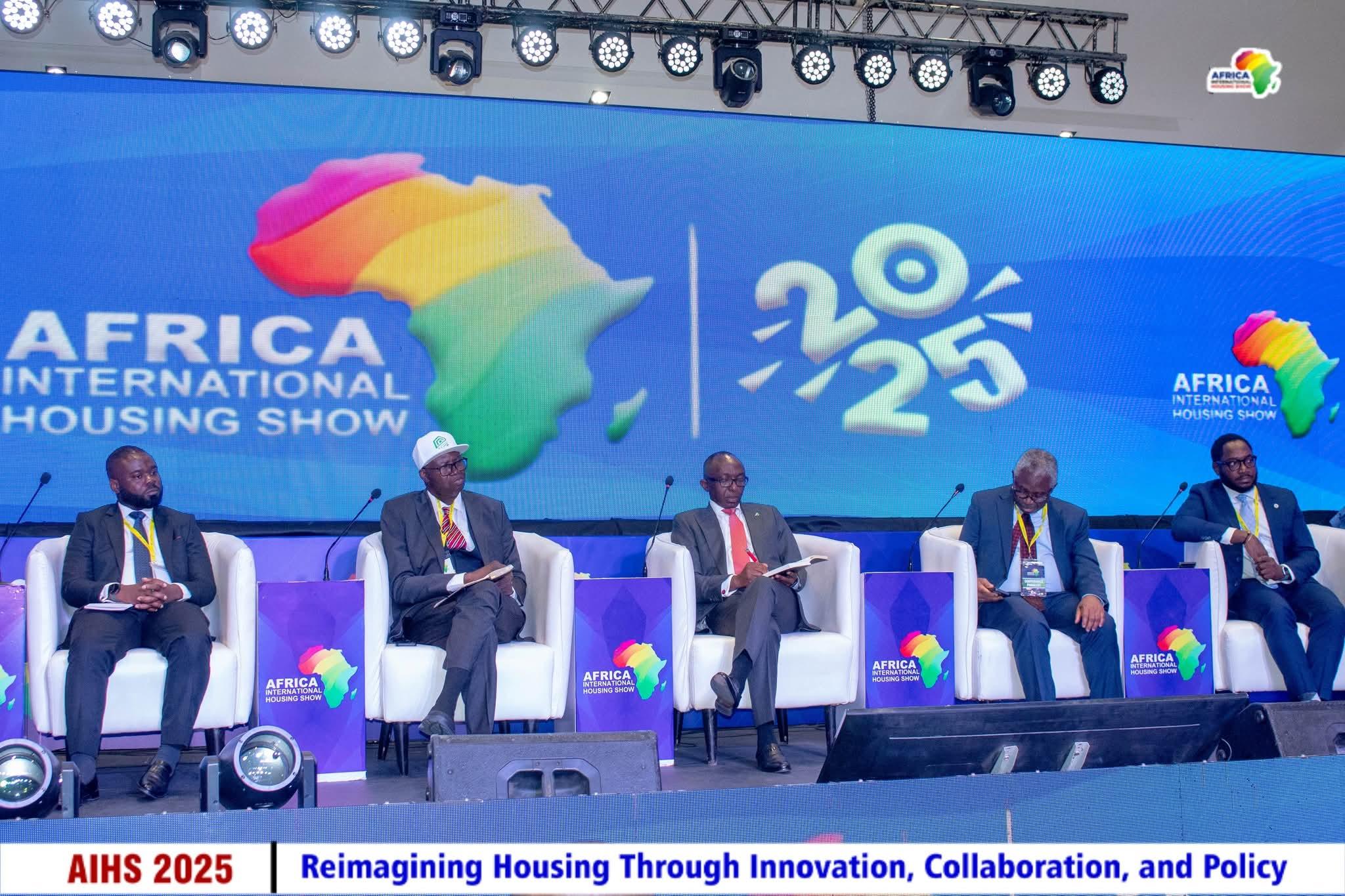
Top African policymakers, housing experts, and development leaders have issued a unified call for urgent action to address Sub-Saharan Africa’s housing crisis, warning that the continent faces a deficit of over 50 million housing units.
Speaking at the 19th Africa International Housing Show (AIHS) in Abuja, they described the crisis as both a humanitarian emergency and a powerful economic opportunity

If properly harnessed, they said; “housing development could drive job creation, spark innovation, and accelerate inclusive growth across Africa.”
Nigeria’s Minister of Housing and Urban Development, Ahmed Musa Dangiwa said that “access to decent housing is not a privilege but a fundamental human right.”
He stated that Nigeria is leading the charge through a State-by-State Homeownership and Housing Development Campaign, launched in partnership with state governments, the private sector, and development partners.
“This campaign is about translating frameworks into real-life solutions.
“We are finalising plans to establish an expert-led National Housing Policy Coordination and Monitoring Committee to track and report progress nationwide,” Dangiwa said.
He emphasised that investing in housing means investing in people, jobs, and the future of cities.
Dangiwa said that the current administration is tackling both housing supply and affordability through broader economic reforms, including efforts to stabilize the naira, reduce inflation, and raise incomes.
The government’s “Renewed Hope Cities and Estates” initiative which includes social housing schemes, is already underway in key cities like Abuja, Lagos, Port Harcourt, Enugu, Maiduguri, Kaduna, and Nasarawa, with similar projects planned across 30 states.
AIHS Advisory Board Chairman Suleiman Hassan Zarma called the housing deficit a billion-dollar opportunity.
He said; “This is not just a conference — it’s a call to action. We have a collective responsibility to drive this transformation.”
Former Nigerian Head of State, General Yakubu Gowon who was represented by Professor Suleiman Bogoro, urged African leaders to place affordable housing at the center of their development strategies, citing its direct links to education, health, and economic productivity.
“Our policies must be equitable and reach all segments of society.
“The success of our cities depends on our collective ability to innovate, invest, and implement,”Dangiwa said.
Former Minister of Information, Jerry Gana, addressed structural challenges in the sector, calling for increased local production of building materials to reduce dependency on imports made costly by foreign exchange volatility.
He urged government to reduce construction costs and increase funding to the sector.
Meanwhile, the Chairman of Nigeria’s Presidential Fiscal Policy and Tax Reform Committee, Taiwo Oyedele announced new tax incentives aimed at boosting the housing sector.
These include VAT exemptions on rent and housing transactions, lower tax rates on building activities, and incentives to encourage domestic production of materials.
The CEO of the Federal Mortgage Bank of Nigeria, Shehu Osidi, praised Dangiwa’s inclusive and visionary leadership and called for stronger collaboration between public and private actors to expand housing access, especially for low- and middle-income earners.
As African populations and urban centers continue to grow rapidly, experts say housing must become a top development priority, not just to solve a crisis, but to unlock vast economic and social potential across the continent.