

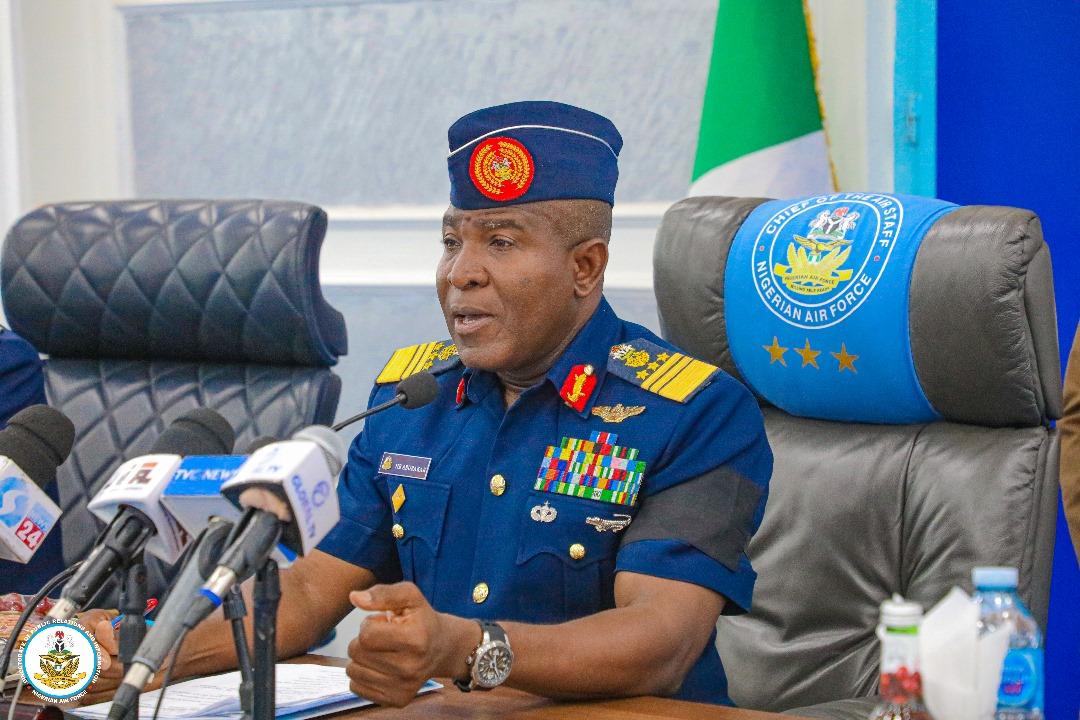
The Nigerian Chief of the Air Staff (CAS), Air Marshal Hasan Abubakar, has reiterated the Nigerian Air Force’s (NAF) unwavering commitment to enhancing its operational readiness by prioritising aircraft serviceability through a strong maintenance culture, institutional reforms, and strategic partnerships.
CAS made this known while declaring open the 2025 Aircraft Engineering Conference held at the Headquarters NAF, Abuja.
He emphasised that “mission success in contemporary air operations is directly tied to the availability, airworthiness, and sustained performance of aircraft platforms,” underscoring the centrality of engineering excellence in the NAF’s transformation drive.
Themed “Enhancing Aircraft Serviceability in the NAF through Strong Maintenance Culture and Strategic Partnerships,” the two-day conference brought together serving and retired aviation engineering experts to share practical solutions and chart a sustainable path forward for maintaining high levels of fleet readiness.
The CAS described the conference as both “timely and transformative,” particularly in light of the Service’s growing fleet size and increasing demand for efficient technical support. Notably, the NAF has inducted 15 new aircraft over the past two years, with an additional 49 advanced platforms expected by the end of 2026.
In his keynote address, Air Marshal Abubakar announced a bold target of raising overall fleet serviceability to 90 per cent by the fourth quarter of 2025.
He noted that the NAF has already achieved a 72 per cent average serviceability rate, thanks to sustained investments in technical manpower development, spare parts availability, ground support equipment, and predictive maintenance systems.
“Each of these high-tech platforms demands sophisticated, data-driven maintenance to remain mission-ready,” he said.
He also highlighted the recent adoption of digital documentation protocols as a game-changer for maintenance precision and accountability.
A significant highlight of the conference was the formal creation of the Directorate of Aircraft Life Cycle Management (DALCM), a new strategic body charged with overseeing the health of aircraft from induction to retirement.
According to the CAS, the directorate will ensure that every aircraft acquisition is supported by a structured, long-term sustainment plan, thereby aligning engineering practice with evolving operational demands.
This move further demonstrates the NAF’s shift towards proactive lifecycle management and self-reliance in aircraft sustainment.
Earlier in his welcome address, the Chief of Aircraft Engineering (CACE), Air Vice Marshal AI Amodu, expressed deep appreciation to the CAS for his unwavering support to the engineering branch.
He reaffirmed the branch’s commitment to pushing the boundaries of innovation in the face of rapid technological evolution.
“We are the backbone of the Force, the ones who keep the wheels turning,” he stated.
The first day of the conference featured two technical papers delivered by seasoned aviation professionals.
Air Vice Marshal J Laoye presented on “Technical Documentation in the NAF: A Prerequisite for Strong Maintenance Culture,” while AVM MA Yakubu (Rtd) spoke on “Aircraft Maintenance and Operational Effectiveness: Leveraging Local and Foreign Partners.”
Both sessions sparked rich and solution-driven discussions focused on sustaining air power through collaboration, innovation, and excellence.
The conference reaffirmed the NAF’s commitment to engineering reform and its broader goal of maintaining a technologically advanced, combat-ready Air Force fully aligned with national security imperatives.
As the Conference continues into Day Two with more paper presentations and expert panels, it sets a decisive tone for what lies ahead, a smarter, stronger, and more resilient Nigerian Air Force, anchored on sound engineering practices and strategic collaboration.