


Akwa Ibom State has retained its position as Nigeria’s cleanest state for 2025, scoring 79 percent in the latest Cleanliness Performance Index Ratings released by Clean-Up Nigeria.
Enugu and Ebonyi States followed in second and third place with scores of 65 percent and 56 percent respectively.
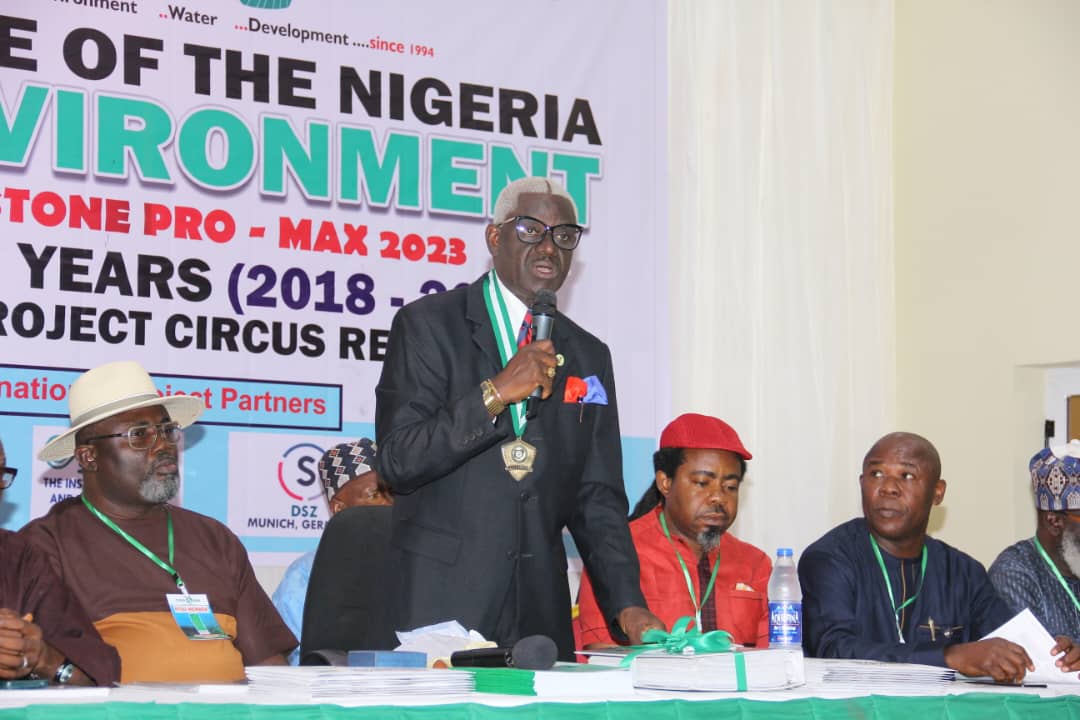
The announcement was made in Abuja by the National Coordinator of Clean-Up Nigeria and Secretary of the National Technical Study Group (NTSG), Prince Ene Baba Owoh Jr., during the public presentation of the State of the Nigerian Environment (STONE 2025 UNBROKEN) report.
According to Owoh, “Akwa Ibom clinched the STONE 2025 Unbroken Green Crystal Award and the Medal of Service for the eighth consecutive year, maintaining its winning streak from 2018 to 2025.”
He noted that Enugu and Ebonyi States also performed strongly, placing second and third in the national rankings.
Owoh further highlighted the top-performing states across Nigeria’s six geopolitical zones. These include Akwa Ibom (South-South) with 79 percent; Enugu (South-East) with 65 percent; Lagos (South-West) with 48 percent; Bauchi (North-East) with 50 percent; Plateau (North-Central) with 52 percent; and Kaduna (North-West) with 35 percent.
He said that “nine states were identified as “clean states” for 2025: Akwa Ibom, Enugu, Ebonyi, Bauchi, Plateau, Cross River, Anambra, Lagos, and the Federal Capital Territory (FCT).”
Owoh said that however, the health of sanitation workers dropped from 31 percent in 2024 to 28 percent in 2025.
He said; “The incidence of sanitation-related diseases increased to 43 per cent in 2025, against 29 per cent recorded in 2024.
“The hygiene and sanitation practice of the people dropped to 32 per cent in 2025, against 36 percent recorded in 2024.
“Open defecation has reduced from 24 percent in 2024 to 19 percent in 2025…
“Notably, in 2025, out of Nigeria’s estimated 240 million population, 187.2 million people are living in unclean environments, based on satellite imagery data.”
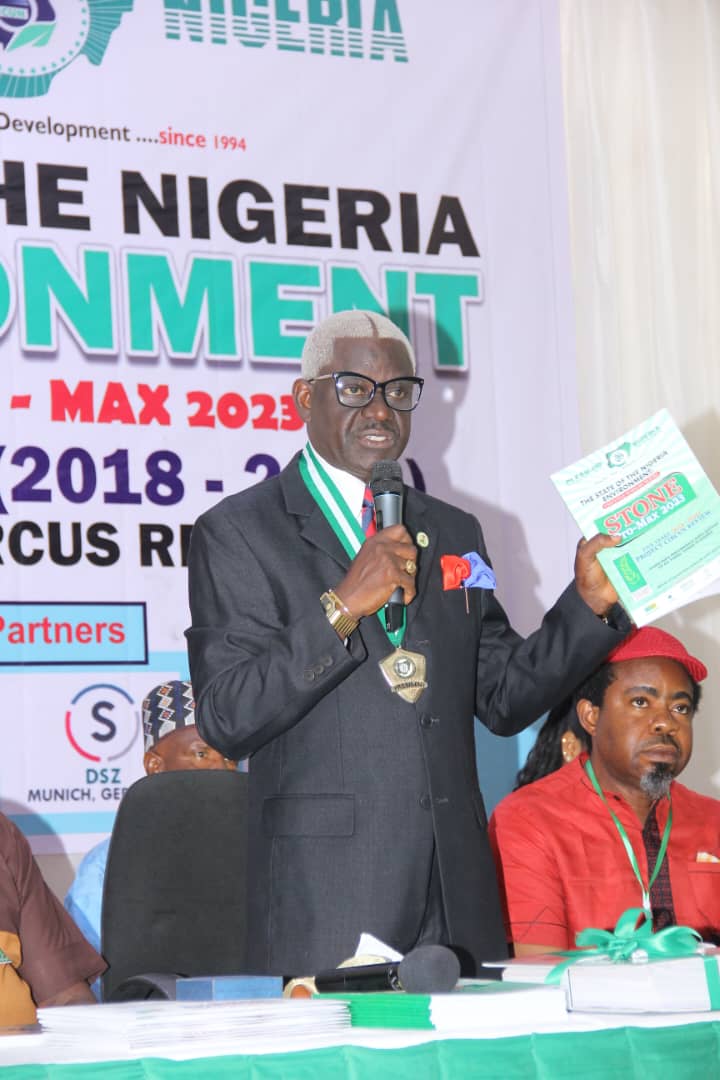
Owoh called on governments at all levels to increase funding for waste management and strengthen environmental health systems to address the worsening sanitation challenges.
He commended Sen. Oluremi Tinubu, the Wife of the President for her green initiative project and urged the Tinubu administration to adopt a green environment agenda, focusing on city and nature living, energy research, green economy, and resources management.
The 2025 study was conducted by the 15-member NTSG, led by Prof. Solomon Balogun, and spanned from November 2024 to November 2025.
It combined on-ground assessments, which accounted for 20 percent of the score, with monthly satellite imagery analysis contributing 80 percent.
The evaluation focused on five key indicators: street and road cleanliness, vegetation and drainage management, waste management services, public opinion, and hygiene and sanitation practices (KAP) among residents.
According to the report, waste management equipment procurement improved by 8 percent in 2025.
However, the health of sanitation workers declined from 31 percent in 2024 to 28 percent in 2025. Incidences of sanitation-related diseases also rose sharply—from 29 percent in 2024 to 43 percent in 2025.
Similarly, hygiene and sanitation practices among Nigerians dropped to 32 percent in 2025, down from 36 percent the previous year. While open defecation decreased from 24 percent to 19 percent, Nigeria still ranks as the world’s second-highest nation in open defecation rates.
Satellite imagery estimates show that 187.2 million of Nigeria’s roughly 240 million people live in unclean environments in 2025. The STONE report also reveals a decline in life expectancy from 50 years in 2024 to 47 years in 2025.