

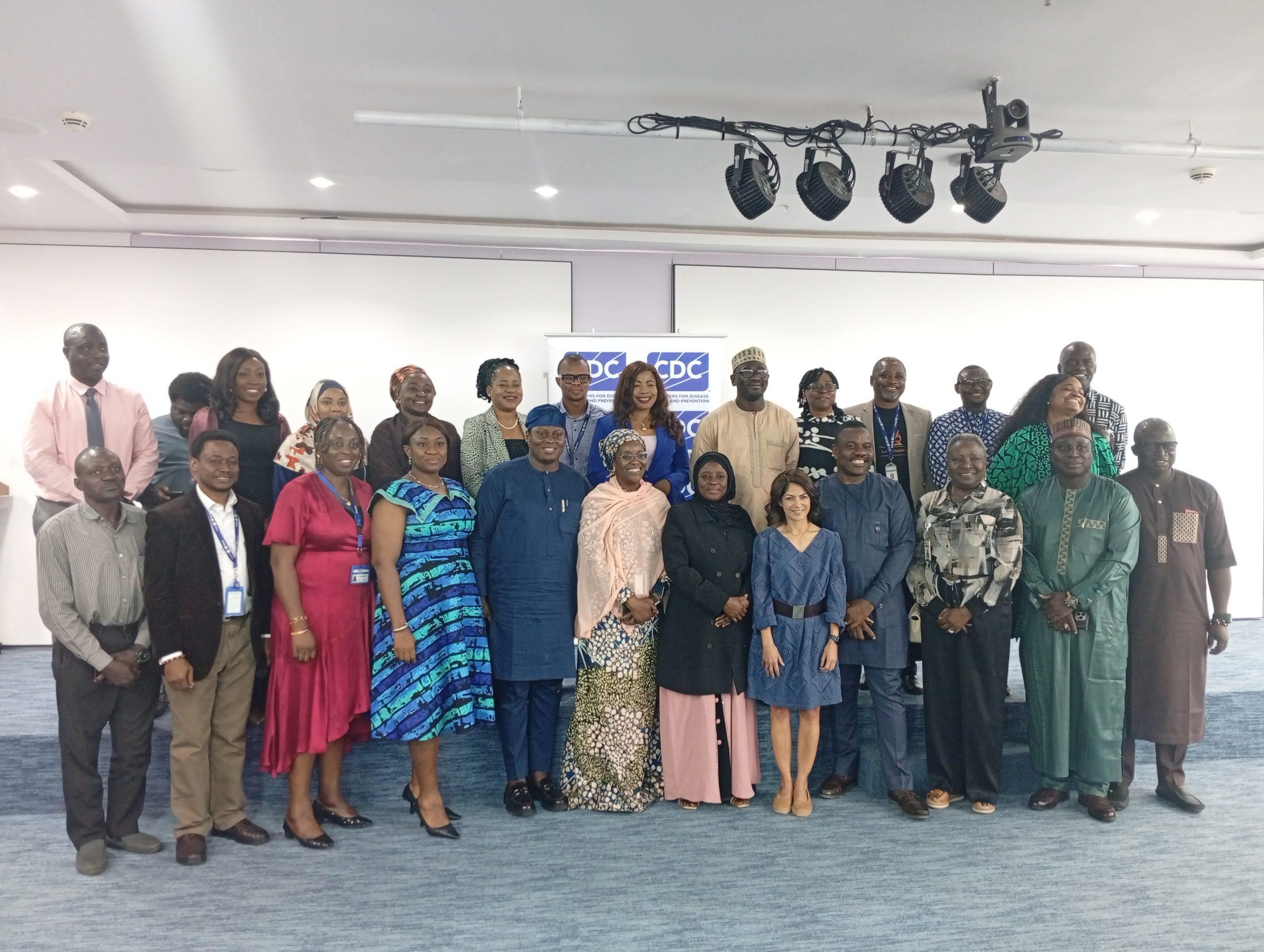
The United States Centers for Disease Control and Prevention (CDC) has reaffirmed its commitment to supporting Nigeria in enhancing surveillance systems for Acute Febrile Illness (AFI).
AFI is characterized by the sudden onset of fever, with or without accompanying symptoms. It can be caused by a range of pathogens, including bacteria, viruses, protozoa, and fungi.
The condition affects all age groups, but is more prevalent among children and young adults.
Speaking at a media roundtable in Abuja, with the topic: U.S. CDC Support for Acute Febrile Illness (AFI) Surveillance in Nigeria, the programme Director of the Division of Global Health Protection, U.S. CDC Nigeria,
Dr. Farah Husain, said the initiative aims to establish a sustainable system for detecting and managing febrile illnesses.She explained that the effort would help determine the burden, causes and spread of diseases while improving Nigeria’s ability to respond to outbreaks.
READ MORE:NCDC To Work With Governors On Regional Development
Dr. Husain emphasized that the collaboration with the Nigeria Centre for Disease Control and Prevention (NCDC) is designed to enhance early detection, strengthen laboratory capacity and improve data quality.
“These efforts will enable faster and more effective responses to epidemic-prone diseases across the country,” she stated.
She also highlighted the pivotal role of the media in public health communication, urging journalists to ensure accurate and timely dissemination of evidence-based information.
During his presentation, the Senior Public Health Specialist for Epidemic Surveillance at U.S. CDC Nigeria, Dr. Oladipupo Ipadeola, explained that the surveillance system is designed to guide public health decisions and strengthen laboratory and epidemiological capacity.
He noted that poor diagnostic capacity in Nigeria often leads to misdiagnosis of fevers, most commonly as malaria.
To close these gaps, the U.S. CDC in collaboration with NCDC, state health ministries and partners has established sentinel surveillance sites in six health facilities.
The sites are located in Abuja, Bauchi, Kaduna, Lagos, Benin and Enugu. They monitor diseases such as dengue, chikungunya, yellow fever, Lassa fever, mpox, Zika, West Nile virus, SARS-CoV-2 and malaria.
According to the CDC, the program, which began in 2021, has contributed to the early detection of outbreaks, including a recent dengue fever outbreak in Edo State where 194 confirmed cases were recorded.
The initiative is also providing data on the distribution and co-infection of febrile illnesses in Nigeria, while supporting training of healthcare workers and provision of diagnostic reagents.
CDC confirmed that AFI surveillance has now been transitioned to the NCDC for coordination, with continued technical and financial support from international partners.
The program has improved Nigeria’s capacity to detect, analyze and respond to febrile illnesses despite challenges such as sample delays and staff attrition.
The Director General of NCDC, Dr. Jide Idris, represented by Dr. Fatima Saleh, described the AFI surveillance system as a “game-changer” for strengthening the country’s outbreak preparedness.
She explained that AFI surveillance would enhance Nigeria’s early warning systems by identifying health threats that might otherwise go unnoticed.
Dr. Saleh stressed that the initiative would enable prompt responses to outbreaks, reducing the risk of large-scale spread and improving public health security.
Acknowledging the support of partners including the Institute of Human Virology Nigeria (IHVN), she said the collaboration would help sustain activities and ensure long-term impact.
At the FCT Sentinel Site, Dr. Ifeyinwa Kate raised concerns over operational challenges hindering the smooth running of the project.
She explained that while storage of samples was initially not a problem, persistent power supply interruptions have disrupted freezing capacity and compromised the integrity of specimens.
The breakdown forced the site to suspend long-term storage of samples, making it difficult to maintain continuous operations.
To mitigate the challenge, Dr. Kate said the team now prioritizes immediate shipping of samples to the National Reference Laboratory for testing.
She stressed that addressing these setbacks is critical to ensuring the sustainability of AFI surveillance and Nigeria’s outbreak preparedness.