

Anambra State Attorney General and the Commissioner of Justice, Prof. Silvia Ifemeje, has called for the inclusion of the Freedom of Information (FoI) Act in civic education curriculum to achieve better implementation of the Act.
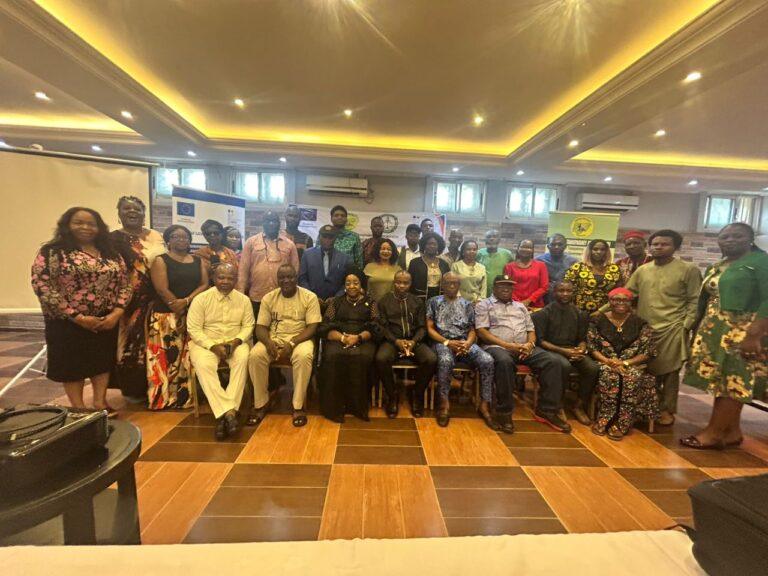
This call was made in Awka, the state capital, during the South-East Regional Roundtable on the FoI Act in Nigeria, themed: “14 Years of FOI Implementation at the Sub-National Levels in Nigeria: Strengthening Access, Accountability, and Citizen Engagement”
The Attorney General, who was represented by the Solicitor General, Ngozi Iwuno, underscored the importance of public education, technology, as well as the need to leverage digital platforms to facilitate proactive disclosure.
“We need to make the FoI Act part of civic education curricula. Our citizens must understand not only their rights but also how to assert them.
“Imagine if secondary school students understood how to write an FoI request. That’s how we build a future of informed citizens.”
She also stressed the need to prioritise the FoI Act in courts as well as the issuance of sanctions for wrongful denials.
“The courts must prioritize FoI cases and issue sanctions for wrongful denials. When legal remedies are swift and decisive, they serve as a deterrent to non-compliance,” she noted.
Further in her keynote address, she canvassed for the institutionalisation of FoI compliance across all levels of government and also charged civil society organizations to continue to act as watchdogs, advocates, and educators.
“Government and civil society are not adversaries; we are partners in democratic development,” she hinted.
FoI Challenges
She identified the culture of secrecy in public service and capacity gaps as major challenges hindering the full implementation of the FoI Act, especially at the sub-national level.
Poor judicial enforcement and lack of adequate digital infrastructure for proper record-keeping and information dissemination in many Ministries, Departments, and Agencies, as impediments to FoI Acts implementation, were also listed as some of the challenges inhibiting FoI Acts
Iwuno urged stakeholders to keep the flame of accountability burning. “Also, public servants should not view FoI Acts as an enemy, but a shield that protects them from the erosion of trust.
“It also forces them to do their jobs better as well as offers them the opportunity to serve with integrity.”
Difficulties in accessing information
The Executive Director at Centre for Transparency Advocacy (CTA), Faith Nwadishi, earlier lamented the difficulties in obtaining clear, timely, and complete information from most MDAs, especially at state and local government levels, despite efforts by CSOs.
She described the FoI Act as one of the strongest tools in fighting corruption and a weapon against secrecy and impunity.
Nwadishi urged citizens to lead the transparency struggle as the strongest force that sustains the nation’s economy and collective existence.
“This round table is part of a broader effort under the Strengthening Accountability and Governance in Nigeria Initiative (SAGNI)—a 12-month project we are implementing with support from the Rule of Law and Anti-Corruption Programme (RoLAC) and funding from the European Union through International IDEA.
“We need the media to continue to inform, train, and educate citizens and civil society on how to use the FoI Act. We also need government officials and institutions to not just comply but also champion transparency,” she admonished.
She insisted that access to information is not just a legal provision but also the heartbeat of democracy.
“If people don’t know, they cannot act. If they cannot act, they cannot hold power to account. If power is not accountable, democracy suffers.”