

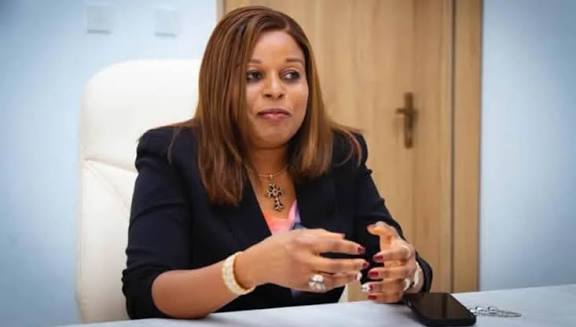
The wife of the Anambra State Governor, Dr. Nonye Soludo, has called for education to be treated as a fundamental right that must never be denied, urging governments and society at large to prioritise inclusive, equitable and quality learning.
Dr. Soludo made the call in a statement issued on Saturday to mark the International Day of Education, an annual global observance dedicated to promoting access to learning and lifelong education.
She stressed that the responsibility for delivering quality education extends beyond government, noting that communities, families and individuals all have roles to play.
“Education is a right that should never be denied by anyone. For that reason, it must be approached with a mindset of priority,” she said.
“Achieving inclusive, equitable and quality education is not the responsibility of government alone. Everyone can make a difference.”
The Anambra First Lady, who is also the founder of the Healthy Living with Nonye Soludo initiative, said societies that aspire to sustainable growth must anchor their future firmly on education.
She explained that the Soludo administration views education as central to the state’s long-term development agenda.
“In Anambra, we see education beyond the classroom walls. The Solution administration understands that education is closely linked to the kind of future we want for our state,” she said.
Dr. Soludo said the commemoration of the International Day of Education was an opportunity to reinforce the state’s commitment to making learning accessible and aspirational for every child.
“We are working towards a system where education is the first priority and a shared dream for every child in Anambra State,” she added.
She expressed optimism over the recent introduction of 15 entrepreneurial subjects into the state’s Junior Secondary School curriculum, describing the move as a strategic effort to equip students with practical and future-ready skills.
The newly introduced subjects include solar installation, garment making, GSM repairs, agriculture and agro-processing, plumbing, tiling, POP installation, event management, bakery, hairstyling, make-up artistry, interior design, CCTV and intercom installation, digital literacy, information technology and robotics.
According to her, the curriculum reform reflects the realities of a rapidly evolving global economy where skills acquisition is increasingly critical to employability and human capital development.
“In today’s fast-changing world, where skills are a major driver of economic opportunity, we want to ensure that every child in Anambra State is not only educated but equipped to become a solution provider,” she said.
Dr. Soludo noted that the state government’s free education policy at both primary and secondary school levels would further strengthen access to learning and enhance long-term social and economic outcomes.
“With free education now firmly in place, we are confident that these investments will yield lasting benefits for our state and its future generations,” she added.