


The Anambra State Government, through its Ministry of Environment, has participated in a multi-stakeholder workshop organised by the National Council on Climate Change Secretariat (NCCCS) in Lagos State, Southwest Nigeria.
The forum, which convened representatives from key ministries, departments and agencies (MDAs), civil society organisations (CSOs), non-governmental organisations (NGOs), international development partners, and the United Nations Development Programme (UNDP), is part of Nigeria’s consultative and preparatory process toward its third Nationally Determined Contribution (NDC 3.0) under the Paris Agreement.
Designed to foster meaningful engagement, data gathering, and consensus-building, the workshop underscores Nigeria’s commitment to inclusive climate action and evidence-based policymaking. Anambra State’s involvement highlights its growing dedication to climate resilience and sustainable environmental governance in line with national and global climate goals.
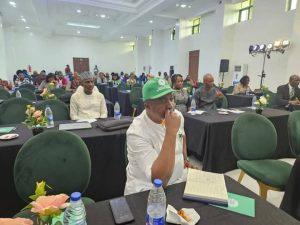

Speaking during the event, Anambra State Commissioner for Environment, Dr. Felix Odimegwu, emphasised the crucial role of accurate and timely data from all stakeholders in shaping Nigeria’s climate strategy.
He noted that Anambra State has developed a detailed climate-resilient plan as part of its contribution to NDC 3.0. This plan, he said, is driven by inclusive, data-based, transparent, and collaborative efforts aimed at reducing greenhouse gas emissions and addressing environmental challenges, particularly the escalating erosion crisis in the state.
“Nigeria’s climate ambition can only be achieved through reliable data inputs from across sectors,” Dr. Odimegwu stated. “For Anambra, our strategy focuses on mitigating climate impacts and slowing the rate of land degradation through proactive environmental management.”


Dr. Odimegwu also reiterated the importance of Nigeria’s NDC 3.0 commitment to the Paris Agreement, which targets a 47% reduction in greenhouse gas emissions by 2030. He described this target as essential to enhancing national climate resilience and fostering sustainable development.
Representing the Director-General/CEO of the NCCCS, Dr. Nkiruka Maduekwe, Director Halima Bawa Bwari explained that the workshop was part of Nigeria’s ongoing review of its NDCs, with an emphasis on data collation and technical analysis. These, she said, are fundamental to building a robust and responsive national climate policy.
She urged participants to prioritise accurate and timely data collection in support of the climate agenda. “This process is about aligning ambition with actionable evidence,” Bwari said, adding that stakeholder input is critical to shaping an effective national response to climate change.
Dr. Maduekwe also commended the UNDP for its technical and financial support in making the workshop possible. She encouraged all participants to engage fully, sharing knowledge, raising critical questions, and collaborating to ensure that the outcomes directly contribute to a stronger, more inclusive NDC 3.0.
Environmental expert and academic Professor Emmanuel Oladipo also lauded the initiative, describing the workshop as “a step in the right direction”. He, however, advised that the NCCCS should complement the review process with a clear implementation framework to ensure the NDC commitments translate into actionable outcomes.
The workshop drew participation from government representatives, academia, international organisations, and key climate stakeholders committed to supporting Nigeria’s transition to a more sustainable and climate-resilient future.