


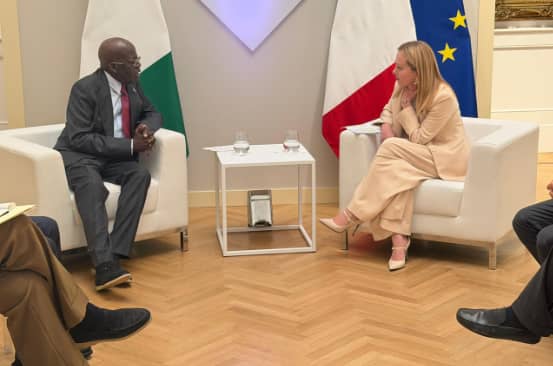
Nigeria stands to gain from the Aqaba Process Summit, where nations renewed their commitment to strengthen cooperation and tackle terrorism and emerging security threats.
Nigeria’s Minister of Defence, Badaru Abubakar stated this on Wednesday while speaking to State House Correspondents in Rome, Italy, on President Bola Tinubu’s participation in the Aqaba Process summit, a high level security forum.
Reviewing Nigeria’s participation at the meeting, the Minister noted that as the leading nation in West Africa and the Sahel region, Nigeria stands to gain immensely from the enhanced security cooperation and strategic partnerships fostered at the 10th Aqaba Process Summit, which focused on combating insecurity across West Africa.
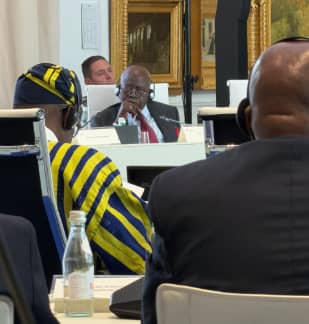
“All nations believe that if one countries is sick because of terrorism, in no time it will affect the other countries the countries around believe that together we have to work and fight terrorism
“So it is a good meeting that discuss especially terrorism in west Africa and the countries resolve to work together and provide both policies and solutions for multinational terrorism fight and i believe it is good for Nigeria being the Leader of West Africa and the Sahel.”
Speaking on the 10th Aqaba Process Summit, the Minister of Defence stated that the forum eliminates bureaucratic barriers, providing world leaders with a platform for open and frank dialogue on practical strategies to combat global terrorism.
He added that with the summit’s current focus on West Africa, Nigeria stands to benefit from shared commitments emerging from the meeting.
“On the effectiveness of the meeting, the 10th Aqaba summit cuts down bureaucracy and leaders meet freely and have frank and open discussions on ways and means to fight terrorism in the world, the focus now is West Africa, I believe Nigeria stands to gain a lot from the coooperations that this meeting brings about,” the Minister added.
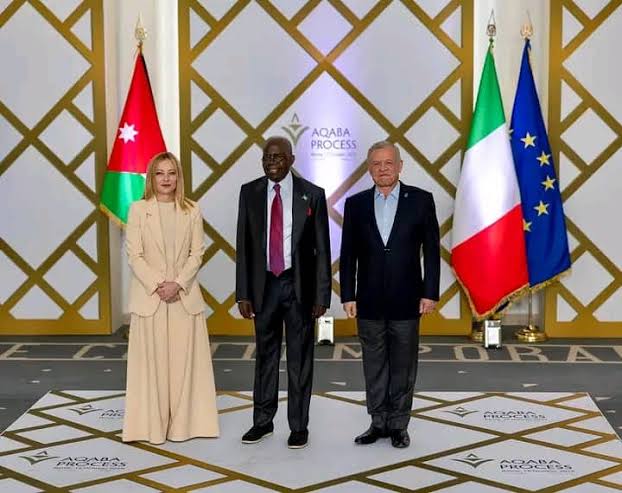
Badaru added that over the past decade, there has been substantial progress in international support and collaboration in the global fight against terrorism, reflecting a growing commitment among nations to confront the menace through shared intelligence and joint security initiatives.
Among the participating countries and leaders are Jordan’s King Abdullah II, Italy’s Prime Minister Giorgia Meloni, Nigeria’s President Bola Ahmed Tinubu, Chad’s President Mahamat Idriss Déby, Sierra Leone’s President Julius Maada Bio, Togo’s President Faure Gnassingbé, and Algeria’s Upper House President, Azouz Nasri.
Also in attendance are high-level delegations from Côte d’Ivoire, Kazakhstan, Mauritania, Senegal, and Uzbekistan, reflecting the summit’s growing international reach and its strategic focus on tackling security challenges in West Africa and the Sahel region.
The meeting being hosted by Italy for the first time in collaboration with Jordan centres on tackling insecurity in West Africa, addressing challenges such as terrorist networks, the crime–terror nexus, and regional cross-border threats.
The summit emphasises cooperation beyond declarations. it is meant to foster frank, candid dialogue, streamline bureaucratic constraints and produce actionable policies, especially in intelligence sharing, counter-radicalisation, and joint operations.