


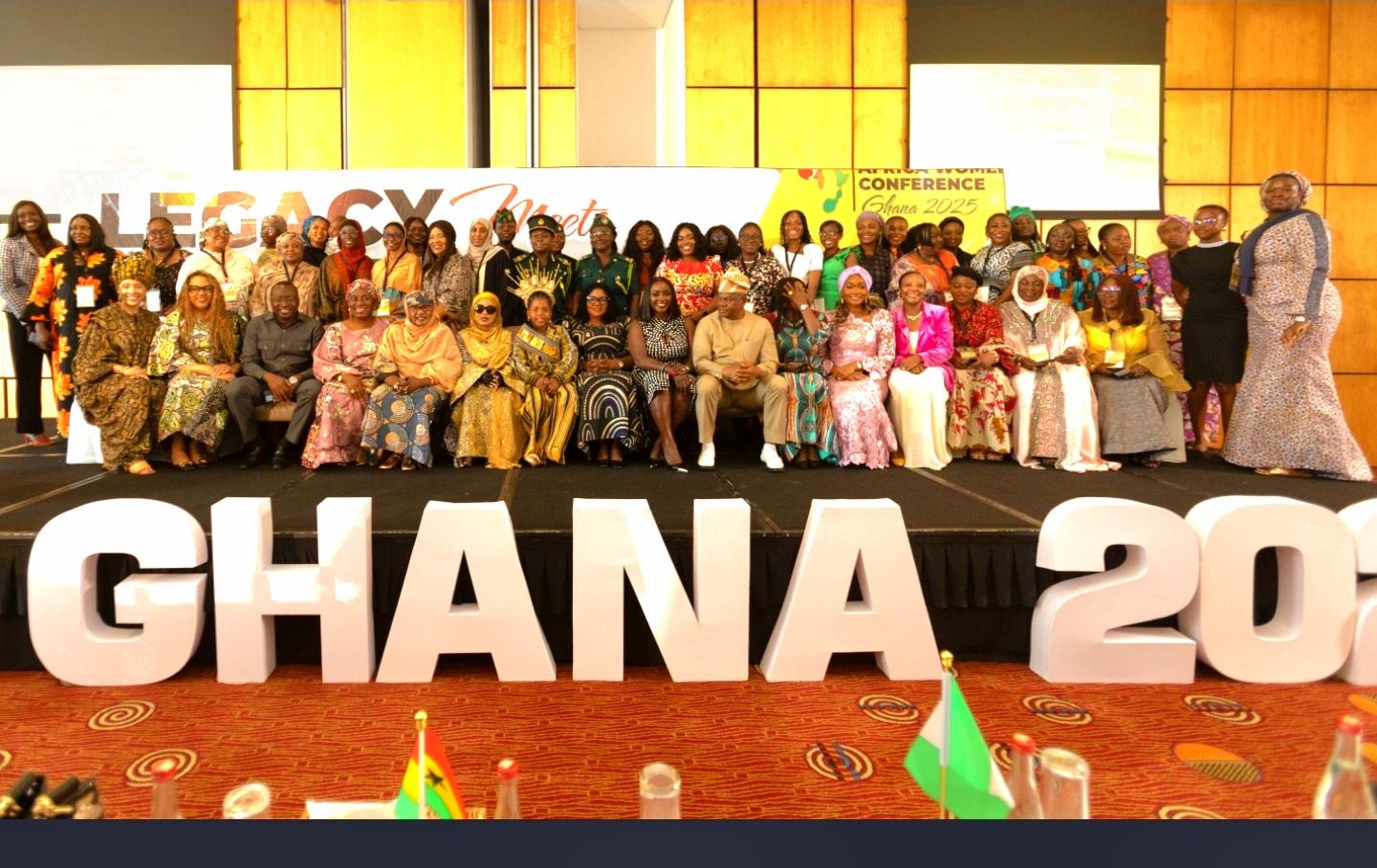
African women leaders, policymakers, and entrepreneurs at the 9th Africa Women Conference (AWC) in Accra, Ghana, have outlined the key lessons they intend to replicate in their various communities, emphasising grassroots mobilisation, mental health support, digital literacy, sustainable innovation, and renewed advocacy for the Reserved Seats Bill.
Leading the reflections was the Secretary to the Government of Kogi State, Mrs Folasade Ariki Ayoade, who stressed that unity and mutual support must shape the next phase of women’s leadership.
“We should learn to have a voice. We should learn to support each other. When women are doing great, we should put our hands together and support them,” she said.
On the Reserved Seats Bill, she emphasised, “The men will not give us a chance. A policy will show them the stuff we are made of.”
From Edo State, Mrs Ninmata Umar Ikhihialor, wife of the Secretary to the State Government, said she was inspired by grassroots innovations showcased at the conference.
“What stands out for me is the woman running eco-friendly shelters for widows. It’s something I want to take back to Edo and align with the Shine Agenda of Governor Okpebholo,” she said.
She added that innovations in menstrual hygiene strongly resonated with her passion for sustainable living, adding a firm charge: “Women need to own their narrative. Whatever you want, you don’t need anyone’s permission to go after it.”
The Special Adviser on Women’s Affairs to the AMAC Chairman, Esther Tawasimi, said her priority is grassroots political education.
“I’m taking back the need to involve grassroots women, educate them on politics, and help them come out to contest from their wards,” she said.
Co-founder of the Citizens Application for Political Participation, Amira Hassan, underscored the urgency of solidarity and legislative advocacy.
“The cards are stacked against women, but we must show up, show out, and support those making the effort. Whatever we can do to push the reserved seats bill, we must do it,” she emphasised.
From the FCT, Dr Asmau Adamu, Director of Community Engagement and founding member of AWC, said the conference strengthened strategies for coordinated action.
“We are forming a critical mass to push the special seats for women. We will insist on the quota because it is about our daughters and the 35% affirmative action,” she said.
FCT Area Council Commitments
Abaji Area Council First Lady Mrs Jamila Abubakar said, “We want to modernise trading for our women using AI. If we train them properly, they will fare well. We’d like to see how we can include that in our trading system. Also, there’s an AI STEM training for young girls during summer camp. So we’d like to catch them young, and by the time the next generation comes, they won’t be suffering as we are right now.”

From Bwari, Mrs Lami John Gabaya emphasised confidence and resilience.
“Believe in yourself, be bold, be confident as a woman. Do not allow your passion to die. I should be able to touch other women with what I learned from AWC 2025.”
From Kuje Area Council, Mrs Salamatu Abdullahi Suleiman Sabo said her delegation is returning with a deeper appreciation for the role of emotional well-being in women’s development.
“I came with nine women from different wards of the Kuje Area Council. They have learnt powerful lessons on legacy, innovation, and the mental well-being of women,” she said
She added, “They will return to their wards and gather women for mental-health talks tailored to their realities. We are going back to integrate emotional support with empowerment so development truly reaches the grassroots.”
Intercontinental Voices
Zimbabwean entrepreneur Emma Guta noted, “Women are now embracing the change coming with technology, and I’m taking that home to share with my peers.”
South African entrepreneur and leadership coach Vani Moodley added:
“Digitisation will assist even deep rural women entrepreneurs and reduce the burden of financial literacy.”
Across all voices, the message from AWC 2026 in Accra was clear: “Women must support women, own their narratives, embrace innovation, and return home to deliver measurable change.”