


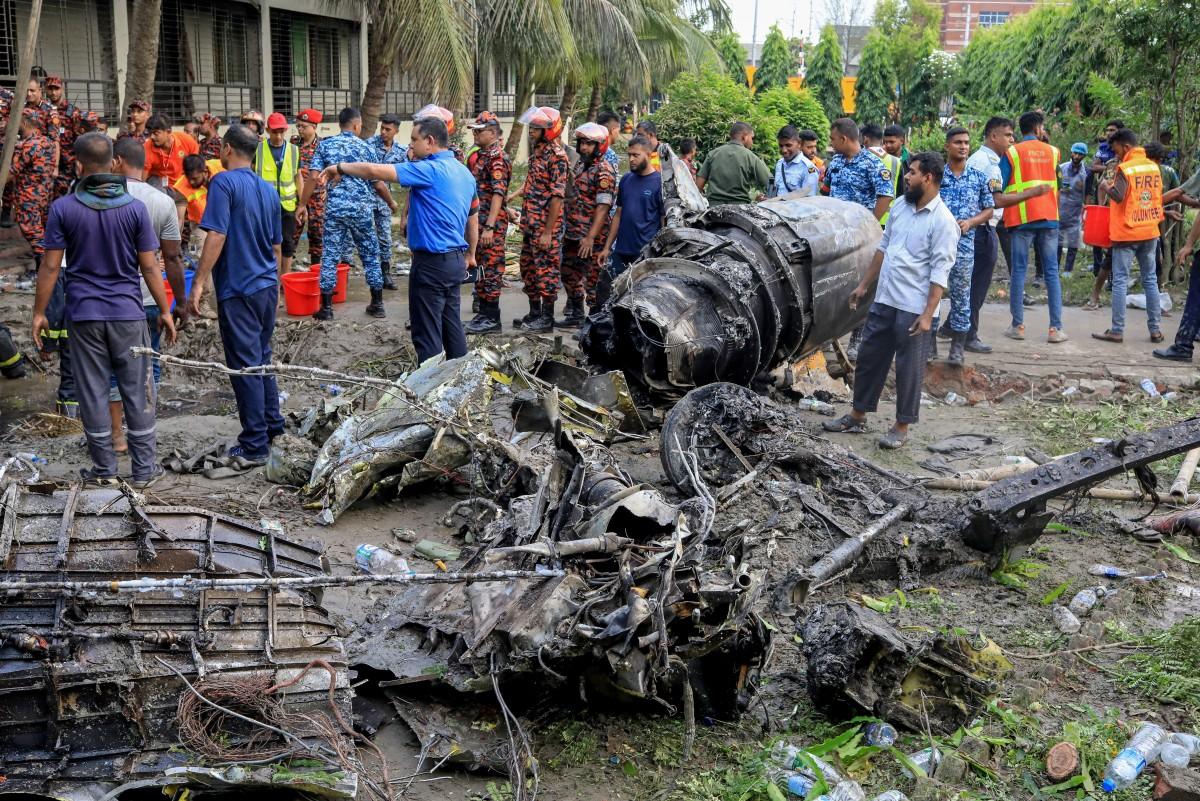
Grief turned into fury across Bangladesh on Tuesday as the death toll from a devastating fighter jet crash into a Dhaka school climbed to 31—most of them children. The incident has ignited widespread student protests and heightened tensions in a nation already battling political instability.
On Monday, a Chinese-made F-7 BGI fighter jet from the Bangladesh Air Force crashed into Milestone School and College during a routine training flight, erupting into flames. At least 25 of the victims were children under 12 who were moments away from returning home. The jet reportedly experienced mechanical failure shortly after takeoff from a nearby air base; the pilot, who also perished, had attempted to steer away from populated areas.
Survivors and devastated families described scenes of horror and loss. “I took her to school like every day. I didn’t know it would be the last time I’d see her,” said Abul Hossain, father of nine-year-old Nusrat Jahan Anika. Another parent, Rubina Akter, recounted how her son narrowly escaped with burns after leaping from a staircase to extinguish flames.
On Tuesday, the government confirmed 31 deaths and 165 injuries, with 70 people still receiving treatment. Rescue operations continued amid charred rubble, as flags across the country flew at half-mast and special prayers were offered in mosques, temples, and churches in a national day of mourning.
However, the solemnity quickly gave way to unrest. Hundreds of students took to the streets, confronting officials who visited the crash site. Chanting demands for justice, they questioned the continued use of outdated military aircraft near civilian areas. Footage showed protesters storming the federal secretariat, demanding the resignation of the education adviser before being dispersed by police with batons.
Student groups are calling for transparency in victim identification, compensation for families, and immediate reforms in the Air Force’s training operations. In response, the interim administration led by Nobel laureate Muhammad Yunus issued a statement promising a full investigation, support for victims, and a review of flight training protocols in urban zones.
The F-7 BGI, the last in the Chengdu J-7 line, which is derived from the Soviet MiG-21, was delivered to Bangladesh between 2011 and 2013. Its continued use is now at the centre of public scrutiny.
The crash comes just weeks after India suffered its deadliest aviation disaster in over a decade, further intensifying concerns about air safety in South Asia. Meanwhile, Bangladesh’s political landscape remains fragile, with Yunus’s interim government pledging elections next year following the ouster of former Prime Minister Sheikh Hasina in August amid mass protests.
For many in Dhaka, the tragedy has laid bare not only institutional failings, but a growing sense of national anxiety. As grieving families bury their children, Bangladesh confronts a moment of reckoning.
Reuters/s.s