

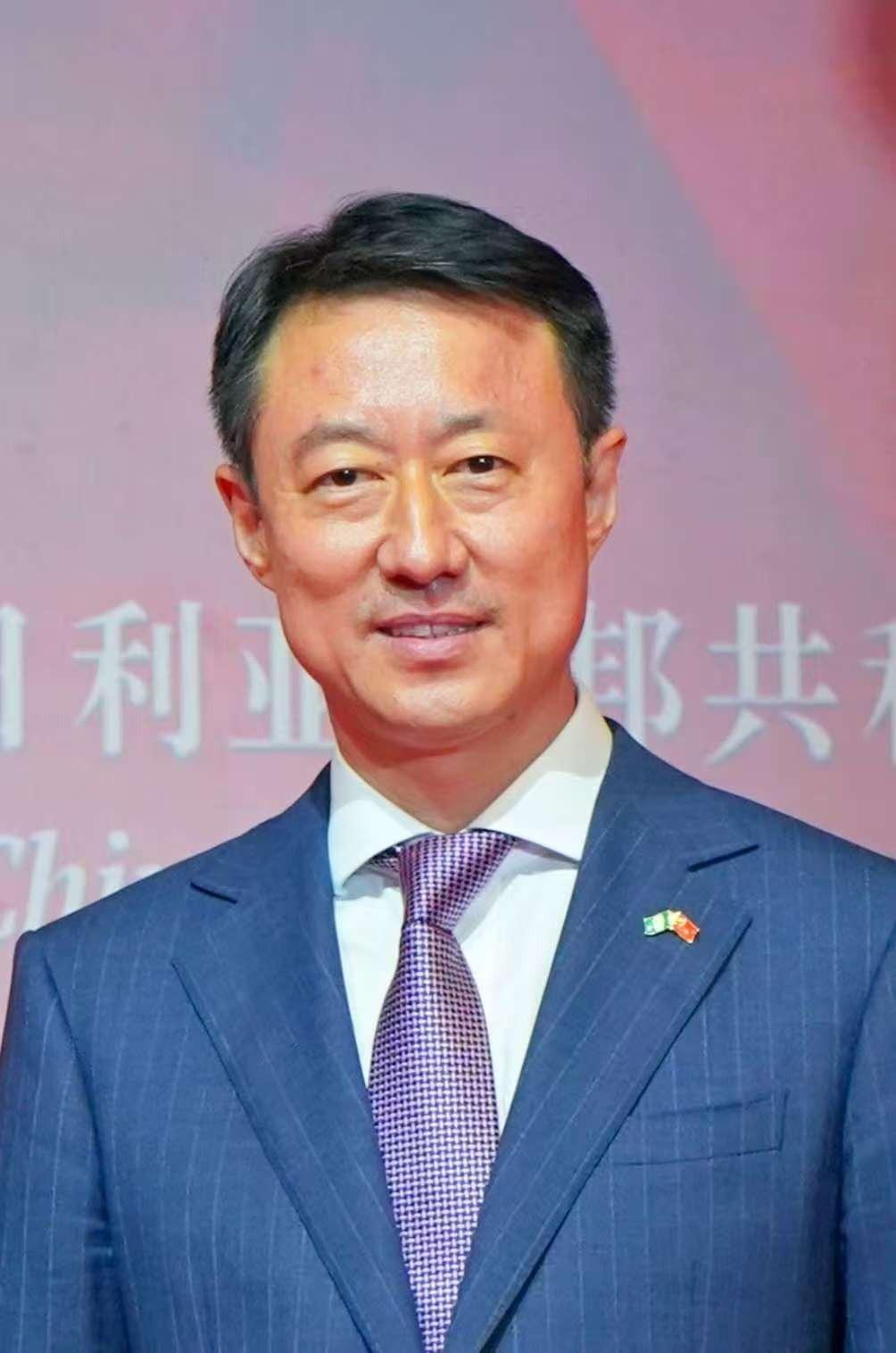
The Chinese Ambassador to Nigeria, Yu Dunhai, has underscored that Beijing’s renewed push for institutional opening-up will create new opportunities for stronger economic, trade and development cooperation between China and Nigeria.
He stressed that both countries stand to benefit from a more inclusive global governance system.
The Chinese Ambassador, disclosed this in a statement titled “Steadily Expanding Institutional Opening-Up to Forge New Prospects of China-Nigeria Win-Win Cooperation,”
Ambassador Dunhai noted that China wss entering a new phase of high-standard openness driven not just by the flow of goods, but by reforms in rules, regulations, management and standards.
“Institutional opening-up, as a hallmark of high-standard openness, is more comprehensive, systematic and stable, representing a more advanced form of opening-up,” he said.
According to the Envoy, the recent global trends, including the weakening of trade in developed economies and the rising role of the Global South, make it necessary for China to recalibrate its approach to global economic governance.
“The global trading system is undergoing accelerated transformation. The WTO-centered multilateral trading system has faced increasing challenges, and mega-free trade agreements promoted by developed economies have gained an advantage in reshaping global rules,” he explained.
The Envoy disclosed that China intends to play a stronger role in shaping these emerging global frameworks.
“By firmly supporting the WTO-centered multilateral trading system and steadily expanding institutional openness in rules, regulations, management and standards, China will strengthen its leadership and agenda-setting influence in shaping international economic and trade rules. Beijing will “participate more comprehensively in WTO reform and the adjustment of global economic and trade rules, contributing more public goods to the world,” he stated.
The Ambassador highlighted China’s recent tariff-free measures for African countries, describing them as a concrete demonstration of China’s commitment to mutual benefit and win-win cooperation that would have long-term developmental impact on the continent.
“China has been granting 100% zero-tariff treatment to products from least developed countries with diplomatic ties to it in December 2024, before expanding the policy in June 2025 to all 53 African nations with diplomatic relations. These measures reflect China’s firm determination to adapt to the evolving international landscape and strengthen multilateral economic and trade relations. China’s zero-tariff policy toward African countries will help reshape the trade landscape between China and Africa, elevating Africa’s position in international trade and global supply chains,” he said.
He stated that it would also support African countries in achieving industrial chain upgrading, moving beyond a ‘resource-export’ economic model, and accelerating their industrialisation and modernisation.
Ambassador Dunhai reaffirmed the long-standing and profound friendship between China and Nigeria.
He said the relationship has advanced rapidly in recent years, recalling the September 2024 meeting between President Xi Jinping and President Bola Tinubu in Beijing, during which both leaders elevated bilateral ties to a Comprehensive Strategic Partnership.
The Envoy said, “China supports Nigeria in playing a greater role in international and regional affairs and stands ready to strengthen coordination with Nigeria through multilateral mechanisms. both countries would continue to“advance solidarity and self-reliant development of the Global South, advance world multi-polarization and economic globalization, and contribute to a more just and equitable global governance system.”
Deepen Cooperation
Yu also restated China’s readiness to deepen cooperation under the Belt and Road Initiative and align its programmes with President Tinubu’s “Renewed Hope Agenda”.
“China is willing to advance high-quality cooperation under the Belt and Road Initiative and work together with Nigeria to align the ‘Ten Partnership Actions’ of FOCAC with President Tinubu’s ‘Eight Priority Areas,’ Yu said.
The envoy revealed that China was prepared to implement the zero-tariff policy through the negotiation and signing of an Agreement on Economic Partnership for Shared Development.
He reiterated China’s willingness to support Nigeria’s modernisation path by walking hand in hand with Nigeria on the path to modernisation, strengthen strategic synergy, expand all-round cooperation, deliver more tangible outcomes, and serve the development needs of both countries.
Olusola Akintonde